Hospitality the Sacred Duty - Colleen Rafferty - Defining Hospitality
DH - Colleen Rafferty
===
[00:00:00]
What I do is inconsequential. Why I do what I do is I get to shorten people's journeys every day. What I love about our hospitality industry is that it's our mission to make people feel cared for while on their journeys. Together, we'll explore what hospitality means in the built environment, in business, and in our daily lives.
I'm Dan Ryan, and this is Defining Hospitality.
This podcast is sponsored by Berman Falk Hospitality Group, a design-driven furniture manufacturer who specializes in custom case goods and seating for hotel guest rooms
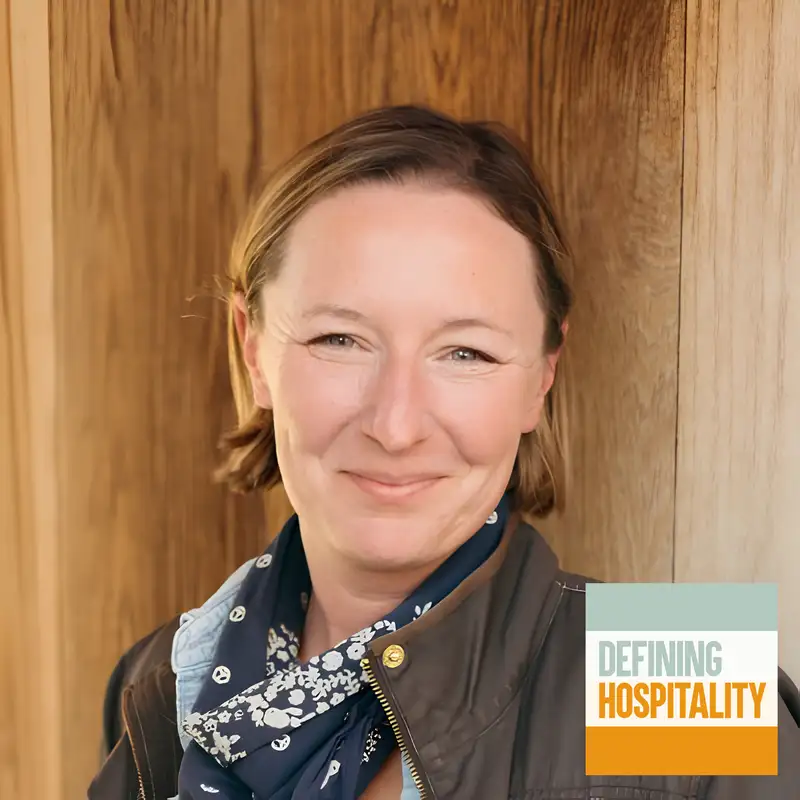
Dan Ryan: Today's guest is a hospitality executive, operations leader, and guest experience expert. She grew up within her current company from guest experience manager to president through multiple leadership roles. She has extensive experience managing operations, team development, and customer-focused hospitality environments.
She's also spearheading a state-funded pilot childcare program for hospitality [00:01:00] workers in partnership with the Massachusetts Governor's Office. She's currently the president at Tourists in North Adams, Massachusetts, the heart of the Berkshires. Ladies and gentlemen, Colleen Rafferty. Welcome, Colleen
Colleen Rafferty : Hi, Dan. Thank you so much for having me
Dan Ryan: I love having you here for multiple different reasons as we traipse past each other at all these industry events and say hello. But also, I'm a huge advocate for the Berkshires. My mom lives there. I've spent so many times up there. Yeah. Sound, which happens every other year, which Wilco, I guess Wil- Wilco is the spearhead behind that.
Colleen Rafferty : Yep
Dan Ryan: curate such amazing musical guests,
Mm-hmm.
And it's at the museum, the MassMoCA in North Adams, and it's so cool 'cause they have the stage up there. They have... Everyone's there. You can camp, you can stay in your hotel, you can stay nearby and come in. But one of my fondest memories was being in one of the exhibit halls at MassMoCA, and [00:02:00] I wanna say, um, like Nels Cline and someone from some other band.
There was like a, they all came in a- acoustic and just started playing around a sculpture inside the, the museum, and you could just go hang out in there.
Colleen Rafferty : Yep
Dan Ryan: I don't know. The music festival experience thing is a incredible growth area within hospitality, but it just seems like it still seems so natural and kind of just not forced, I guess, if that makes sense, which I think is what the Berkshires are all about, right?
Colleen Rafferty : Totally. It's a really authentic festival. There's lots of pop-ups. It's true, you're gonna walk through an exhibit and see Natalie Merchant singing in a corner. So it's really special. It's every other year. We just had one this June. I'm so glad you were there. This was a really good one
Dan Ryan: And well, actually, before we talk more about that, because something funny really just happened, um, that my mom actually posted. Um, but before I get into [00:03:00] that, how do you define hospitality? What does it mean to you?
Colleen Rafferty : you know, I think hospitality really is just proof that human beings were made for each other. I mean, you, you said in the beginning, Dan, that I started in guest experience, and I think that there can be no hospitality without the guest. And when I think of all of the most magical experiences I've had as a hospitalitarian, none of them would've, would've happened without those exact people in the room at that exact time.
You know, you need someone who's game, who's, you know, wants to be transformed, who appreciates what you're doing. you know, you talk about this on the podcast a lot, how hospitality is like a, a sacred and ancient rite, right? The, the Greeks called it xenia. It was this code, uh, when a stranger shows up to your house, your duty is to feed them, and to not ask their name, and to send them back into- out to the world with a full belly. Uh, but the guests also [00:04:00] had a code the host to show respect, to bring gifts, not to take advantage. So it's a symbiotic relationship, and I really think that one of the greatest gifts about working in this industry is truly the, that dance between the guest and the host that happens. that's something that really only human beings can do for each other, and that becomes, I think, even more and more important nowadays. So, uh, it is the most human thing we can do is to take care of each other.
Dan Ryan: Yeah, and I love that so many people see that it's a two-way street,
Mm-hmm.
Actually, not that many people see it's a two-way street. A lot of people think it's really all about how you serve the guest, but there is a code from the guest backward. And one of my biggest gripes, I love the new Odyssey movie because it's just so fun to see it done in all these different ways.
But one of my biggest gripes [00:05:00] was that at the end, I guess it's not a spoiler, it's been around for thousands of years, but at the end, Odysseus and Telemachus don't slaughter all of the suitors who are not good guests in the book or in the poem. They're all wiped out. But for some reason in the movie they didn't do that.
So if I ever get to bump into Christopher Nolan, I'm curious about that. But another thing I wanna share, that was the first time I've ever heard the word hospitalitarian. So thank you for introducing that into my lexicon. I ha- I just wrote it down and I have to highlight it, and I think I need to use that.
How, what do you have to do, use a word three or four times before it becomes part of your-
Colleen Rafferty : and it's yours. Yeah, the first person who ever said that to me my old boss, Wiley Dufresne.
Dan Ryan: Okay
Colleen Rafferty : and I have probably used it a thousand times. I don't know if he made it up, but it's one of my favorite words
Dan Ryan: I think I might have to R&D that, and with R&D I like to say it's rip off and duplicate [00:06:00] because it's a, it's a good one. I'm glad that I brought up The Odyssey also because you have a degree in philosophy, right?
Colleen Rafferty : do
Dan Ryan: A master's degree in philosophy. So how did getting and studying Aristotle and everyone else associated, his book's right over there, how, how did that get you from studying Aristotle to North Adams running a hotel?
Colleen Rafferty : You know, it's, it's such a good question because it's the reason that I ended up making hospitality my career. I think that like so many people, I started out working in hospitality as gig work, right? It was the thing that I did so I could pay my bills and write or go to school or be a graduate student in philosophy. Uh, when I started studying philosophy and artist at St. John's College, uh, in Santa Fe, and was really thinking about, like, these concepts of, of virtue, [00:07:00] uh, and, you know, ethics and, uh, ambiguity, um, I was working, uh, behind a bar. I was working at Santa Fe Brewing Company interacting with thousands and thousands and thousands of people. and that was kind of when I realized that this work wasn't the side gig. work was the practice of virtue that I was reading about and studying in the classroom, and that was my opportunity to really transform people, transform their day, uh, transform their week, uh, give them an experience that was where I had, I had kind of like some power, right?
I'm sitting behind a bar and I have this ability to sort of, uh, you know- dictate how your experience is going to go. and I think that in [00:08:00] those moments, I, I really felt a new appreciation for the work of hospitality and decided to really give it my all and make it my career. It was not what anyone expected. Um, I think that, you know, graduating with a master's degree in philosophy and deciding gung ho you're gonna go into hospitality is not really the ROI that, uh, most people would think. But I really think it, uh, it, it couldn't be a more fitting education for, you know, the work we do every day and seeing the parade of humanity that comes through our doors, uh, and centering that in a, in a, in a real practice of how we treat people and how we show up in those moments.
Dan Ryan: One of my favorite professors I ever had, I didn't even... I, I wanted to study the classics. Um, I started off as architecture, but then I was rowing
Yeah
and I couldn't do both, so I switched to English. But then I took this Ro- uh, Roman civilization class, and the guy who taught it was a guy, AJ Boyle, [00:09:00] he wrote the book that we studied in high school Latin, and I was just always impressed by that.
But then a few years ago, I went to Rome with my family, and I sent him an email. I didn't even know if he was still working. And I said, "Oh, you were one of my favorite teachers, and any highlights or things that must see that are not on the normal
Colleen Rafferty : Right
Dan Ryan: And he said, "I have no idea who you are, but I, uh, hun- uh, but I...
You just really made my decade." And, uh, uh, yeah . So I don't know. He gave me some things and I went in there. But the thing that held me up from pursuing the classics was I just did not wanna study or learn Greek. Like Latin, I had a working knowledge in, but I didn't wanna study Greek. And I appreciate so much that you're looking at this idea of xenia, because when I think about hospitality, to me it's always this hearth.
And Hera was the goddess of the hearth,
Mm-hmm.
Warmth that [00:10:00] everyone shares in. Again, it's not that one-sided. Like you said, as a bartender, you d- you dictated what the night could go, but I'm sure... But in everything I've talked to you, I don't think that you're dictating anything now. Now I feel like you're really open to a two-way symbiotic relationship of, of what that experience should be for both sides.
And
as Okay. So basically philosophy to North Adams, and how did your perception and also activation of hospitality evolve from that time when you were the bartender dictating
Colleen Rafferty : Yeah.
Dan Ryan: where you are now?
Colleen Rafferty : Totally, yeah. I, it, it has, it has evolved quite a bit. and I think a lot of that had to do, uh, with working with really excellent people and trying out different environments. I come from a food and beverage background, right? So, uh, one of the things that, [00:11:00] you know, you learn when you're working in a, in a, like, fancy Michelin starred, you know, 12-course tasting menu place is, uh, you don't, uh, introduce yourself by name because it's not about you, it's about the chef and it's about the experience. I went from that to working at, you know, uh, in the brewery world for about seven years, where I really had this luxury to be fully myself and really, like, take off the apron and put on the overalls and just be super comfortable and make really deep relationships with the guests. And I think that between those two poles of experience, I found my middle ground, which is, you know, always introduce yourself by name to the guest.
You know, this is always the thing that's gonna make them feel comfortable. Uh, it's going to let them know that they have a partner in this, that they have someone they can come to. Um, uh, but also, [00:12:00] like, listen for the cues, right? Like, this isn't really about you. This is about this moment and what the space can provide and what the guest is looking for. And what I love about working in hotels is that that exchange between the guest and the host, which, you know, at a bar is, can be five seconds or it can be a couple hours, you know, uh, at a, at dinner maybe it's a few hours. I get these people for, like, three days, and I can really get to know them, I can read them, I can watch them, I can see what they're into, I can create moments of surprise and delight that, uh, you know, I couldn't otherwise.
And I think that, uh, so much of us who work- so many of us who work at Taurus all come from a food and beverage background, so we all carry that sort of, know, guest obsessiveness and service obses- obsessiveness with us, where we [00:13:00] see, you know, every detail is really important. Um, and then stretching that across, you know, a few days of time with someone where you really get to know them, uh, you, you...
It, it really, I think, is what makes that hotel special. It's a hotel run by a bunch of people who are all excellent servers.
Dan Ryan: Yeah. Well, it's, it's also interesting because you, or Tourists opened in what? 2018?
Colleen Rafferty : 2018, yep
Dan Ryan: Okay, 2018. And when did you get the Michelin stars or keys? keys or stars?
Colleen Rafferty : um, keys. Uh, so 2024 was when they came out with their first, uh, Michelin Key list
Dan Ryan: Wow
Colleen Rafferty : pe- people ke- started texting us and saying, "Congratulations, you're on it." And we were all looking at like the, the page for the one-star hotels and/or the one-key hotels, and we're like, "What are you talking about?
We're not on it." And they were like, "Scroll up. You got [00:14:00] two keys." And we
Dan Ryan: Wow
Colleen Rafferty : what?" So we're still kind of, you know, pinching ourselves on that.
Dan Ryan: I mean, that's an extraordinary result when you think about... I don't- for those of you who haven't been to North Adams, it, it's kinda, it's like an old mill town, kind of burnt, like old factories, uh, big brick buildings.
Colleen Rafferty : Totally
Dan Ryan: Basically, a mo- you were a motel across from a stop and shop,
Colleen Rafferty : Yeah
Dan Ryan: really created this place and feeling that now this extraordinary result of two Michelin keys happened.
When you step back and pinch yourself, what do you think was the key ingredient on that journey?
Colleen Rafferty : Oh my gosh. Well, we didn't look up. Um, we worked really hard. Uh, we problem solved in the moment every day. Um, and we were super guest focused, but really it was about the team. I mean, I just want to call out This woman, Bryn [00:15:00] Clark, who I work with every day, and she come, came to us from Keller Restaurant Group and Brooklyn Fair, and opened the hotel and has been there every single day. Um, she's my partner in crime, and the, uh, dedication that she really brought to the team every day, flowed through to the guest experience and was really inspiring to all of us. And we now have a whole slate of managers who have been there collectively for... I think I counted that we have a total of 40 years of experience on the management team for a hotel that's been open eight years,
Dan Ryan: Wow
Colleen Rafferty : which is kind of silly.
But think one thing that the guests always say when they come, um, and that they note in every review is, you know, of, of course, everyone is really taken with the space and it's an incredible design. Um, it was designed by, uh, you know, uh, Ben Svendsen, Hank Skollard, and Julie Pearson. Um, [00:16:00] it really, it, it's a, a very unique experience of a motel, you know, and the way that it converses with nature sort of just acts as a frame and a haven, uh, to get you outside and to engage with your environment. Um, but always the reviews note the staff and the people, and I think that a lot of the work we did, over those years from 2018, uh, when our opening GM, Nina Konza, built the team, till, uh, 2024 when we got those two Michelin keys, was figuring out staff retention and how to operate in a super seasonal location. And, know, it was really just, I think, a ton of culture work. I think that, you know, s- formulating our guiding principles, developing, like, benefits around that, where everyone gets generous PTO [00:17:00] and, uh, we have a tenured health insurance policy where everyone from the housekeepers you know, the president have access to these really good benefits that make them feel like this can be their career and this is...
they should have a lot of dignity and pride in working there. That flows through, and I think that all of those things are, you know, they, they are decisions that happen at the highest level and that, you know, are endorsed by the ownership team, and we're super, super lucky about that. Uh, but I really do think that flows through, and then when you're able to have people stay for years and years- You know, those busy moments of service, uh, and those like little fires that happen every day, they don't feel as overwhelming. Uh, in fact, sometimes you look forward to the challenge of being crushed by, you know, 200 people walking in your door, uh, Thanksgiving morning [00:18:00] unexpectedly, uh, because are the moments that light you up and, uh, and it just creates that consistency for the guests where they can walk in and they can see that same person who's serving them a drink that they saw last summer, and the summer before, and the summer before. Uh, and I think that makes... Be- aside from the design, which is incredible, the location, which is incredible, you know, the music, which is incredible, the people are really what make it special.
Dan Ryan: And I think, uh, uh, so to pull on the people thread a bit and balancing people and structure, let's just say. So
Yeah
when you started there in 2018, you were more on the guest experience side, correct?
Colleen Rafferty : Yes.
Dan Ryan: Okay. And now you're the president. And along that way, and throw in a pandemic and other awesome things.
Colleen Rafferty : A couple kids.
Dan Ryan: uh, pandemic, couple kids, um, just li- all the life that happens for you
and, and, and the whole team there. [00:19:00] How do you create a corporate structure, right? 'Cause you're... Or how did you create a corporate structu- structure? Because in a way, you're an airplane that's building itself
Colleen Rafferty : Yeah
Dan Ryan: taking off.
But what... How do you build a corporate culture that doesn't quash all the things that are good that then results in two Michelin keys? And so the results are working. I'm just curious how you balanced kind of scaling and a s- in getting everything o- operating perfectly well and being recognized for it without quashing the p- the spirit that comes from the guests and from, from your team and, and I don't know, heats that hearth
Colleen Rafferty : Oh gosh. You know, I think we're still figuring it out. Um, honestly, I don't think we've cracked that nut, you know? I think that that's just part of the journey for any company that's trying to scale. Um, it's helpful [00:20:00] that, you know, everyone who's now at the corporate level, um, has worked on the floor at the hotel for at least a year or two.
Mm-hmm.
Um, it's helpful that, um, our, you know, principal lives here in town, sees the people who work here, comes to the hotel regularly, so they have that face time and, uh, they feel that sense of loyalty and, and the staff really feel seen by ownership. That's, I think, just a luxury of having a, a, a small town business. Um, there is a certain amount to be said about physical presence, right? Like we're not remote. Like we're... I'm talking to you from my kitchen right now, but it's five minutes away from the hotel and I had to run here and I was a little bit late and I'll be right back there when I'm done. Um, but uh, I, I think it's, it's also just a, a matter of, again, bringing it back to like the people, uh, [00:21:00] the managers that have joined us and grown and that we were able to pass really the day-to-day operations of the hotel onto, are just excellent and have like a really open line of communication with us and I, I hope they feel supported.
I hope they feel Um, but that's, that's, that is like the... That's all of it, right? Is staying connected to the day-to-day operations, staying connected to your staff and to your guests, and not losing sight of what you're doing while you're trying to build something bigger and get into new sectors and open new properties, uh, and expand within your town and, and beyond.
Dan Ryan: as you're building the airplane, as it's taking off, and I also feel like I'd also get bored if every, if every day didn't feel like a new challenge or a new startup. Like, I feel like
Colleen Rafferty : [00:22:00] Yeah
Dan Ryan: I get comfortable or once anyone gets comfortable in how things are, it's not gonna serve you to how things need to be, right?
You always have to be in startup mode in a way. That's my feeling. But if you were able to speak to another independent operator that's listening right now or watching right now, and who might feel like they're quietly drowning, what would you tell them?
Colleen Rafferty : Ask for help. Talk to your team. I think that, uh, one thing that we often do as hospitalitarians is we try to solve every problem ourselves. we think that we are, you know, invincible and that, uh, we're the... We, we oftentimes think that we're the first person who's dealing with the same issue. Um, but that's never the case.
Uh, so I'm, I'm just thinking of, you know, [00:23:00] a- an example of, you know, we're, we're, we're obviously not perfect, and I remember there was one summer where much my entire housekeeping staff just fell apart right in the middle of the summer. So I was acting as general manager, housekeeping manager, housekeeper, runner, and so was everybody else who worked at Tourists. Uh, and it really, you know, is one of those things that I think any, you know, general manager can relate to, where you're spending, know, y- eight hours of your day just getting the rooms clean and trying to get ready for the guests and trying to stay above water. And then, you know, you're sitting down at 4:00 and doing your job for your actual job from 4:00 PM to 10:00 PM, and that can feel really stifling. I think what helped [00:24:00] me crack that nut, uh, was talking to other operators in my area and asking them, "Are you experiencing this, or is this just me? Okay, you're experiencing this too. This is not just me.
All right, what do we do about it? How do we start to think creatively about it? Uh, are there ways that we can adjust how we're actually operating to, uh, you know, understand that this is a context we can't change, we're just gonna have to make it through with what we've got? Or is it me? In which case, great.
This is a problem that I can solve from the root. And that means I'm gonna go back to my values. I'm gonna look at how I'm training people. I'm gonna look at I'm hiring people. I'm gonna look at what this job is. Is this job just too hard to do? Is there ways that I can make it easier?" Uh, just really breaking things down to, like, what the day-to-day actually looks like for your team, and going through that and doing it [00:25:00] yourself and building up from there. Uh, that I think was, uh, a really helpful piece of advice that I received early on, um- And then I also say that you're not gonna drown. Like, this is, this is not, this is, you know, no one... We, we like to remind ourselves when we're really in the shits, uh, you know, this is vacation,
Dan Ryan: Yeah.
Colleen Rafferty : Like, everything's gonna be okay. If someone has to wait an hour for their room, guess what? They're gonna get a glass of champagne. Everything's gonna be fine. Like, it's... We're, we're lucky that this is not a hospital, right? one's life is actually on the line, and there's very little that you can't solve with service recovery.
So Um, actually, as you were talking about that and, and thinking about what the job entails and, um, how to make sure that... I think you said how to make it [00:26:00] easier for your team.
Yeah
Dan Ryan: That might be an unintended segue into an area I wanted to explore with you, which is the, the, the pilot program for childcare that you're doing for hospitality workers.
I know it's in the, the infant stage, but was what you learned through those crucible moments I don't know, did that help inspire you to look at burning extra calories to make this thing get off the ground? And, like, tell us about that
Colleen Rafferty : 100%. So, you know, uh, I, I mentioned that we live in a, in a really seasonal, uh, area, and we, we work in a, a, a rural spot. Uh, but I think this is something that's universal, uh, to the hospitality sector in general, um, which is when you're s- in a place that lacks the proper infrastructure for people to get to work, the entire economic atmosphere suffers, right?
Mm-hmm.
And, uh, we saw that, uh, you know, here quite a bit, uh, especially after the [00:27:00] pandemic, um, where people couldn't come to work because they didn't have anyone to watch their kid. and I relate to this 100%, right? Like, when
Dan Ryan: It's fine. Just give him an iPad
Colleen Rafferty : Yeah. Well, that's, that's one way to do it. But,
Dan Ryan: I'm just kidding.
Colleen Rafferty : when they're too young for an iPad to
Dan Ryan: No, it'll just get them addicted super s- way sooner and give them a lifetime of, uh, of therapy bills. Yeah
Colleen Rafferty : Yes. That, so that, that's true. You could pay the therapy bills later. Um, but you know, I will say that one thing that is, is really, uh, fundamental to working in hospitality is you're not gonna work Monday through Friday, 9:00 to 5:00, ever. You know, when I talk to people who are thinking about getting into the industry, I say, "Okay, how do you feel about Christmas?
Do you mind working on Christmas? Because if that's a deal breaker for you, Th- think about something else," right? Like, our whole philosophy is that when everyone else is on vacation is when we are busiest. So that, as a [00:28:00] young parent, can feel really shitty because the entire culture is telling you that you should be off and you should be home with your family. the truth is, this is your time. You know, this is your moment. This is when you actually have to be working hardest. And that, and that just a- also happens on the day-to-day, right? So you know, simply put, when I was, you know, uh, on the floor at the hotel, my schedule was Wednesday through Sunday, and there was no childcare available that matched my schedule, especially because I was doing generally, you know, weekday nights and then s- during the day. Uh, and that was really hard. It was hard for us as a family. It was hard for my husband. Um, and you know, it doesn't really help if you, if you're experiencing postpartum depression, it doesn't really help if you feel like you don't have the support you can get and you feel like, "Oh God, if I have to be working right now, I must be a really shitty parent." Uh, so that was [00:29:00] my experience. And then, you know, as we grew, uh, uh, as a hotel, you know, I was, I was, I think the first person to have, uh, you know, uh, to go out on, uh, maternity leave at Taurus. We ended up having... I think we've had like 10 babies now.
Dan Ryan: Oh, wow
Colleen Rafferty : uh, it's always a challenge, right, to come back to work, um, when you get...
When the, the childcare sector really hasn't caught up or to, to the, the needs of people who work in hospitality. And the truth is, these kind of schedules are becoming more and more commonplace, right? Like, who do you know who works just Monday through Friday, 9:00 to 5:00 anymore in this day and age?
I'm,
can't think of anybody
Dan Ryan: in my peer group, I'd say almost nobody.
Colleen Rafferty : Exactly. So, um, I, I thi- uh, we, we saw this issue, we experienced it with a, a lot of our staff. Um, you know, all of those call-outs that I mentioned [00:30:00] before, half of them were for childcare reasons. in my work, you know, in my volunteer work at the North Adams Chamber of Commerce, you know, I was sort of, uh, connected with the Berkshire United Way, um, and also with Berkshire Head Start.
They made us aware of this program that the state of Massachusetts was, um, uh, funding that was for employer-sponsored, uh, childcare solutions. We had this idea, what if our employer-sponsored childcare solution isn't just Taurus saying, "Hey, I'm gonna start a childcare center for, you know, the seven kids I know who, you know, are people who work here who n- who need, uh, coverage"? What if it's a coalition of hospitality businesses here in the northern Berkshires that can all pay in for seats Ah.
Childcare center that operates during hours when we most need it, which is after school on weekdays and on [00:31:00] weekends?
Dan Ryan: Oh, so really, that's actually really interesting because the infrastructure's already there. It's how can you have the, the caring people there to keep the lights on and engage with the kids? That's cool.
Colleen Rafferty : actually, it's, it's a little bit different than that.
Dan Ryan: Okay
Colleen Rafferty : what we are is we're working with Berkshire Head Start to create this, this infrastructure where basically we'll be looking for people to staff this. We'll be creating the hours in conversation with the businesses who are participating, and, uh, we'll be starting with a pilot program of just seven seats. The state is watching what we do really closely, and hopefully if we're successful, if we can find the right people to staff this, uh, if we can get the businesses to buy in to a pilot effort, uh, and if we can prove out, uh, the need for childcare during non-traditional hours, we can expand it across the state.
So
Dan Ryan: I'm [00:32:00] cur- if I'm not mistaken, funding was announced over the summer to help explore this, correct?
Colleen Rafferty : It was, yes. Our, our project was funded, uh, by the governor's office, which is awesome. And now the work ahead is, uh, building the coalition and launching the program. Um, I will say that I'm so thrilled to have The Porches on board. They are a hotel right down the street run by Main Street Hospitality Group,
our Oh, yeah.
Eustis.
Dan Ryan: Sarah
Colleen Rafferty : so I'm, I'm thrilled, uh, to have a partner in town and, uh, you know, I really think this is something that isn't exclusive to hospitality. Obviously, people who work in healthcare, you know, who work
Yeah
uh, this is something that could really be applied. So the work, a
I
is still ahead.
We're not gonna celebrate too early, but this is something that I'm obviously
Dan Ryan: I also, uh, so anecdotally from my own life experience, I know my dad tried to do this at his place of business when I was a little kid, and the state of New [00:33:00] Jersey, not Massachusetts, so no shade, but they made it so onerous,
Ah
like with all the requirements, and you had to hire people with PhDs. I don't even remember, it was like 40 years ago.
But he couldn't, he basically couldn't do it. It just became a whole other business. And I know, I s- I don't remember who brought this up on the podcast, but Marriott, their, their big HQ building in Bethesda, it was the first Class A single occupant, uh, new building that opened after or during COVID,
Mm-hmm.
In a ma- it's a magnificent building.
But one of the things they did is they wanted to put childcare on the second floor, but there was no code. There was no building code for what to do with chi- childcare that's on the second floor. So they had to... It didn't hold up the building or anything, but it just became a lot of, I think, well-intentioned bureaucratic red tape.
But if you don't have the deep pockets, like how do you rewrite [00:34:00] or create building codes or whatever it is?
Hmm.
As you're piloting this, are you seeing... Are, is there any kind of like bureaucratic nervousness that you're having about it? Or, or is, is Massachusetts being very accommodating? Like I, I'm just very curious to see 'cause sometimes these well-intentioned plans just get overburdened with all the things that we know come from well-intentioned governments.
Colleen Rafferty : Totally. Well, I mean, watch this space, uh, and we'll see. But, uh, so far, I mean, the fact that they're funding it is huge. I think the
No, no
make me nervous are, you know, age restrictions, um, obviously facility considerations, right? Are we gonna be looking at in-home care? Are we going to leverage a, a center that already exists? Um, and then of course, you know, the actual amount of money that's funded, will it actually cover, you know, what, what, uh, ends up being [00:35:00] implemented or what the businesses need? So there's so much to figure out. Maybe I'll come back on in six months and tell you how it went.
Dan Ryan: Well, it's, it's also... But, uh, okay, so that's the one side where it's the, you know, the, you can get suffocated by red tape. But then also, I just remember in New York City, uh, Mayor de Blasio, when I was living there, made, um, pre-K universal for everybody,
Colleen Rafferty : Yeah
Dan Ryan: everyone said, "Oh, you can't do it, you..." blah, blah, blah.
But it's now, it's got traction and it's rolling out around
the, around the country. And again, it, I, I don't know how that doesn't exist already because
Colleen Rafferty : Totally
Dan Ryan: people need to work, and, uh, and kids need to be watched in a safe environment. And I, I don't know why we haven't cracked that nut sooner. I love all these nuts we're cracking, so
Colleen Rafferty : Yeah. Was that me? Did I start the nut
Dan Ryan: You did.
I think that, there it was four times. I love it. No, it's not bad. It's great.
Colleen Rafferty : times?
Dan Ryan: it twice, then I did it the third time, and then you just said it again. But who's counting?
Colleen Rafferty : You [00:36:00] are
Dan Ryan: Well, it is fall and the squirrels are out there filling up their nests with all the acorns. So
Colleen Rafferty : every time that I'm recorded. I get stuck on like a certain phrase and it's apparently today it's, it's nut cracking, which I'm
Dan Ryan: Yeah
Colleen Rafferty : is gonna find hilarious
Dan Ryan: I love it. Um, when... Okay, I wanna go back to the
Colleen Rafferty : Sure
Dan Ryan: Michelin award accolade. So when the Michelin inspectors, like when they were there, what do you think they noticed that a normal guest wouldn't? And what do you th- what do you think they missed that you wish they'd seen?
Colleen Rafferty : I have to tell you something. I think this is a really small detail that most people miss, but I think is, like, really critical, and it's how a place smells.
Dan Ryan: Oh
Colleen Rafferty : Our property is all untreated white oak. Our
smells like
have, like, handmade modern soap bars and, you know, Wonder Valley bath amenities.
The property just smells [00:37:00] amazing. Like, the minute I turn the corner, I always have this, sensory experience of just feeling like I'm in a different place. I hope they noticed that. I hope I'm not the only one who notices that. Um, I will say something that's I think, special about our property is our art and adventure program. You know, we don't have a spa, which is usually something that the... you know, notches you up a level in the Michelin inspector's books. Uh, but we do have an incredible Sing For Your Slumber program, where we have artists who are on tour come through, stay with us, and, you know, put on a show for our guests.
It's always free. It's always open to the public, and, you know, they're, they're magical. They're out on the deck under the stars. This is a program that was started by our partner, Eric Kearns. Uh, and it's, it's, you know, one of those things where you can, you know, walk into the [00:38:00] lobby to check into your room, uh, and the singer from Lake Street Dive is over in the corner doing a set with her husband.
It's,
Hmm
uh, really... We, we, we sort of punch above our weight often with that program. and I really hope the inspectors have, have, uh, you know, taken in a show or two. I wouldn't be surprised if-
Dan Ryan: As you were talking about the, uh, what is it? Sleep, s- say the Free Artists Day, the f- music
Colleen Rafferty : It's called Sing for Your Slumber
Dan Ryan: Okay, Sing For Your Slumber. As you were saying that, I also got teleported back to the story I didn't get to finish, uh, in the MassMoCA 'cause I just remember being in that acoustic set in the museum around sculptures.
I don't remember what room it was. It was a big warehouse room. But my mom today just... She was up at MassMoCA yesterday, I think, and posted a picture of herself standing in front of one of those Sol LeWitt walls.
Colleen Rafferty : Oh, yeah
Dan Ryan: And I wrote in there, and I hope I don't get anyone in trouble, [00:39:00] I said, "Oh, remember when Theo," my son, "when he was really little, he ran and karate kicked the wall" that she was standing in front of.
But no damage was done, but I literally wanted to rip his head off, and we had to exit quickly. But, uh, yeah, maybe I should delete that.
Colleen Rafferty : No, it's fine. I think it's okay. Obviously, if you're going to MassMOCA, please don't touch the Sol LeWitt drawings.
Dan Ryan: Yes
Colleen Rafferty : but if that, that museum is so family-friendly, it's so kid-friendly, it's incredible. It's an incredible resource just living in the Berkshires to have it on a rainy Sunday, Saturday afternoon.
But, uh, you know, they, they have, they have their ways. I'm sure that, that Theo did not destroy the drawing.
Dan Ryan: No, he didn't, 'cause I went up and I looked and everything was fine and, and it was, uh... But I just remember he was probably like four or five, so that must've been 12 to 13 years ago. But anyway, he's, now he, he's grown up a little bit maybe.
Colleen Rafferty : He wouldn't [00:40:00] pass
Dan Ryan: don't think he would do, I don't think he would do it now. Um, so another question.
You, so you started as the motel across from the Stop & Shop. I love that metaphor.
Colleen Rafferty : Yes.
Dan Ryan: the keys
Colleen Rafferty : it's not a metaphor, it's just, it's just the truth. We're a motel across from a Stop & Shop, and we have two Michelin keys somehow.
Dan Ryan: Right.
Colleen Rafferty : things are true
Dan Ryan: Uh, yes, um, what is that like dialectical,
Colleen Rafferty : It's
Dan Ryan: in dialectical... Yeah, it's two things can be true at once. See, I'm learning. I'm learning. I'm learning. you've expanded within North Adams, correct? Since, since 2018.
Colleen Rafferty : Yes,
Dan Ryan: tell us a little bit about that, and then I'm also curious, like, as you look to the future, what's exciting you about the future?
'Cause you have this really great, I don't know, this formula that's working. Are there plans for, for more?
Colleen Rafferty : So in North Adams, uh, we have 55 contiguous acres around the motel, and we have slowly been, uh, uh, [00:41:00] you know, activating certain parts of that campus. you know, we have, uh, a, a sort of s- sculpture, outdoor sculpture experience, uh, on the 55 acres behind us, which has been evolving throughout the years.
We have pieces on loan from Dia Beacon by Philip Kraussman. Uh, we've also opened two, uh, luxury homes on the other side of the river, uh, which have been pretty fabulously, uh, you know, received. A, uh, a five-bedroom home and a three-bedroom home. People come and stay for a while and spread out. You know, our rooms are very minimal at the hotel.
They don't have kitchens, so this is an opportunity for our guests who wanna gather and cook and all of those things. also across the street on that side of the campus, we are renovating a historic bed and breakfast, uh, which will be open in 2027, formerly known as the Blackington Manor, and being re- renovated with tender loving care by our very talented design team. [00:42:00] and you know, h- hopefully more. Every... We find this, this little city so inspiring. I'll say that like just yesterday Ben called me and he found this little corner, uh, of the woods that was really beautiful, and said, "Oh gosh, we should put nine cabins here." And we really just continue to be inspired every day by where we are and by our partners at the Clark and MASS MoCA. but you're right. I mean, we have built something really special and, you know, when we opened this hotel, uh, we thought we might get a mention in The Boston Globe, and we were announced in Vanity Fair. So we
Dan Ryan: Oh
Colleen Rafferty : certainly, like, been a little
Whoops.
And surprised and delighted,
Dan Ryan: That was a great miss.
Colleen Rafferty : by how people have received it.
So, you know, I think that we, we want, we wanna... W- we, we love our staff, we love our guests. Uh, you know, we wanna do this more and in more [00:43:00] places.
Mm-hmm.
And, uh, I, I, I think it's, it, it's safe to say you will see another Tourists out in the world somewhere that's not at, i- in North Adams, uh, somewhere that, sometime in the next few years.
Dan Ryan: Awesome. And then, okay, so then I-- there's this book I read and I talk about a lot on this podcast because when I started my entrepreneurial journey, I was just trying to scale for the s-sake of scaling, right? And it, it blew up magnificently in my face. And I read this one book by Bo Burlingham, it's called "Small Giants,"
Hmm
after it, it magnificently blew up in my face.
And, and he talked about... And I, I re- I really wish I read this book earlier in my career. But he talked about how sa- staying small for the sake of being small and just being the best that you can be
Mm-hmm.
Is really imp- an important thing to consider on the spectrum of outcomes.
Colleen Rafferty : Totally
Dan Ryan: and he takes seven [00:44:00] private businesses from Annie DeFranco and her recording,
uh, record production thing up on Buffalo, only Buffalo artists, to Zingerman's in Ann Arbor, to
Mm-hmm.
Company that just makes blinking lights for forklifts or something like that.
And hearing what you're saying about the proximity and just running back and forth between your house and the hotel,
Mm-hmm.
And thinking about the other kind of more independent boutique hoteliers out there that, that in- that straddle that innkeeper to general manager vibe, how, as you grow or consider growing, what do you think the missing piece would be t- that so that you can keep that secret formula
that you've, that you've unlocked there prescient, working, and warm?
Colleen Rafferty : our goal would be if and when we open another Taurus in another place.
Dan Ryan: Let's just say when,
Colleen Rafferty : When we
[00:45:00] Let,
Taurus in another place, the
Dan Ryan: let's manifest. We're, we're manifesting right now. Okay
Colleen Rafferty : The will actually work to our favor such
Dan Ryan: Oh
Colleen Rafferty : in places that have an opposite season to us,
Dan Ryan: Inversely correlated.
Colleen Rafferty : inversely correlated
Dan Ryan: Ah
Colleen Rafferty : uh, you know, we have a very deep bench and, you know, great talent. Do they need to be here all year? No. Could some of my, uh, staff spend six months here and six months elsewhere? Absolutely. So
Dan Ryan: would they want to? Most probably, depending on location.
Colleen Rafferty : probably. Have you--
Dan Ryan: Yes
Colleen Rafferty : the, the Berkshires is beautiful in the wintertime, but if you're not a winter person,
Dan Ryan: Skiing at Butternut can get old pretty quick
Colleen Rafferty : Yeah. Well, I
Dan Ryan: But I love butternut. No shade to butternut. I love butternut. Love butternut
Colleen Rafferty : Love Jiminy Peak, love Berkshire East. I'm a winter person, so I, I love it up here. I love the seasons. I
Dan Ryan: I do too
Colleen Rafferty : for those who have the ability to bop around, we'd, we'd love to design a [00:46:00] business and a s- and to scale appropriately so that our talent can actually move around with, uh, the s- the high seasons.
Dan Ryan: Awesome. So, and maybe that could be a good segue into the question which I love asking almost every guest, but as you think to that future,
Yeah
what's exciting you most?
Colleen Rafferty : honestly, I'm really excited about bringing this experience to new audiences. Um, the greatest gift of my life so far has been the relationships I've built here in the Berkshires at Tourists with my guests, with my staff, and the experience we've able to provide here, the way we've lifted up our community and created these solid jobs for the people who work here, honestly, like, a really strong and great business for our ownership team. excited to do that more in more places and more communities where, uh, a tourist would [00:47:00] be welcome with open arms.
Dan Ryan: You can spread the Xenia across the country,
Colleen Rafferty : There you go. One
Dan Ryan: the world.
Colleen Rafferty : Why not?
Dan Ryan: Awesome. Well, Colleen, if people wanted to learn more about you or, uh, tourists or anything about what you're piloting up there, what you've built up in the, up in the Berkshires, what's a good way for them to get in touch?
Colleen Rafferty : check out our website, touristswelcome.com. Uh, you can email me, colleen@touristswelcome.com. You can find me on LinkedIn, um, or just on Instagram
Dan Ryan: I know that you talked about the b- I, I don't want to end it just yet because I want to pull on one other thread, which is, 'cause you've said it a lot and I don't think I asked enough questions around it, but, like, the people. You said, like, it's all about the people. If, if there was a person along your career
Mm-hmm.
That helped you get to the seat that you're in now Who is it and like what do you think they taught you about getting to where you are now?
What did you learn? How did they impact you the most positively?
Colleen Rafferty : [00:48:00] would have... I couldn't choose just one. Um, but I'll, I'll try to choose a few.
Dan Ryan: Mm-hmm.
Colleen Rafferty : the first person is somebody I've al- already mentioned, who's Wylie Dufresne, uh, who was the chef that I worked for at wd~50, um, when I was in New York. and you know, you're- when you're in fine dining, you learn to break all your bad habits and create good ones, at least as far as service is concerned. Uh, and you know, Wylie really inspired me to take myself seriously
Mm-hmm.
A hospitilitarian, and really, uh, showed me what excellence and dedication to excellence really look like. And I think one of the biggest gifts of my career is the fact that completely unprompted, and a surp- as a surprise to both of us, he made a reservation at my hotel about [00:49:00] seven years ago and showed up with his entire family for summer vacation. Uh, and we were reunited in this moment where the person who taught me everything I know about hospitality was now my guest. Uh, and the most rewarding thing is that now he comes back every year with his whole family. They
Oh,
their seventh summer with us
Dan Ryan: great. I'm glad you didn't fuck that up.
Colleen Rafferty : Well, who knows? Um,
Dan Ryan: He keeps coming back. That's Wiley. Go
Colleen Rafferty : coming back.
He gets a nice room drop, maybe that's why.
Dan Ryan: Okay, good
Colleen Rafferty : but I, you know, I'd be remiss not to talk about Chef. Uh, that was a, a huge formative experience in my life. then just everyone at Tourist who also saw so much potential in me and, you know, and,
Yeah
supported me during this time when, you know, I really fell in love with this hotel and wanted to grow my career and make it my thing.
And, you know, Nina Kansa, [00:50:00] who, know, was our opening GM, like, really did teach me everything I know about hotels. Uh, she came from Bunkhouse and Standard and, and, uh, now she's at Hyatt. Uh, so I would be remiss not to mention her. And then of course, people have already mentioned, you know, Bryn Clark, my work wife. I mean, I wouldn't-- I would be completely lost without her. So, I think that it's-- I, I feel just so blessed. I think you can see I'm getting a little teary just thinking about, like, all of the people that I've been lucky to work with over the years and just how, uh, grateful I am to still be in this industry. Mm-hmm.
Ass backwards into it and, uh, thriving.
Dan Ryan: And now you're stuck
Colleen Rafferty : And now I'm stuck, but, you know. I'll, I'll, I guess I'll do this for a few more decades. Why not?
Dan Ryan: Awesome. Well, um, Colleen mentioned earlier, and it'll be in the show notes about how you can learn more [00:51:00] and connect, and I just wanna, Colleen, give you a heartfelt thank you. And I know I'm up there not as much as I'd like to be anymore, but I will be up. You will get notice. We will break bread and sit by, hopefully some open flames of a hearth and, uh, get to know each other even more.
Colleen Rafferty : I can't wait, Dan. Please come. Thank you so
Awesome.
Was awesome
Dan Ryan: Thank you. And thank you to all of our listeners. Without you listening to almost 300 of these conversations, and I can't believe I've never heard the word hospitalitarian before, so I-- that needs to get into my lexicon. I think I've used it twice now, so I have to use it one more time before the end of the day.
But without you, we wouldn't be having these conversations. I love that y'all tune in every day. So if this changed your idea about hospitality, delivering hospitality, receiving hospitality, or you think you know someone who might benefit from this, please forward it to them. We grow by word of mouth a lot, even in this age of social media and clicking and all that.
But also don't forget to like, [00:52:00] subscribe, and pass it along. So thank you. Thank you all
Creators and Guests