Slow Down to Connect - David Rich - Defining Hospitality
DH - David Rich
===
[00:00:00]
What I do is inconsequential. Why I do what I do is I get to shorten people's journeys every day. What I love about our hospitality industry is that it's our mission to make people feel cared for while on their journeys. Together, we'll explore what hospitality means in the built environment, in business, and in our daily lives.
I'm Dan Ryan, and this is Defining Hospitality.
This podcast is sponsored by Berman Falk Hospitality Group, a design-driven furniture manufacturer who specializes in custom case goods and seating for hotel guest rooms
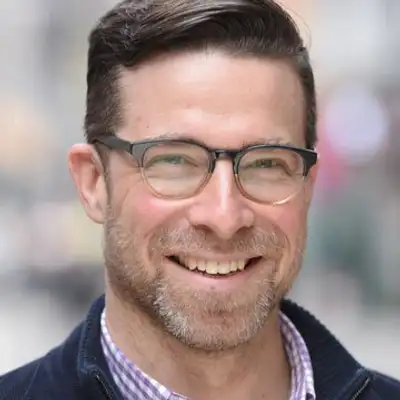
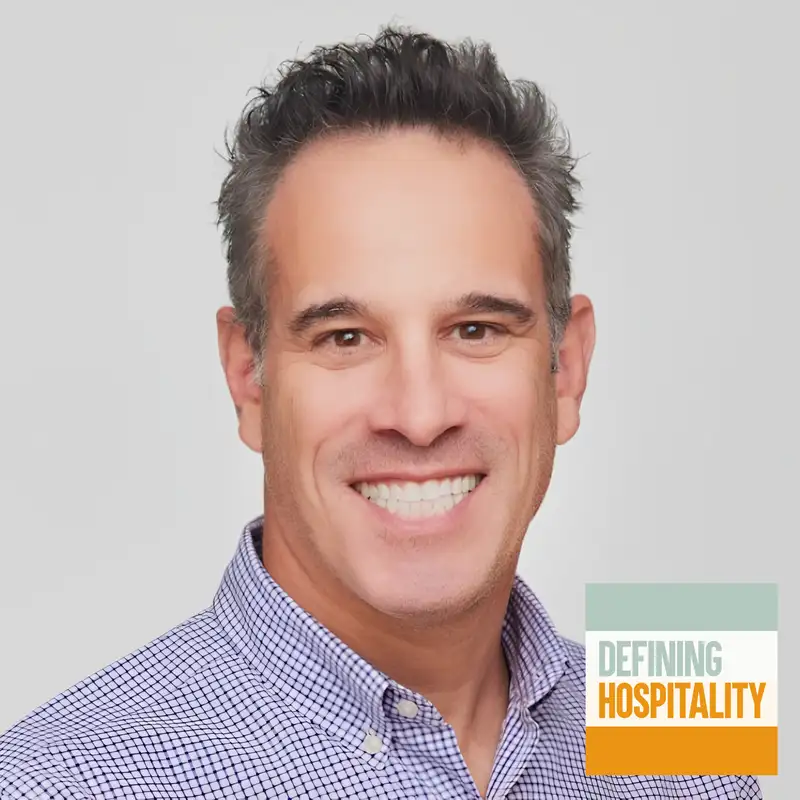
Dan Ryan: Today's guest is a community builder, conversation facilitator, and leadership experience curator. His work helps leaders navigate change, spark new ideas, and build stronger relationships through authentic dialogue and storytelling. He founded a platform that brings business leaders together through curated story-driven conversations.
He's the founder of Palabra. Ladies and gentlemen, welcome [00:01:00] David Rich. Welcome, David
David Rich: Great to be here, Dan. Thanks for having me
Dan Ryan: I'm happy to have you here. And w- uh, everyone, one part I left out of the intro is he's also a really dear friend of mine, and I would even say a mentor in many ways, and lives in the next town over from me, and has really been here for me to guide me through some really crazy, um, ups and downs in my own life and businesses.
And again, a shout-out to Entrepreneurs' Organization and kind of where we met there, and it's become so much more than that. And for that, I am eternally grateful for you and your family
David Rich: Right back at you, Dan
Dan Ryan: David, this platform you've created, um, I've participated in a handful of these dinners. You've done scores of these dinners over the past 10 years, and you've done them, I think, on every continent. I'll let you clarify that. [00:02:00] I think you've done it up near the jet stream. I think you've done it at sea level.
I think you've done them in jungles and deserts and everywhere in between. But these dinners are something incredibly powerful, and they've inspired me, um, to tweak the way I do dinners and I interact with people in this interpersonal, more analog way. And when I think of hospitality, yes, in the built environment, but also it's the oldest human interaction and how you make other feel, others feel and, and, and, and the warmth that you give someone in welcoming to your home.
But how do you define hospitality and what's taken you onto this path?
David Rich: Well, it's really simple. To me, hospitality is about creating a space where people feel comfortable enough to be themselves, okay? And also create a place where they can share that with other people
Dan Ryan: And [00:03:00] one of the things as a fanboy of the Palabra Dinner is in the onboarding process, you get everyone to tell their story. So without me telling from my, speaking from my experience about what you've created, why don't you walk us through what a Palabra Dinner is all about and how it, how it is impacting people all over the world?
David Rich: Sure. I mean, Palabra, it was really started many, many years ago when my family was actually moving back from Spain. We were there for a few years, just had an amazing, amazing, um, time. And, uh, kids were in school there. Ran my businesses from there. My wife worked from there. it was all around my concern of coming back to the USA. see, when we were in Spain, to my surprise, we had these amazing lunches and dinners. And I should say, when we moved there, I thought it was just gonna be a great family [00:04:00] adventure. The kids were gonna be in school. Maybe we'd meet a few people. But I had plenty of friends back in the States, particularly in New York City. But the two years there, I ended up making friends there in two years than perhaps I had for two decades in New York City. So I was like, "How can I bring a little bit back Barcelona to New York?" And I really stumbled upon, uh, originally, essentially it was like a Jeffersonian dinner for those that are familiar with it.
And I started that concept. Because in the US it just, things were not as natural as they are in Spain. Part of it is just because the time allotted for a meal, and also just what people bring to an event. I- in Spain, and in many parts of southern Europe, if you ask people what they did for a living, they'd look at you like you were you had three heads.
Like, you could go a whole evening without anyone ever asking what you do. And of course, in the United States, it's the first thing people ask.
Dan Ryan: I [00:05:00] have to say I appreciate that so much because I try my hard... I feel like if I'm meeting someone for the first time and then I'm like, "What do you do?" I've failed. And I t- I try and talk around that so much to really get to know the essence of the person. Uh, sometimes in making the small talk and you're at a mixer or whatever for a school or for anything, I- maybe it comes up a bit quicker, but it's something I really struggle with
David Rich: It's a great challenge, and I would put that, uh, you're on it already, Dan, but I put, put it out to all the listeners, uh, there is, like, try it. Because people are expecting the question, and then when you don't, um, not only are they sometimes very much relieved, um, but also you might find out that you learn something new about the person
Dan Ryan: what do you-- Okay, so I heard you say when you were out in Barcelona, you made some of the, your closest friendships from your entire life, right? And [00:06:00] I think a lot of that has to do with the excitement of Barcelona is like a hub of entrepreneurs, people from all over the world go there and run...
It's a great time zone to be in to run a business or businesses. Um, but you're also on this journey with all these other kind of like-minded people outside of your comfort zone in a new area. But having experienced many Palabra dinners, I would also say that there's something about that excitement that you bring to these dinners, right?
Because, okay, yeah, we all know each other. If, if we do these, maybe we all know each other, maybe we're all from the, a same company, a s- similar industry. We're a think tank. Um, but somehow the format that you've created from my experience, it, it, it opens up that hearth and creates a level of excitement because people are sharing their ideas and stories and not necessarily [00:07:00] talking about what they do or what politics or religion they have.
Um, it goes much deeper and how, how did you figure this out?
David Rich: Well, it did, at first I, I didn't have the formula for it. It just, like a lot of things in life, it just sort of A- and I will say, although there were many different, uh, expats in Spain, I ha- have to remind you that they weren't, weren't all from the US, right? So you had people from all over the world, and you know this, I mean, it's different when you're with a German versus someone from the Netherlands versus an Australian. So it was really a unique um, to be having these kinds of deep conversations. And I think, and I'm gonna talk about it in a moment, but I think that's what's so beautiful about Palabraa and a similar concept. It's really about creating the container to allow these conversations to happen. In Spain, the container just happens to be there already, and it's embedded in their culture. [00:08:00] In the United States, not so much, so it needs to be designed, but of course, designed in a way that doesn't feel
Dan Ryan: W- what is it, when you're saying it exists in the Spanish culture, is it that tapas, like you're just out and, and having a conversation and wine over some tortilla? Or what, what is it about Spain in particular, and what was your biggest challenge as you were trying to figure out this format about having it work in the United States?
David Rich: Well, with Spain, service, food, there are just a lot of things that go, go into that. And not that you don't have service or food in, in other places, but, uh, first of all, I mean, lunch is there minimum two hours, and everyone takes lunch, and most people have it together. this in the United States, like is just another 30-minute appointment that we have, and you get bonus points if you can eat it at your desk.
So there was this forcing function in a way that you were [00:09:00] always having lunch with a group of people. Okay? The other thing is just around when it comes to service, and this is, uh, with all due respect to my, my Spanish friends, but having quick service, that is something that we pride ourselves on a lot of times in the United States. Like, there, the food gets there when the food gets there, and part of that is in the preparation. But also what that allows is for people to not be obsessed with getting out within a half hour or an hour and be more focused actual conversations. And this is what I say all the time about a Palabra event or anything like a Palabra is it's not the food, and it's not about the wine.
And that's even to me, because I love good food and good wine. It's all about the conversation. But all too often, when we think about going out to dinner with a group of people, what are we talking about? We're talking about, [00:10:00] "I made a reservation at this restaurant. Oh, and we're gonna have this, this wine from
At this
or this flight." And it's the... Not that I don't want to have good food and wine, again for myself or even at a Palabra event, but we put the conversation first, and the food comes last
Dan Ryan: And that to me is really interesting, and I can also speak to it from my experience, pardon me, with you. The first Palavra dinner we did, it was COVID, it was early COVID And, uh, we were all remote, right? And so you had already worked out your f- the way to do it, and then you're like, "Okay, how do we do this?"
And everyone brought their own meal to the, to the Zoom meeting or whatever it was, and you expertly facilitated a conversation about the first theme, I remember it was navigating change. And all of us sh- and then you coached us on how to tell a story about an event in our life that [00:11:00] we had to navigate change or something didn't turn out the way that we wanted it to be.
And I got to... I've known all these people that were at this dinner for years, and I heard stories that just surprised me, that I got to know them at a deeper, more meaningful level. And, and then fast-forward to more recent ones that we've done together I love how you, you, and I also believe everyone is a storyteller.
Everyone has a story that they can tell. Sometimes they just don't know how to say the story or they can meander. But the way that the pre-coaching and the, the pre-dinner work that you do is just nothing short of magnificent. And I know that I prepped a five-minute story in a dinner we did, and based on what was happening amongst the crowd there, the crowd of, you know, 12 people, um, I changed my story because I was so moved and impacted by these people [00:12:00] who just opened up and told a, a...
And many of these I actually didn't even know. So it was just such an incredible way to, like, slice that cebolla or onion. Uh, I just wanted to throw some Spanish in there. But it, it's really just something... It's a format that is unlike any other dinner I've ever had. Um, as you present, as you kind of present these dinner or this idea of a Palabra dinner to people or groups, what is some of the, the pushback you might get at the beginning?
Again, I'm a fanboy, so I'm probably the wrong person to start teeing you up here. But then at the end of it, what are some of the testimonials like, "Oh my God, I wish I did that 10 years ago"?
David Rich: I mean, there are a few things. First of all, particularly when it comes to, to corporations, is just vulnerability. Like, what do you mean? Is it, is this event gonna be too soft for a corporate event? Um, another thing that people think about [00:13:00] related is, "Hey, I have a great team of people, but some of them are and some of them are extroverts, and that might not be a really good mix for dinner," or at any, you know, meal for that point. Um, and Dan, you mentioned about stories. I mean, there's certain things about a Palabraa event. I have tinkered with this formula. I mean, ev- I, I still tinker with it. Um, part of it is I just feel it can just get better and better and better, and to some degree it just needs to change a bit with the times.
But there's certain things that have never changed, and I've been doing this for well over a decade. Uh, one of those things is they're always story-based. Okay? There's always a prompt that goes out ahead of time, generally a question. Um, and when one person's talking, is listening. Um, and there's a lot to that and, and to go back, um, to your question, the stories, people surprised not just to hear other people's [00:14:00] stories, but Dan, you mentioned at the beginning of, of a, before the event happens, you know, people have to put together a five-minute story.
I can't tell you how much benefit comes from these events before they even start. Because we put a question out there, and this is not therapy to be clear, but we put a question out there, and a lot of times people never thought about the response to a question or a prompt like that. Further, even if they did, um, they never put it in a story. It might've been an anecdote, something happened. Um, and a story, as we know, there's a beginning, there's a middle, and an end. And when they look at that question and then they put their s- their answer out there, but then formulate it in a story, before they even get there, they're blown away. And there's so much benefit that has come out of it.
Then, God, the greatest gift we can give one another is our story. So to be able to share our story with a group of people, it's a beautiful [00:15:00] thing. And then to see other people the similarities and to some degree the differences, that's where a real connection happens. And one thing I want to say is this is not, I love a good TED Talk, and I know you do too. I love a great speaker, but this is not about a performance in any way. We want people to bring themselves fully to the event. And Dan, you mentioned you changed your story. This happens probably 30% of the time. People come prepared with a story before the event, but because they were listening, um, not just with their head, but with their heart, they change their
Dan Ryan: I think that, and I don't know how you manage and tinker to that, but that is the thing actually that I think I experience the most, is you get people to listen with their heart. Because when you're fully listening and everyone is engaged at the person telling that story, and you're really [00:16:00] trying to have the story you're hearing affect you in some way, and f- you're really trying to feel it, that to me, that's why I love doing these podcasts so much as well, because then I get...
I'm, like, attuned to the feeling, and then I can ask a question or come back to something where I was intrigued, or I see you light up, or I know our listeners will light up. I'm listening for others. But to me, that is something that is, like, a re- a real gift. And I think coming out of so many of these dinners with you When everyone is listening with their heart, they're also able to learn.
And there's like this unusual collective learning that happens where that group that's there from, I don't know, the three to five that I've done with you, um, they all walk out impacted in a m- in a positive way. It's almost like they're levitating walking out of the room
How did you learn how to crack that code?
David Rich: well, I think a lot of it is like, yes, these are storytelling events [00:17:00] and storytelling is a big part of the event, but perhaps even more so, they're listening events. we're all terrible listeners, myself included. I needed the format, in this case Palabra, to help me become a better listener.
So we can listen better. Well, like I said, there's a format, so when one person's talking, everyone's listening. But stories w- stories have been around since the beginning of time. And why? Because they get people's attention. People remember them, right? stories are a really effective way to get people to learn and understand
Dan Ryan: I've always found you to be an incredible listener, and somehow I feel like you just came out of the box that way. But I don't know if I shared this with you, but I know I noticed on your computer or your iPad or something, you have a little, almost like a fortune cookie that you printed, [00:18:00] like a, that size strip of paper, and you said, "Slow down."
What prompted you to put that at what you look at all day every day, that those two words slow down or go slow, um, there, and how did it wind up there, and h- how did that help you become a better listener?
David Rich: Well, it just has, happens to be that when I'm on my laptop or my... I, I'm not in a Palabraa space, you know? And again, Palabraa sort of is a designed experience that just allows all these things to happen. So when I am sort of outside of the, the dojo, so to speak, um, I, I need a reminder. I need a reminder. And the big thing about is that we'll ourselves because so often we're, we're just programmed this way, which is to listen to respond. So you're talking and already in my head I'm thinking, "Oh, how am I gonna respond to that?" And when we go into that, we don't [00:19:00] fully listen.
Dan Ryan: Earlier in the conversation, I don't remember if you said the dinner is a container. How did you use the word container in what we were talking about?
David Rich: Well, Palavra is essentially, we could call it a platform, but it's essentially a container to
Okay
these kinds of conversations to happen
Dan Ryan: Because what I found in that container i-- and I love this saying. I've used-- I haven't used this in a long time, but, um, I feel like, and I've heard-- I didn't coin this, but we're all in our own containers, right? And in, in the container that we live in, this big squishy meat filter of a container that we're in, we can't necessarily read the label that's on the container, right?
Or the jar. But other people can. And I think what was... When you, when you called the dinner b- a container, what, what it made me feel was I walked into those dinners knowing that I'm sitting in there in a jar in this larger container, but I learned how to read my label a little bit better after hearing [00:20:00] everyone else in that room speak and tell their story, and then when we all talk about how it impacted us.
And somehow I think that is all because the slower that we go and the more that we listen with feeling, it's, it's a really a transformative experience
David Rich: Wow, tha- thanks for sharing that, Dana. I really, I like that, and there's a l- there's a lot to it. There's really a lot to that. Um, yeah, I agree. And as I said, this has been Palabra, it has been this ongoing experiment of always trying to make things better and better and better. So I'm always Um, and the way that sort of this container sort of, uh, is set, it's, it started one way and just like I said, there's still certain things that are always happening.
It's always gonna be storytelling, right? It's always gonna be when one person's talking, everyone's listening. Um, something that, that you touched on a little earlier as well, um, is [00:21:00] that there's theme drift. So every event there is a theme that we bring in to the event, and I think that also allows the events in that container, so to speak, just to be that much better.
Because otherwise we're sort of just, uh, talking into the wind. I mean, think about a, a typical that we might have, whether that's a family dinner, certainly whether that's a corporate dinner. I mean, how many different subjects up, right? So at these events, there's a, the topic, it could be resilience, it could be courage, it could be legacy, but people are very focused around
Dan Ryan: You know what's, what's so funny, and I'm smiling as you're saying this, is last week I was in Atlanta, um, staying at my friend Jeff and Casey's, and their daughter Sienna, they have one, one daughter who's awesome. We were sitting at their kitchen table and we were just talking. And then in the middle of dinner, I think Sienna might have been talking, and I was like, "This is so amazing to [00:22:00] be at a family dinner where there's one conversation going."
Whereas in my house with everyone with ADD, and three kids, and Alexa and I just... It's like you have to fight to get a word in edgewise. I just felt so calm being... It was actually was reminiscent of a Palabar dinner. It was nothing, we were just having dinner, but it was just so peaceful to have one conversation and listen to that person finish their thought each time
David Rich: Well, it, it seemed like it, it, it worked naturally in their household. Maybe it's not as natural in yours, but the intentionality is what it's all about. So another challenge, um, to sort of put out there, you know, Dan, you mentioned about not asking people what they do, you know, in a conversation, but is to be able to create a space.
It doesn't have to be a Palabraa event per se, but where everyone can be present. And a big part of Palabraa is sort of designing presence so these kinds of [00:23:00] conversations can happen. And again, I just want to go back. Sometimes they just happen naturally, but in many, many companies, families, organizations, they don't.
So you need to design for
Dan Ryan: With intention. What's really interesting too, in this time of division and just opinion and, you know, you don't talk about politics or religion at a family event or a business meeting, right? Those... That's like the, the go-to. But what I found is, and fr- also from talking to you, in a family or in a business or anything, people have these opinions and stories.
Not so much the stories, they have their opinions. But has that ever come up in a Palabraa dinner? Or because they're telling a story, you, you, you skirt all of that and it doesn't, it doesn't happen. So people are really just focused on them and you don't... It doesn't get tribal, in my limited [00:24:00] experience
David Rich: In my experience, and I've done hundreds and hundreds of these all over the world. I have not, Dan, by the way, I should have mentioned, I've not done them in Antarctica yet,
Dan Ryan: Okay
David Rich: everywhere else and, uh I've never, I've never had a problem. And a part of that is that these events are moderated, if something starts going that direction, um, they can be sort of pulled back.
Mm-hmm.
But stories don't divide us, um, opinions do. all Palabra events are opinion-free events, which is so Um, and that safe space that is created makes all the difference in the world to have a, an amazing conversation. And I've done this format companies for sure, organizations, absolutely. I've even done these in my family, and it's amazing. Now, every dinner is not a Palabra event, [00:25:00] but it's amazing to do these. I've done this in my family. I have a very close family, and some of the things that I heard after the event were just, "I never knew that about you." And that's my mom turning to my dad, and they've been married for over 60 years, right?
Wow
my niece, you know, saying that to my sister and she's been alive for 27 years. Um, it's so beautiful to see these unfold, even within families. Um, because a good prompt and a good story in a safe space, it's just beautiful to see what out of that. Now, Dan, I do wanna mention something. You, you used the word religion.
Um, I've actually have done an event years ago, and it was one of my favorite. I've done a few of them. and this is gonna sound like a joke, but it's not. Um, the theme, um, was on spirituality, and the big question was, uh, what is the difference between spir- [00:26:00] spirituality and religion? this is the, the sounds like a joke part, which is, I'm not exaggerating. I invited a rabbi, a priest, a monk, a yogi
Dan Ryan: Oh, wow
David Rich: and it was just s- it was such a fun Um, and it was just so beautiful to see much in common we all have together. And also, our differences can be respected. But because it's over story and it's not in a way of, "I'm right, you're wrong," or, "I'm the CEO and you're not." Um, all those hierarchies, all those opinions sort of go away and we can really get to know one another. We talked about sort of listening from the heart, but also I think it's really important, um, just to humanize. And that's exactly what these events do. They humanize our experience. One other thing, Dan, you've generally, I think, have always been at a Palabra dinner, but Palabras don't have to necessarily be dinner.
They don't even necessarily have to be over a meal. Um, we certainly have done our [00:27:00] share of, uh- hours, but I even did an event a few weeks ago where I think we were across six different time zones, and the person who was hosting, sponsoring the event, they were based out of California. So they're like, "Hey, let's start this at 8:00, 8:00 AM." So she was there with her cup of coffee, and it was two hours. Most of our events are in person, but we can do Zoom events. Um, they're a little shorter. They're generally no more than two hours, and the crowd's a little bit smaller. But yeah, that event was 8:00 AM Pacific Time, and it worked beautifully
Dan Ryan: When you had the priest, the yogi, the rabbi, and whoever else at that one, did someone organize that or was that you saying, "Okay, I just wanna, I wanna test this out," and bringing all these people? Who organized that?
David Rich: That's a great question, Dan. In my early days of doing Palabra, I was just so curious. So I would-- There really wasn't a sort of business [00:28:00] associated with it. I was just so starved to have real conversation that, like I said, when I moved back from Spain, I would organize these events, and I just wanted to meet interesting people.
Not people necessarily that were gonna help my business. Maybe they did, maybe they didn't, but that was not the intent. I just wanted to have real, authentic conversation. Um, and it was a nice way to sort of, build my community, but it just was a lot more interesting than just watching the Knicks game on TV one night, is to be able to have these kinds
Dan Ryan: was 'cause the Knicks were terrible back then, right? It, it might not have been that the case la- this past year. Um, okay, so you've done hundreds of these. You speak with entrepreneurs, businesses, friends, family, you name, you name the, the crew. Um, you can tailor it. As you've gotten more sophisticated with it and [00:29:00] now people are calling you to have these be done, um, what is it like...
Who's like an ideal Palabracana? I know that you, you cast a very wide net, but for, in the business sense of like trying to build teams or, or tighten up relationships f- within a, a company, let's say, or entrepreneurs, what's an ideal group size? Um, how do you bring them together? If the leader is all for it and some people are, are maybe not on board 'cause they don't like doing what they think would be like a performative trust fall, how do you, A, who's, who's ideal?
How do you find them? B, how do you get the whole crew together and aligned? And then how does that ch- how does, how does that group or that flock change from the time it's pitched to them till w- everyone's wa- or wakes up the next morning [00:30:00] after the dinner?
David Rich: Yeah, there are a lot of use cases for Palabra. And, and the one that is probably the large percentage of what we do is usually it's either with teams, so it could be an organization and they might have 15 people. I'm gonna talk about the numbers in a moment, but might have 15 people on their team. They've done the, you know, corporate events before, and this is something that's a little bit more unique. Um, I mentioned themes before. We always like to work a theme off of what the organization, something that the, the team is going through or the company is going through. When we did, uh, the, uh, event during COVID many, many years ago, Dan, that was just all about, you know, change and transition, which was really appropriate back then 'cause we were all through it and weren't sure, you know, what was gonna come out the other end.
So I always like to work with a company to see like, you know, what's, what's happening, what's happening there. Um, so teams is an [00:31:00] easy one and it's a frequent Palabra, um, but also from a sales perspective, a lot of times people, it's a great give back to current customers and it's also really great for customers that you might have in your pipeline. 'Cause ultimately, like, what, what is sales? Sales is a transfer of trust,
Hmm.
And an event like this where you're breaking bread and you're really getting to know someone better, there's nothing that will catalyze a relationship So a lot of times, um, companies, um, entrepreneurs will put together these events, um, and they'll bring maybe six of their current customers and, and six potentials and put together an event like this.
And they're always really, um, beautiful, beautiful events. And I should say that every event is different, and it's different based off of who is in the room. I could do the same theme every single night, [00:32:00] it would be completely different because everyone brings different stories. And I'll go as far as to say, Dan, you mentioned about people changing their stories. All it takes is people or two less people, and that changes the dynamic, which could mean that there could be completely different stories
Dan Ryan: One of the things I appreciate so much about having been in the entrepreneurs organization, and it's not just in that, it could be YPO, EO, um, you name the organization. Typically, there'll be subsets and a forum, right? Where you have six or eight people meet with regularity, and you're going into this deeper place and sharing business highs, business lows, personal highs, personal lows, family highs, family lows in a confidential, safe space.
And what I love about it is it's helped me transform, become a better listener, and do this great podcast, and just, like, communicate with people differently. But I also [00:33:00] think that it's never about, "Oh, you need to do..." It's not advice giving, right? And I think one of the things that I appreciate so much about those forum type groups and this Palabra type group or Palabra dinner is, um There's no advice.
It's, it's somehow, and I feel like this is missing so much in everything we do, it's the learning through storytelling is just a missing thing, right? We're all trying to take these master classes or whatever, and it's, it's, "Okay, do this, do this, do this." I'm sure there's stories interwoven in there, but this is just a dinner that's all stories, and everyone walks away impacted positively.
Am I s- hearing, uh, am I seeing that or feeling that correctly?
David Rich: Oh, absolutely. Absolutely. Um, and the one thing which I wanna mention to that, Dan, is like, listen, in society, I don't know exactly what the numbers are, sometimes I've heard it's a [00:34:00] 50/50 split, but 50% of us are introverts, 50% of us are extroverts. So imagine telling your team, "Oh, we're gonna have an event three weeks from now.
This is the theme, this is the prompt. Everyone's gonna bring a story." Well, 50% are just like, "Oh my gosh, I don't wanna go this, to this at all." Um, but what they're sort of surprised the moment they get there is just how natural things flow, because it is not a performance, it's just your story. No one knows what you're gonna say. As we know by now, sometimes people change what they're gonna say. Uh, so it's not as formal. And what I find is that introverts tell me afterwards they love this event more than anything that they've ever done because, one, they don't have to compete with the extroverts at the table. And quite frankly, to us extroverted people out there, um, we enjoy it as well, because who doesn't like a little bit of [00:35:00] structure?
And to what we were talking about, about listening, is some of us, maybe we listen, but to be able to dial that up and to listen a little bit more than we normally are, it's true gift. It really is a true gr- gift. And the feedback that I get after the dinner from everyone, sometimes I get it immediate. I may always get im- immediate feedback, but my favorite feedback is sometimes I get emails years after the event and they'll say, "Hey, David, that event that happened two years ago, three years ago, four years ago, got the divorce. started the business." "I got a promotion. Um, thank you." And that came... That wasn't from me. Um, that just came from what happened that evening in the room
Dan Ryan: Wow. I love that. And I think, actually Vivienne, my daughter, was just, she, you know, she just started at college, and she was l- taking a history, or she was at a history class, [00:36:00] and she said, "Oh, I just, I wanted to write my high school history teacher from a year or two ago a letter because we were covering something."
And, and I was, and she's... And I was like, "You have to do that." Because to me, as a, for a teacher, to get a letter years later from someone you impacted, that must be why they get up every morning, right? And so often they don't hear that, you know? And I think that that's just such a, a, an important affirmation.
So for all the listeners, I'm gonna just say I've done this Think of someone that impacted you over the past 10 years and just take a second and write them a thank you. I'm gonna do it after I hang up here. And, um, it just, for expecting nothing in return, it just is a great way to pay it forward or fill up the karma pool.
It's amazing. And to- the fact that you hear from so many people that way is just a [00:37:00] testament to what you're doing. You've been doing this for t- over 10 years now, starting just doing it as your own, if you make this arc, um, just for your own, then involving other people, and now y- you continue to evolve and tinker with it, and you're doing it for companies and teams and you name it, families.
As you look to the forward... Uh, as you look to the future, what is, uh... Like, where do you see it going? What's exciting you about the platform you've created?
David Rich: Well, Dan, we mentioned about, uh, numbers a bit, and I wanna dive a little deeper in that. Um, and I think that's gonna answer this question as well, is that when I first started doing these events years ago, it was pretty much all right, 10 to 15 people was, like, the number for a Palabra event. And I experimented. I did an event with 16. I did an event with 17. It didn't work. It didn't work. It really... There was something, and for those that are familiar with Dunbar's law, this idea there's [00:38:00] just sort of certain numbers. It's, you know, 5, 15, 50, 150, like, and after 150, it sort of maxes out when it comes to community. Um, it just doesn't work.
There's just, there's too much complexity involved, and that is what I initially found with Palabra. 15 was sort of the number. But as I sort of tinkered around with a little bit, it was, it was in some ways a gift from COVID, but I never thought that this was something that could translate into Zoom, you know, or doing online, but actually works really well. The thing with that, though, is no more than 10 people, no more than two hours. That's something that I've learned. So Palabra, do online events. It's a smaller, smaller group. Our sort of signature event is mostly what you experience, Dan, and that is usually 10 to 15 people max. But the two other formats that have been working really well and have me very excited about the future, um, [00:39:00] are o- one product which we're calling Palabra, uh, Circle.
And with that, we actually have, um, upwards to 50 people.
Dan Ryan: Oh, wow
David Rich: w- and this was something, um, I played with, and this is not, like, every day of my life. But my son and I went to w- we wanted to do Everest Base Camp last year, and I had a few crazy friends who were climbing, so I was like, "This is a good reason to, to do the trip." And, you know, it's about a nine-day hike, um, to get to base camp. Lots of altitude, um, and difficult at times. Um, but what I found is I was listening to people's stories again and again, sort of the same story, whether they were sort of telling me that, you know, and it's the normal, "Where are you from?" "What do you, you know, what do you do?
Oh, what mountains have you climbed?" Et cetera, et cetera. And I went to the, um, person who was organizing, uh, the trip, and I said, "Hey, me crazy, and you can [00:40:00] say no, but when we get to base camp," 'cause we were at base camp for a couple nights, I was like, "Let's try doing a Palabra event." And we had over 30 people when it was
Well
who were climbing, the trekkers, um, and, uh, a few of the Sherpas.
So it was like, how, how can I do this? You know, I didn't wanna exclude people. So, you know, um- Necessity is the, uh, necessity is the mother of all invention. So I was like, "All right. Let me think about this." So what we did, one, the theme, no better theme for Everest than courage. That was the theme. The, the prompt for courage is, uh, tell us about an act of courage that changed your life, that could be something that either they did or, or someone else did, um, that helped them. But the thing was, going back to the numbers, 30 people, and by the way, almost 18,000 feet in the air. We've been
Yeah, it's hard to tell a story when you're,
when you're,
I
you can't breathe
you [00:41:00] can get pretty fantastic fare, uh, on Everest. I'm sure people have seen some sort of videos and whatnots of, uh, jamón and caviar and, and all those things.
But, you know, resources are sort of limited, and quite frankly, at that altitude, you're not even that hungry. But I w- was in- insisted on doing a Palavra event. So what we did, uh, was, with the 30 people is I asked people ahead of time, wants to tell a story? So 10 people, volunteered to tell a story, but then the other 20 people were flies on the wall, so to speak.
So they got to listen to the stories, and a big part of Palavra is after someone's done telling their story, we have time for comments and questions. So what was nice about that, although only 10 people told their story, the other 20 got to participate
Dan Ryan: Ah. and interact. And then at every Palavra event, the last question we ask, and s- I always joke, it's a little more like a half of a question, uh, which is essentially this, is like, "Based off of what you heard tonight, are you gonna do differently [00:42:00] tomorrow?"
David Rich: And in that like all 30 people got to go around and contribute. the numbers, uh, can work really well, and then one step above that is we've actually been doing events for over 100 people. And you're probably like, "Well, David, what is that? One, one long table?" Like no, but what we've, we've done, um, and we call this Palavra Room, but what we've done is the first couple hours are a keynote on presence. We talk about storytelling. Then people break up into groups to create their story. Um, and then over lunch or over dinner, we might have, depending how many people are, are in the group, like 10 tables of eight or 20 tables of eight, and there are these mini Palavra sessions that happen, uh, at the table. So even in larger organizations, people can
Dan Ryan: Oh, and that could be like a annual keynote or a conference. Oh, that's really cool.
David Rich: Yeah.
Dan Ryan: one other thing I've noticed, and I think we're all noticing, is in this rise of AI and [00:43:00] virtual meetings and distributed workforce, I just think people are starved for the analog, right? And these personal, memorable experiences.
And we all hear about this experiential tourism or ex- just the experience. How do you look at these events from an analog perspective contrasted to just the, I don't know, or swimming against the, the way that everything else is going these, these years or, I don't know, these past couple years? Like, what-- From that analog experiential perspective, what are some of the testimonials that you're hearing or getting or receiving back?
David Rich: well, full disclosure, let's just bring up AI, elephant in the room. I use AI every day. I love it. It's amazing. And put together events, you know, where humans are at, and they're [00:44:00] amazing as well. And that's what's so beautiful about Blooom, even though I did it, m- started it many, many years ago, sort of how it has adapt evolved and it's, it's having It's having an interesting effect these days.
And I think what people are realizing is this. First of all, AI's great, as I said, but let the machines do what the machines do. Um, but let the humans do what the humans do. And I think there's a lot of confusion, confusion, 'cause there are some people out there that think that AI can do you know?
And then I love analog as well, but then there are some people who are just like, you know, nothing. Nothing at all. Like, I'm not gonna, you know, take advantage of, uh, all of humanity's, uh, brain. And to some degree I could argue that they might be missing out on something as well. But palabra is a uniquely human, um, experience, and are starved for it.
I, I see that time and time again. But a lot of people don't wake up in the morning and be like, "You know what? want to go to a [00:45:00] storytelling dinner with my coworkers," or, "I want to have an event, um, in my community where I can get to know people, you know, better through story." It, it's not necessarily on the top of people's minds, but it is one of those things that like when people experience it, they get it and they realize like, "Wow, I've been missing this."
And it's so beautiful to see even outside of the palabra container that we spoke about, is how people are using a lot of the fundamentals that came out of their experience with palabra in their everyday lives. And whether that's at the next board meeting, whether that is with their family, all going back to some of these principles, and these principles that make us uniquely
Mm-hmm.
Listening, like storytelling.
Dan Ryan: Yeah, I also think like as, as AI gets better at simulating everything, I think that the, that idea of let AI do the AI stuff, let the human do the [00:46:00] human stuff, but being physically in a room with other humans is... I, I feel like it is trending back, but to me, I feel like this is like this sacred moment or these moments that just seem to be happening less and less as people are busier and more efficient and more dialed into their calendars.
So how have you found leaders use this Palabra dinner to help break that wall down and, and, and create that sacred moment again?
David Rich: And this is, uh, something that I've, I've seen time and time again, particularly in the last few years, is that we are getting together less than we ever have before. Not that people don't do happy hours, but I mean, companies used to have every Thursday there was a happy hour.
Every Friday there was a happy hour. People would, you know, go out for drinks after work, whether that was a formal or informal event. Most people [00:47:00] are not going to the office as much. They're still going, but not much. Um, so when we do get together, when we do get together, let's make it count. And all too often I'll be in a restaurant and I'll see a group of 10 people, whether they just came out of a Chamber of Commerce meeting or whether they just are a, a team, you know, going out to dinner and I can see, you know, four different conversations going on, people looking at their phone.
You know, people sort of rolling their eyes. You can tell when people aren't listening. And I say to myself, "I don't know exactly what's being said there, but gosh, they're leaving a lot on the table." And it's like sometimes I like to have one of these little like, like thought bubbles, like above the table, like 20%.
Like what percentage of impact are they really making on one another? to me, if we are getting together, make it count
Dan Ryan: [00:48:00] That was another thing that I loved is that there were no phones, but you also teed it up in a way that was, "Hey, we're not gonna have phones. There's gonna be one conversation. But also, I understand we're parents, we're this, we have these responsibilities. So if you do need your phone, just please deal with what you have to do, but just take it outside."
And I feel like you're very good, and it's probably just because you've done so many of these, that you are really good at giving permission to people to not be so adhered to a process. Where do you think... Ha- what, what are some other good examples about that, that you've, you find it like, in the same way that you said that, that the introverts might have apprehension about going, but then they actually love it.
What are some other, like, unlocks that people didn't realize that you helped them realize and read the, the label on their own jar in this dinner?
David Rich: Well, the, the phone, [00:49:00] um, I wasn't the first person to in- invent like, "Hey, let's not check our phone." But from a organizer, from a moderator point of view, I always liken it to being a benevolent despot. You know, you have to be understanding that people have a life besides, uh, this event. But at the same time, we do need some, some guardrails.
And a Palabra event, typically three hours. how often have we gone three hours not checking phone? doesn't count, by the way. people are used to being able to ch- look at their phone. I mean, even a quick glance at texts, and it's like no way, no how. Um, and what I find from people is that they appreciate it afterwards, the gift, because back to listening and being present, that allows people themselves to be more present, but also the interaction with other people.
If you're talking to someone, even you look at your phone briefly, [00:50:00] like you've just sort of destroyed the connection. So when those phones are away, it makes a huge, difference. So yes, there's some small things. Another big thing that, uh, that we do at the Palabra events is the person who tells their story, 'cause we go around in a somewhat random order, but everyone gets an opportunity to tell a story with about five minutes.
Um, I don't sit there with a, a clock or give them y- yellow cards or red cards if they go over. People generally honor it. But we always have, um, the person who's going next, um, tell them, um, a little bit about what they heard and what their takeaways were. And you think about that. Um, one, it's a nice way for the person who just told their story to know that someone was indeed listening to them.
But the other thing is, like if you're on deck, you're extrovert or introvert, whether you're a champion storyteller or not, all you're thinking about is you
[00:51:00] Yeah
So it's actually, it allows you to be a better listener as well, and to enjoy the full event
Dan Ryan: yeah, that was pretty awesome too. And I also think it's a, it... By assigning that person to listen to the next story, it really turns down the anxiety volume as well, right? Because it's like, okay, I know I'm gonna do this, but then everyone is-- It also makes everyone else kind of lean into it and listen a bit more and w- more with their heart.
Um, it's pretty awesome.
David Rich: Yeah. And Dan
yeah.
Leaned, literally leaned in. I,
Totally.
Know, I kinda ha- having, you know, heard thousands of conversations, I always love watching the body language o- of people. And it's so great when you do get that, that lean in, 'cause you can just tell that people want more, um, that they really like what they're So it makes a, it makes a big difference. And I wanna be clear, to go back to a word that we used before, it, it's intention. Okay? [00:52:00] Because you can put together 10 ru- you know, 10 rules for having a stimulating conversation, it's not gonna feel like a Palavra event will feel, because the intention isn't, isn't there.
Dan Ryan: yeah, I totally agree. I like, I'm just trying to go back to my dinners right now, like through my body and my body memory, and all these things that you're saying are, I don't know, what's that? Like a Prostian moment. Like I'm actually teleporting back to the, to them. And that I, I, as a raving fanboy, I just can't say enough good things about it, and I really want everyone else to try this out.
if,
it's not
yeah
again, is not a performance, and we're so used to everything being a performance. You know, even, you know, a quick little, you know, reel that we're putting out there is a performance. This is not. People, as we said, people change their story all the time. [00:53:00] People, sometimes people are crying.
I mean, anything can go. Um, and to be clear, it doesn't mean that every event, you know, people are in tears and we have to bring the Kleenex out. But sometimes people surprise themselves that this event attached a little more emotion than they thought. And to me, it's, a good event isn't, "Oh, someone cried, so it was a good event."
A good event to me, going back to sort of defining hospitality, is that people become a little bit more of themselves, so they're more So if you get a person that 5 is super and deep, and 1 is, you know, a closed book, if you can get the person who's normally a 1 to go to 1.5 or even 2, a victory.
It's a victory to that person, but also for that group because they know that person.
Totally
David Rich: person just open the kimono just a little bit, um, that's where, that's where all the beautiful things that happen at Palabraa [00:54:00] happen when you have that moment of vulnerability. But it's not about being champion storyteller,
Hmm.
The best story that night.
There's no such thing. I'm sorry. Anyone out there who wants to get a award at the end of the evening, they don't happen,
Yeah.
Palabraa.
Dan Ryan: you said it earlier is it's, it's not a TED Talk, but it's really just giving people the chops to kinda tell their story on whatever that theme is. And again, it's not-- You don't have to drive people to tears or laughter or magnificence. You just have to show up as yourself. Um, David, you've built and exited businesses.
You've raised three incredible kids who are now off... They're all at graduate school now, right? So you've done a good job. You have an amazing wife, family, everything. As you look back, if you were to, like, teleport in front of your earlier self, what advice do you have for [00:55:00] your younger self?
David Rich: Well, don't take things so seriously, number one. Um, and like many things, there is a, you know, like what, it's the fame- famous Marshall Goldsmith book, like, What Got You Here Won't Get You There. I mean, there are a lot of things that helped us, you know, get to where we needed to be, but think I over-indexed too much, and I think that cost, cost me and I think it cost, you know, other people who were either customers or employees or whatnot. Um, yeah, just don't take things so s- seriously. And you hear this word all the time, curiosity. I mean, to me, that's like such the essence of a Palabraa is curiosity. And I have to tell you, Dan, and I, for those out there, can't tell you how many, I don't wanna say days, it's weeks, it's months of my life that I sweated over a PowerPoint.
I can't even... If you, you know, I think all people out there right now are just sort of getting like the chills [00:56:00] 'cause we've all been there right before the presentation or the night before, or when your boss is changing all the slides at the last minute. If I had to go back, the only thing I would do, I would not have a PowerPoint presentation, or if I did, it might have three slides. Um, and it would just be telling a story. And the story would be like why, um, we could be a good fit your organization, and how been successful with other companies, and what we're looking forward to creating you
Dan Ryan: Yeah. I, uh, just taking this from, from you and your laptop, for me and just the, and the dinners, it's slow down,
Mm-hmm.
It's, uh... And I think a lot of that has to do with slowing down And figuring out the story that we all want to tell, and that we all can tell. There's no secret. Anyone can do it. Um, David, if people want to...
David Rich: I
Yeah?
I'm sorry to [00:57:00] interrupt, but I just love that. It's, that is really well, well said. Well said
Dan Ryan: Thank you. Um, well thank goodness it's recorded because now we can r- I don't even remember what I just said, so, uh, we're gonna have to look at the transcript and feel free to R and D that, rip off and duplicate. Um, it's, it's a good one. But if anyone is interested in connecting with you and learning more about Palabra, um, or doing a Palabra dinner, what's a good way for them to do this?
David Rich: you're curious, uh, go to our website, uh, palabra.co, um, or look me up on LinkedIn. Um, probably pretty easy to find me. Send me a note. Um, also if you, if you wanna email me, it's david.rich@palabra.co, but, uh, always would love to, uh, talk to you further. And whether that is about using Palabra or you just want to learn more about how to have better conversations, I'm happy to help
Dan Ryan: Awesome. And again, if you want a testimonial, you call me. I can [00:58:00] give you a list of people to talk to as well. Uh, they're, they're really awesome, and it's a gift that, um, I'm just so happy to have you on here so that we can share this and people can try a different way of communicating. I also say, like, doing these podcasts I love doing them.
People listen to them. They're impacted by them. But more than anything, I think what I like about them the most is it's just a different way of communicating. And thank you for letting me interview you here. I know it's been a, a long time coming, and I appreciate you. Thank you
David Rich: Thank you, Dan
Dan Ryan: And also thank you to all of our listeners and watchers and everyone who tunes in every week. I can't believe it's been five freaking years. It's crazy. Um, just so many great conversations. And again, without all of you listening and checking all of this out and, and being, allowing yourselves to be impacted, uh, I don't know if I'd keep doing this.
So it's great to get those affirmations. And then everyone, [00:59:00] forget the like and subscribe. Write that thank you note to someone that impacted you years ago. That's my gift to you. We'll catch you next time. Bye-bye.
Creators and Guests