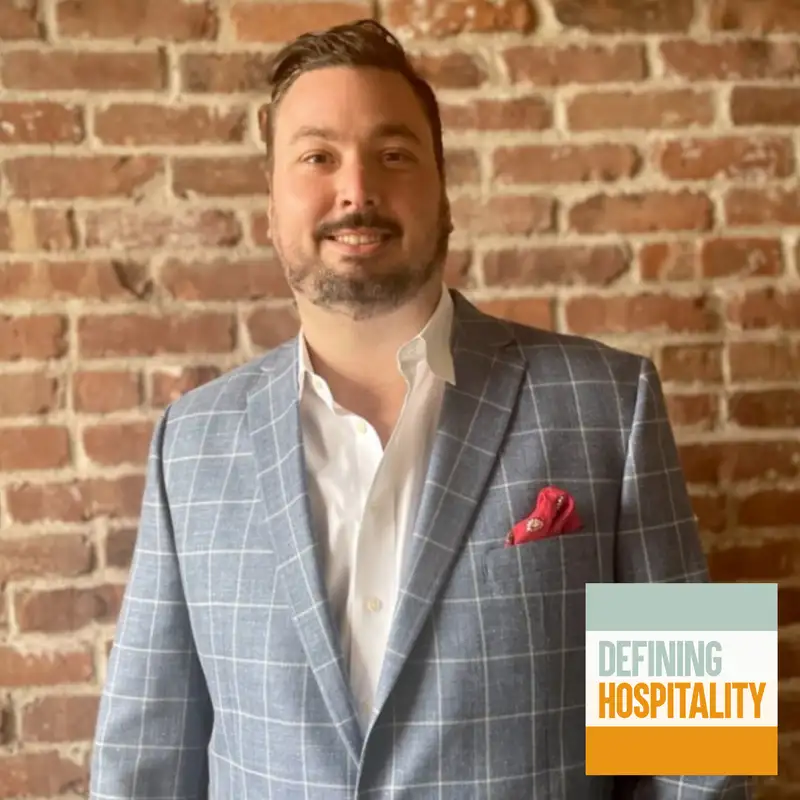
Transforming Hospitality for Millennials - Saxton Sharad - Hideaway Inns & Revival Hotels - Episode # 243
DH - Saxton Sharad
===
Saxton: [00:00:00] if you are an explorer, if you are an experience seeker, if you are an insider and you want to try, one of these markets and what we will do is we will give you access to it.
Intro: What I do is inconsequential. Why I do what I do is I get to shorten people's journeys every day. What I love about our hospitality industry is that it's our mission to make people feel cared for while on their journeys. Together we'll explore what hospitality means in the built environment, in business, and in our daily lives.
I'm Dan Ryan, and this is Defining Hospitality.
Sponsor: This podcast is sponsored by Berman Fall Hospitality Group, a design-driven furniture manufacturer who specializes in custom case goods and seating for hotel guest rooms.
Dan: Today's guest is a senior executive serial founder, hospitality expert, advisor and business leader.
He has over 20 years of experience within the hospitality industry specializing in asset and operational management. He's worked with leading companies, including [00:01:00] Hotel AVE, postscript hospitality and graduate hotels. He's the founder and CEO of Revival Hotels and Hideaway Inns. Ladies and gentlemen, Saxton Sharad.
Welcome, Saxton.
Saxton: Thank you, Dan. It's excited. Uh, it's excited to be here.
Dan: I'm excited to have you here and I'm really excited by the wallpaper you have behind you. For those of you who can't see, it's just these awesome, I guess they're banana leaves or fern
Saxton: Yeah.
Dan: ferns. I don't know what they're.
Saxton: life is too boring for beige. Um, I don't get to be in this office as much as I'd like, 'cause I'm generally at our hotels, but really wanted to make our space feel unique, to reflect our hotels. And similarly, You know, the banana leaf wallpaper. And then on top of it. A collection of different pieces of art or knickknacks or every, each one has a story, uh, and has some significance to either something in my life or something that's motivational for me to remember, uh, when I work.
So [00:02:00] we try to bring that level of intentionality to our hotels, and I like it in my workspace as well.
Dan: Well, and I also appreciate that as much as you love being in your office and you have that incredible background, you're there as probably, maybe more, less infrequently than I am in mine, because we're just on the road all the time. It's kind of the nature of our beast, right?
Saxton: is my fourth day in the office since the new year.
Dan: Oh boy.
Saxton: if that's not an indication, um, You know, some of my team is here more often, which is great for them. Um, and I do think it's important to have an office space having lived, through COVID world, uh, where you weren't able to interact in person with people. Um, I also was a. Work from Home Warrior long before it became popular during COVID, um, through some of the consulting firms that I had. Um, I do think it's important to have a space that I can collaborate with my team, have the water bottle, uh, water cooler conversation, um, and, You know, really get some of that one plus one equals three.
So [00:03:00] we are committed to an office space, but just rather be at a hotel.
Dan: Well, and that actually is the perfect segue to ask you, what does hospitality mean to you? What keeps you on the road? Where's, where's the passion coming from? How do you define hospitality?
Saxton: Well there's a ton of passion here. Uh, I, I love this business. I could never do anything else. And it's funny when you ask me this question of what does hospitality mean? because the first time I answered this question was almost 20 years ago, uh, or maybe over 20 years ago. I'm getting old. Dan, was,
Dan: too.
Saxton: um, was when we were, when I was at Cornell, uh, we were doing HEC for those who aren't hotel, HEC is a. Weakened of the year when the students take over the hotel and run the operation of the hotel and you plan it all year. And in the year I did it, we had this video where everyone who was involved got asked the same question. Uh, what is hospitality or what does hospitality mean to you? So it's funny. Fast forward 20 years getting asked the same question.
Dan: Did it change?
Saxton: No, I was gonna tell you, I think it's actually what's more [00:04:00] ironic and what's better is I have the same answer. I guess I'll preface this by saying I don't care who you are, whether you are a billionaire or you are living paycheck to paycheck, is hard, right?
We all have problems. Nothing can solve that. We have health problems, we have family problems, we have work problems. I have three kids under seven. There's always kids issues, right? There's always something in life.
Dan: Mm-hmm.
Saxton: To me, the definition of hospitality, of true hospitality, it's giving people a break. From the stress of that daily life, giving them a place they can go to.
Whether it's an hour for drinks, two hours for dinner, one night getaway, a week getaway, stay at my hotel for a month. We have month long rates. Um, whatever length of time that is. When you come to our hotel, you walk through those doors, you should be able to leave all of those stresses behind you. Be who you want to be, live authentically for the [00:05:00] time that you're there and, and, and not have to worry about all the stuff that life brings that you don't want to deal with.
So to me, in short, the definition of hospitality is giving people a break from their daily lives, that is a direct quote from the HEC video made 20 years ago.
Dan: Oh, wow. We gotta try and get that clip.
Saxton: I am gonna get it. My friend Greg Meze has a copy. I've been, uh, he put it together 20 years ago. Uh, we're still friends to this day. Uh, I'm trying to get it from him.
So we're gonna get it. We're gonna pull it outta the archives at some point, and, uh, show that while 20 years happened and a lot of work has gone on, I just haven't changed. I'm still a child, so it's all good.
Dan: you came up with that definition 20 years ago. When in college did you think about it at that moment to have that tightened up for the video that you're gonna get us a clip of? Or was it re, was that feeling always residing in you as you went onto this journey into hospitality education at Cornell?
Saxton: Yeah, that feeling was always there to a [00:06:00] certain extent. Right. Um, You know, my father worked tremendously, tremendously hard to provide me, my sister, my mother, uh, a great lifestyle. And he was a chef and worked for those food and beverage folks on there. Uh, You know, it's, it's one of the most difficult professions I think there is.
And, You know, he worked a lot of seasonal jobs, uh, when I was a kid and we used to go away every year and I would watch my father work literally a hundred hours a week in the summer we would go to Florida, uh, 'cause he loved the summer and loved being in the beach. And we would go to Florida for, uh, a period of time in the winter and I would watch that in him, right?
I would watch this person who had to always be on this person who watched, worked a million hours, have a break. For a little bit of time and I was a kid at that point. I, You know, 20 years of work and [00:07:00] three kids later, I know what stress is now. I probably didn't know what stress was when I was in college, when I first came up with that definition.
But, You know, watching that happen for my father or watching other family, other friends, getting into the business, watching people able to relieve that weight that was sitting on their shoulders, that's just magical. And You know, I really believe what we do in the hotel space is the greatest thing we could do for mankind. Honestly. Like, I mean, I know we're not curing diseases, we're not putting men on the moon, but like, I really believe what we do for our fellow men and giving them that ability to themselves or be whoever they want to be and be authentic and not deal with it.
Dan: Hmm.
Saxton: the best gift we can give to somebody else.
Dan: So I'm looking at the, I'm looking at one of the pictures behind you, and I don't know who it is, but it's baseball, it's Sports Illustrated. But to me that's [00:08:00] something that I think is just so critical for everyone. It's stepping, I call it stepping outta the batter's box, right? You get down in the count, you just gotta kind of regroup.
And I feel like so many of us don't have that opportunity,
Saxton: Yep.
Dan: um, because we're always on, we're always going. I learned a long time ago, and I actually haven't done this since co, since COVID, where I would just take a week with my family and I wouldn't touch my phone or computer for an entire week. We would go,
Saxton: my wife, my wife is gonna want to get your number at end of this and figure out how to do it.
Dan: well, a fellow hotel guy said this to me and, um, a hotel designer outta Hawaii, John Staub, we were sitting under this mangrove tree in the Western Moana Surf Rider, and he said. Well, I, I, You know, I was kind of like early in my career as an entrepreneur and he is like, well, why don't you just unplug and just put your phone down?
And he's like, I, he's like, I do it twice a year for like three weeks and I almost had a panic attack. And, and then I said, You know what? I have a vacation coming up over July [00:09:00] 4th. July 4th is on a Wednesday. I'm just gonna take this week and I'm just gonna not touch my phone or computer. And I had real anxiety at first, but then I realized everything's gonna be okay.
We're not saving lives. But it really just brought me closer. I wouldn't even grab my phone to take a picture, but I think it's something that we all need to do. And as it relates to that, tell us about hideaway ins, because I feel like the model and the demographic and the psychographic that you're going after, I find very intriguing.
Much like your, like your career journey through graduate hotels. I think graduate hotels was one of the most. Interesting developments and super because it was so supremely focused, it chose a certain guest at the expense of leaving all these other guests out. So I guess like what did you learn from that experience and how is that playing into your hideaway ins?
Saxton: Yeah, I mean, hideaway Ends has been a dream of mine, whether I knew it or didn't know it, uh, my entire life. Uh, You know, to bringing up the [00:10:00] past, my fifth grade yearbook, when they said, what do you want to do when you grow up? Some people wanna be doctors, lawyers, professional athletes, firefighters, police.
Then there's Saxton. I want to own and operate my own hotels. Uh, right. So this has been a lifelong dream of mine and I've been blessed, first off, to have the opportunity to work at graduate and build that portfolio and, and see that firsthand. But I've been blessed also to really have been able to work on, develop, consult for pretty much every major brand, uh, in the hotel space today. And learned a lot of really good things from all of them. You also learn a lot of what people do wrong or you would do differently, uh, from that. And in a lot of ways, I say Hideaway is my of 20 years in this business of what I want to create and where I think the white space is. And for me, it ties to that giving a break bit and we, we can get into that, but know. [00:11:00] One of the stats that's amazing in the hotel space, and again, 25 numbers aren't in yet, so I don't know whether it came to fruition or not, but the projection was that 50%, 50, not five, not 15, not 25, 50% of domestic travel in the US was going to be millennial and Gen Z travelers. Right. You know, I'm a millennial and I think when most people hear the word millennial, they think about, know, the kid with a skateboard or playing video games or whatever.
And millennials are 46 years old. Right. We're here to stay, uh, on the
Dan: I am like right on the Be I'm, see, I'm feel like I'm right on the edge of that, but I technically am Gen X, but I don't feel like a Gen X or I guess sometimes I do. I feel like I'm all things,
Saxton: a millennial and I feel like a boomer, so we can feel like whatever, whatever. We can feel like whatever we want.
Dan: sometimes I feel like a boomer too, but I just wanna get that stat right. The, the stat or the, the forecast was that 50% of all
Saxton: Domestic
Dan: domestic travel would be millennial and Gen Z.
Saxton: correct.
Dan: That was the, that was the forecast [00:12:00] for 25.
Saxton: Yep. And it was supposed to grow from there,
Dan: Oh, wow.
Saxton: is, and, and it's, and it's fascinating. And to me, you read that stat and you say, millennial and Gen Z's lives are very different from that of past generations, right? When we want to call, when anybody today wants to order takeout, we're not calling, looking for the menu and calling the Chinese restaurant, right? Uh, when we want to, You know, we need a ride somewhere. We're not hailing a cab or calling for a car service, right? We're, we're using our phone. And to me, the hotel space, well, I love this business more than anything. Just has not evolved, right? I mean, I think, You know, we're a business of, it's amazing meritocracy, right?
Like where someone can be a housekeeper and work their way to a GM or a president of a company someday. But with that, there's a lot of things done in our business. 'cause that's the way they've always been done. I find there to be very little reinvention in the way org charts are run in the way tech tech stacks are built and the way the process is [00:13:00] driven. And the world today is very different than the world 20 years ago, very different than the world I came up in, even in hotels. So we said, okay, if there's this idea that millennials and Gen Zs make up such a large piece of the pie, first off, what's different about them? How do they travel? So the first thing we looked up is and Gen Zs. Value, experience, value, authenticity. And instead of taking that month long trip to Florida like I did with my father when I was little in, in that seasonal trips, we talked about millennials and Gen Zs to take micro locations, so trips that are generally within a four hour drive of their home that are generally within th three days or less.
And they take on average four to seven of these trips per year. They're taking regular breaks from their daily lives and they're doing it in regional drive to locations. So first off, how do we build [00:14:00] a brand that captures that? How do we build a brand where people have authenticity but also have a level of quality and a level of expectation unlike the short term rentals?
Dan: Mm.
Saxton: So that was, that was sort of the genesis of this. Then it was, when I've built brands for other companies, whether that be Hyatt or AJ Capital or Marriott or whoever I've worked with for seasons consulting on that brand. It's generally, and, and no disrespect to any of these companies, but know, you generally have a large room of senior executives, maybe a couple marketing people sitting around a table saying, I think our guests would like this, or The research shows that the guests would like this, or we think, to me, the only way to really give somebody what they want. Is to ask, right? Like it's, it's, it's not revolutionary. Like just ask the question. So we did about a thousand, either surveys or focus groups of millennial travelers asking them what did they want in a hotel experience, what was most important to them in a hotel [00:15:00] experience? just as important, what are the things that are in hotel experiences today that you find no value in? What are those things that hotels offer that like, I could care less if they come and turn down my room. I could care less. I hate the front desk check-in experience, You know, un unless there's a really good cookie at the end, I don't even want to go through that experience, right? Like, what are those things that like people don't want?
So then we could build a process and experience, not that of a typical hotel, but we could build a hotel, or we could build a travel, we could build a hospitality experience that really echoed what were the true needs, wants and desires of this group. So even in our team. Right. We don't have all hospitality veterans that work for my company, and that's intentional because I want to hire people who would come in question the experience and say, how can we make it better?
How can we be different? How can it, how, how can this be relatable to today's traveler? and [00:16:00] that was the real goal of Hideaway. Certainly there's a million different things that make that the case, that make our brand unique. Um, and there's pillars of the company and we can discuss all of that. But really at its core, was here's this group of people who travel differently. What is out there today doesn't match their needs? Let's build something that matches his needs of the individuals. Right? I have this partner, Joe Tante, amazing, one of the smartest people I know. So blessed that he's working with us, and he recently said, when we were talking about our, our company overall, he goes. We're really a company that disrupts, that is a hotel company,
Dan: Well,
Saxton: our core we're disrupting a space and we just happen to do it in the hotel
Dan: I, I wanted, I wanna ask you with respect to the millennial and Gen Z traveler, but really the millennial, when you say they travel differently,
Saxton: Yep.
Dan: and I, and I, I kind of want to tie this into a book I'm reading right [00:17:00] now. Um, how do they travel differently?
Saxton: So first off, the micro cation piece, right? Like that, that travel trend is different than the other generations before they're taking more trips right there. It's not like I'm not waiting and saving my bonus money all year and splurging on one big trip, right? I need this constant level of gratification
Dan: Mm-hmm.
Saxton: Another thing is they want authenticity, They don't want the, necessarily the Marble five fixture bathroom when they, You know, piece of art on the wall. That's a Renaissance artist that's in. A ski market that has nothing to do with Renaissance. They want to feel, they want to learn about the local market. We also find that millennials care about giving back and care about the cause. So when they're in these markets, they want to support restaurants, they wanna support local businesses, they want to have that experience and they want to give back. Every hotel stay. We give a portion of that back to a local charity.
So we are partnering with a local charity in each [00:18:00] market. So a mar, a charity that's specific to that market, and we're giving proceeds of each stay to that charity. That way we're making a difference in these towns. It's not like we're just dropping a, You know, big box flagged hotel and taking from the market we want to give to the market.
Right? We don't have food and beverage on site of all of our hotels. Why? Our insider guide recommends to you, where is the best hamburger?
Dan: Hmm.
Saxton: to this place and get the best eggnog or go to this place and get the best fish and chips I ever ate. to this place and work out and have the best workout. We want our guests to be the insiders to experience all these things, and that's that level of authenticity that a millennial is working.
We're not the restaurant, typical hotel restaurant, that's three meals a day that tries to be everything to everyone. We're trying to say, if you are an explorer, if you are an experience seeker, if you are an insider and you want to try, one of these markets and what we will [00:19:00] do is we will give you access to it.
We are not the destination.
Dan: Hmm.
Saxton: We are simply the place that gives you access to these amazing regional locations and while you're staying with us, most importantly, we're most fun than any place else. design is cool. We have nostalgic elements, and it's easy
Dan: Yeah,
Saxton: that, that it's, that's it. That's the solution.
Dan: so I, this book, I'm actually rereading it, it's called The Fourth Turning is Here, and it's kind of a bit of a downer, but it, it basically goes through, um, society and throughout history has been, um, split into these four 20 year, I think they call them succulents, but basically the eight, they're 80 year cycles.
And it go, in America in particular, it goes, um, where we are now, the Great Depression to World War ii, the Civil War, the Revolutionary War before that. And there's these 80 year cycles. Um. What's interesting, that's why I love these micro vacations because, and stepping out of the batter's box, because I [00:20:00] want the millennials to be rested and inspired because apparently in this book there, within these four generations, there's um, there's this hero archetype which basically rebuild society.
And those are the millennials, right? So the ar the, the, the Gen Z, the millennials are the artists. The Gen X are the nomads. The baby boomers are the prophets. And they have like these archetypes of each of them. But, and apparently we're in the, this fourth turning is coming, and I, and now the millennials are the ones who are gonna rescue us.
And I'm very intrigued by that. And I also know that millennials, having grown, been born when they were born and dealt with September 11th, the great financial crisis, COVID, it's like every time the millennials turn around, they can't catch a break. And I think it's really awesome what you're doing because we need all the millennials to be rested.
For what comes next.
Saxton: Yeah, I mean it's amazing when you talk about the resting piece and it's in also kind of tying in what you talked about with your phone, which I need [00:21:00] to really do that. have this amazing friend, Ryan Anson. Ryan is again a serial entrepreneur, incredibly smart guy, he is now working on a venture about how dads a more balanced lifestyle. How dads can rest and be there and be present for their children and not miss all of this. And, You know, we're working about how we tie that into what we're doing at Hideaway. 'cause so much of that is memory making. when you talk about this fourth churning and this hero archetype, hero needs to be able to do that.
That hero needs to be able to be there for their children, be there for their family, be able to turn it off, uh, every once in a while, which I will admittedly say I am not the best at. So, You know, this is Ryan's mission right now. And, uh, we're a hundred percent supportive and I hope he hits Home run. And he, I hope he's the hero in, in, in making it happen. But it, it, it really does tie into, uh, everything we're doing it Hideaway.
Dan: So, and I, I, I'm gonna, I just pulled this up 'cause I just want to be a bit accurate with the premise of [00:22:00] this book, but, and I'm wondering if what I'm about to say ties into your pillars,
Saxton: Yep.
Dan: because I'm also surprised to say this as a Gen Xer borderline millennial, they basically say the, the last hero generation was the GI generation or the greatest generation that fought in World War ii.
And to me to hear that about millennials is just surprising to me. But.
Saxton: d we're very different. I mean, that's the tough man generation and we're our millennials. We are the, we we're the weaklings. Right? Like
Dan: Well, okay, so here,
Saxton: the coddled children.
Dan: here's the different spin, the pillars of the hero. Generations going all the way back, like even into ancient history, there's a, they have a collective orientation, right? So they're more team oriented and community focused than the individual generations that proceed them. Like boomers and Gen Xers.
There's civic engagement. So I love what you said about, um, uh, the philanthropy aspect of what you're doing. They tend to trust in institutional solutions and are more likely to support robust government action [00:23:00] to solve large scale problems like climate change or economic inequality. There's a level of pragmatism.
So while the boomers or the, the prophets in these 80 year segments, um, they provide like a moral vision. And the, and the Gen X nomads provide a PRA pragmatic management. Millennials are expected to be the engine that executes the rebuilding of society. And I gotta say like things are just fucking weird right now.
So there is this huge shift going on. The other thing with millennials, and this is the interesting one, because I always thought millennials, that was like that first generation where everyone got a trophy, right? And this is putting a cool spin on it. And in this book, they're basically saying they have high expectations.
So they were raised with the sense of being special and protected, which the theory suggests, gives them the confidence needed to confront existential threats during a climax of the crisis.
Saxton: Well listen, I like that you put a positive spin on that. 'cause I'll tell you what, most days I'm saying that the, uh, participation trophy and the fact that everyone [00:24:00] feels special is sometimes a problem
Dan: That's why I'm rereading this book. 'cause I think it's very, I read it a while ago, but it's like, it's very salient right now. Um, and timely. So with respect to collective orientation, civic engagement, prag pragmatism, and high expectations. Do those intersect with the pillars of what Hideaway is all about?
Saxton: I mean, I think they tie together into part of what we talked about there, right? When I talk about our pillars, they're probably more about like our product pillars
Dan: Mm-hmm.
Saxton: the overarching theory pillars. But yeah, I mean, I think. All of this research we did, right? Like Owen Wexman, who's my head of marketing, and I have spent tons of hours looking at these target demographics and saying, what are the AVPs, what are those unique value propositions for that these guests that we can add into our space?
What are the things that we can do that matter to them, whether they be product, whether they be things like the donation and the philanthropy side, whether they be any of this. So I think we've [00:25:00] done that research, like deep down I'm a nerd and I love it. Um, and um, so I think we've done that and we've been able to kind of work on translating these theoretical pillars into actionable product
Dan: Hmm.
Saxton: uh, that hopefully they get resonates with, with our guests.
Dan: So one of the things that intrigued me for these, with the micro vacations, right, you're just, you're taking 'em whenever you can. You need, you wanna space them out. You've also developed this platform that's like a frictionless check-in, and I want you to tell us about that. But also at each property, one of the things I was really intrigued by was this idea of each property has an inkeeper.
So I would love for you to tell us, like, how did you come up with the, the frictionless platform, number one and number two, why is this role of the innkeeper, and you can describe the innkeeper so critical to what you're doing at Hideaway.
Saxton: Yeah, and [00:26:00] this is all tied to Invisible Hospitality. So Invisible Hospitality is our trademarked management platform through our company, revival Hotels, which is. Our management company and consulting firm, which is the exclusive management company for hideaway ins, but also we do third party management and can offer invisible hospitality to people or traditional management for, for other folks, because they're micro locations, they're shorter, and when time is shorter, every minute counts even more.
Dan: Mm-hmm.
Saxton: You don't wanna waste those minutes waiting behind a line at the front desk to your room. You don't, you don't wanna waste those minutes wondering, is my room ready? Let me go see if my room is ready. Let me go try to check in. You wanna maximize that? So a lot of this was how do we maximize the time for our guests?
So for us, our check-in process [00:27:00] is you'll receive a text message eight or 9:00 AM in the morning, or even sometimes the day before. Uh, on the date of, of the day of your arrival, you fill in the process, the check-in process. You put your name, make sure your credit card, confirm your details. Hit it sep As soon as your room is clean, as early as 10 in the morning, you get a code saying your room number is 1, 2, 3, 4.
And use code. Make sure you hit the door button on the bottom left, uh, and then hit these four digit code and you can go right to your room.
Dan: Hmm.
Saxton: That maximizes vacation for people. Right. Again, I've learned, and I could never have built Hideaway pre-children, right? My wife Karen, and our three kids have, humbled me in many ways when it comes to travel.
And, uh, I have learned that it's really not travel with kids. It's just parenting elsewhere sometimes. But even in our hotels. Even in hotels that I manage, that we manage traditionally, By the time I pack the car with all of the stuff the kid, the [00:28:00] kids need, and we get there and we've been in a road trip and the kids have been in the car for three hours. The last thing I wanna do is unpack the car, have them in the lobby with me, try to understand, is our room even ready? do I gotta put it back in the car or do what we gotta do to get our day started, right? That whole process is eliminated with invisible
Dan: Hmm.
Saxton: So if you want to go and you want to get to the hotel and check in early, and our room is that room is ready and you get that at 10:00 AM you go right to your room at 10:00 AM. Conversely, again, all of our markets have these exciting things to do. So if you want to go hit the slopes and you wanna make the entire day of hitting the slopes, and then you want to go for a little apre ski, and then you're having so much fun that you want to go out with your friends and keep going through the night, there's no sort of fear.
Are they gonna give my room away is someone gonna be at the hotel? When I try to check in at. One in the morning, two in the morning after I've been out all night, that you just use your, go to your room, use your room code. It's easy, it's frictionless.
Dan: Hmm.
Saxton: I mentioned earlier about trying to revolutionize the space. [00:29:00] Again, mentioned, to go food, car service, Amazon for ordering anything. Frictionless is what millennials and Gen Zs expect. Frictionless is what everybody expects today. Every other aspect of our life is frictionless. Hotels haven't been frictionless, right? This is that ability to create that frictionless stay for people, however.
Dan: a a actually, yeah, I, I want to touch on that because, You know, with the rise of technology, AI, and all this technology driven efficiency, like how do you balance that with the warmth that defines hospitality? And I have a feeling that Inkeeper might bridge the gap
in there. Right. Okay.
Saxton: I was going with it. We also had this line about invisible hospitality.
Sponsor: Hey, everybody. We've been doing this podcast for over three years now, and one of the themes that consistently comes up is sustainability, and I'm just really proud to announce that our sponsor, Berman Fall Hospitality Group is the first within our hospitality industry to switch to [00:30:00] sustainable and recyclable packaging, eliminating the use of styrofoam.
Please check out their impact page in the show notes for more info.
Saxton: We call it invisible hospitality because there is hospitality there. It just doesn't require hands. Like you can provide great service. I would actually say we provide better customized service and I can talk about the innkeeper and then other ways we do that not having the staff there. Right? Because we now have budget and we now have the ability and we now have the focus to be able to do that in other ways.
Dan: Hmm.
Saxton: first off, small hotels, and again, the typical Hideaway Inn is 25 to a hundred rooms. So they're smaller properties. small hotels don't have 24 hour coverage. They just don't.
Right. They can't afford the overnight, uh, the night auditor, which I don't know why anyone has a night out anymore 'cause you press a button in the system and it does it for you. Um, but we don't have, most small hotels don't have someone there 24 hours. We also wanted to make sure that someone owned this property, that it was more than [00:31:00] just someone who worked at the property.
It was more than just a general manager. It was someone who was an ambassador for the area. Was the true insider that could basically say, you gotta go get ice cream hair. 'cause the rum raisin is off the charts good. You'll never get anything like it. And I know because I go and get it three nights a week.
Right? Like we wanted that level of comfort and rapport with people. So the inkeeper allows us to have that person 24 hours a day if you want to talk to them and you want to have that conversation, be my guest, our innkeepers will talk to you all day. On the other side of things, if you just want to go to your room and you don't want to have to have talk to anybody, you can have the flexibility to do that as well.
It's, it's stay your way. The other thing about our innkeeper model is very different is tried to clean the capacity of the innkeeper. So they have a very different skillset from that of a typical general manager. If you look at a typical general manager, there's a huge level of of employee [00:32:00] management. There's revenue management, there's supply chain, there's marketing, there's finance and accounting. There's all of these business skill sets that I would argue really don't relate in any way to hospitality, but just are things that these people have to learn to do. Sadly, I can tell you the amount of times that we take over management of a hotel, I have to teach a general manager and an executive team how to read properly, read a p and l. It's mind blowing, right? Like these are people who run $20 million businesses who don't understand how a basic p and l works. They're just not business-minded people. And again, if you ask a goldfish to fly, they're never going to be able to do it, right? So we wanna focus on how do we hire people who are personable, who want this to be their home?
Wanna share that with people also. Our innkeepers clean the first five to seven rooms per day, so before we bring a housekeeper in, our innkeepers are cleaning some of those rooms and cleaning the public [00:33:00] spaces. What that allows us to do is, first off, our labor model at Hideaway ends, labor cost is around 15% of revenue compared to the industry, which is generally around 30 to 40% of revenue. We just run way better margins because of this model. The other piece is we are open all year long because our end keepers are live on site, are salaried employees, and they're cleaning the first couple rooms. This came from just personal experience for me, You know, when I was in high school. A lot of my friends had beach houses.
I did not have a beach house, but I got to benefit from friends', beach houses the best thing to do. Um, and there was nothing better than going to like the New Hampshire. I didn't grow up anywhere warm, but the New Hampshire beach house in the winter, having a bonfire on the beach when nobody else was in the town and you had the space to yourself, to me, being in some of these seasonal markets in the off season is literally the most special time to enjoy them. So by having this live-in Inkeeper and having this labor model we talked [00:34:00] about, we can be open to these super seasonal markets all year long because we don't have to bring in any additional cost to, to essentially clean the room or clean the hotel during that case, that innkeeper is taking care of that. So You know, whether it's a property in on the Cape. going there in the wintertime and enjoying, You know, the, the beach and an indoor pool at that property, enjoying everything that market has to offer when it's not slammed full of tourists or a ski mountain and being able to hike and mountain bike and do those other things that you can do at mountains when the, You know, you're not five deep Presidents Day weekend, uh, at a bar trying to get a drink. Um, it allows us to give people access to these places the rest of the year.
so now the next question would be, well, if they're not doing those other things, the revenue management, the marketing, the accounting, how does that get done?
Dan: Hmm,
Saxton: the way we've set up is our company is set up in regional pods. So we essentially have a regional manager who oversees the larger property.
And this regional manager is someone who is well versed in business, who understands the [00:35:00] economies of scale benefits, who understands the proper use of the technology, who understands all of these things that a typical general manager may or may not understand.
Dan: Hmm.
Saxton: able to pull these levers at that level in a way that, again, the innkeeper doesn't have to worry about it, and now I have an expert managing our processes rather than an innkeeper at a small hotel or a manager at a small hotel who may or may not have that skillset.
Dan: So let's say I had a hotel. It was 75 rooms in a remote location near where one of your regional managers are, and, and it, it fit in that Venn diagram of your pod.
Saxton: yep,
Dan: and I'm like. This sounds really interesting. You're telling me I can have or more than have my labor costs. What does it take to sign up with Hideaway to do a, to enter a contract with you?
And as far as like the, the override on revenue, obviously if it was a truly independent hotel, now they're [00:36:00] paying, um, hideaway, but then they're also saving a lot of money on labor. So do you have any like, examples of doing a conversion like that or what can an owner expect by, by changing gears?
Saxton: absolutely. So first off, just in addition to Labor's just a piece
Dan: mm-hmm.
Saxton: I mean, know, our tech costs are purchasing costs. Just because I've been in this business forever and I've made a lot of really good friends who now I've built some karma up who take care of us on this side. You know, our hotel margins, we're running 40 to 50% GOP, right?
Uh, You know, we just finished our year in Woodstock, Vermont, running 45% profit, right? Most small ends running high teens, mid-teens, right? I mean, we're more than double the typical operating profits. So we do more, uh, than pay for our fees because of what this model brings.
Dan: And is, that's before debt service.
Saxton: That's before debt
Dan: Oh wow.
Saxton: GOP we, You know, we use, uh, [00:37:00] Ali 11 gap principles. GOP is before debt service, um, insurance and property tax.
Dan: Wow.
Saxton: That, that's the gross operating profit line. Um, so how you work with Hideaway Hideaway, You know, our model is three separate ways. We have three different ways to work with Hideaway. Um, the first of which is we buy our own properties.
So some of our properties we've acquired by, we've acquired ourselves, we own the property, and, uh, that's wonderful, right? We, that's, that's how we really started. The second way, uh, you work with Hideaway is we do have a typical brand management franchise model, right? So, um, hey, I want to bring you in. We want to pay the brand, the brand fee and the management fee.
We'll do that for you. Now, when we launched Hideaway, I thought it would take us several years for building enough of these things and scale and distribution and trust to actually have a, um. brand Place. We're opening our third property in Lennox, which is our third property in six months this week. Um, [00:38:00] and that is a franchise and that's representative of the press we've gotten. That's representative of the noise the brand has made that's representative of the results we've been able to execute at our hotels. And our owner in Lennox is a friend and they're two of the smartest guys I know in the business.
True. They had worked for Citi and Starwood Capital, like true institutional, smart guys who have a huge business. This isn't me saying, oh, mom and pop buy our franchise, right? And I had offered them our third model, which is the lease, and they said, no, no, no, we want the upside 'cause we know what you're doing is gonna make a lot of money.
So we want the franchise where we have the upside, the third model. Um, and on the franchise, while we charge a franchise fee, do help. With the conversion, uh, to hideaway. So we help with that cost, um, rather than, so if you're, You know, it's not like, oh, I want to convert to Hideaway. I now have this massive conversion fee. And we also don't have five-year pips. Uh, we're just constantly renovating. 'cause every single one of our rooms is one of one in design and bespoke in [00:39:00] nature. So, if you're saying to yourself, yeah, it'd be great to have a hideaway, but I can't afford the conversion to make it a hideaway, or, oh my God, I'm gonna get stuck with every five years the other shoe dropping and I have to put a pip and I gotta reserve all this money. doesn't happen with us either. Uh, we are owners first. We think of this as an owner through an owner's lens, and we've tried to reinvent the model so that, You know, the typical headaches with a franchise doesn't happen, uh, with us. And the last model, as I alluded to, is our lease model. So I am so confident our ability to perform that we will literally lease your hotel from you.
Dan: Really.
Saxton: your hotel from you, you give me your trailing 12 p and l. Whatever you did in gross operating profit in that year, you worked your tail off to get there. You sweat, you missed the family vacation, you couldn't not answer the phone call. I will give you that amount of money in a base lease free.
You don't have to work. You can go sit, you can not [00:40:00] calls anytime or you can go work on the next project or you can go work on something else. I will give that to you in a base lease.
Dan: Wow.
Saxton: to that, I will also help with the conversion fees, right? As I talked about, I'll pay for the, the renovation conversion I'll give you a percent share in my upside over the base Kings.
Dan: Wow. But wait, there's more. That sounds, that's,
Saxton: can you not win? You're guaranteed to make as much money as you did last year to not have to work.
Dan: that sounds too good to be true.
Saxton: It does, but the only reason it works is because I run such high margins compared to the historical.
Dan: Hmm.
Saxton: that spread, I can make my money.
Dan: Wow.
Saxton: I have multiple hideaways and You know, we're launching, as I said, our third and six months.
This week have two new deals. We purchased our pipeline. We should be at
Dan: I.
Saxton: by the end of the year. It's super hard to make money on one hotel, especially one small hotel. It's because we have the economies. We're not smarter than every other hotel owner. We've just been doing this longer. And we have the [00:41:00] network and we have economies of scale, and we have the tech solution.
We have invisible hospitality. That's what allows us to be profitable. So if you're running a hotel today and you're like, man, my insurance went up 50% last year. Uh, You know, it's harder and harder to find good staff. And the ones that I do have want more and more money, they're calling out. I'm finding myself in the morning cleaning toilets because that broke and I have no one else to call, or excuse me if you say, You know, we're overdue on a renovation, but I don't have the money to put back into this. can solve this problem for you and
Dan: Hmm.
Saxton: you higher, more money than ever by partnering with Hideaway. And that's really where, to me, the joy of this comes is in addition to taking a break, I find the beauty of hospitality to be in these small, independent properties. And you're hearing that from the guy who used to be the hotel manager at Caesar's Palace, where I had 3,100 rooms every day.
Right? 1700 in
Dan: Such a change.
Saxton: average day, right? These small properties, these unique properties, [00:42:00] me are the backbone of what is hospitality, what is inviting someone into your house? if not there to fix this problem in crisis, like they're gonna, a lot of 'em will go out of business and will be bought by developers and will be torn down for strip malls and cold storage
Dan: Yeah,
Saxton: wants that.
Right.
Dan: so one of the, one of the things particular, I'm very familiar with Lennox, 'cause my mom lives up near there and I spend a lot of time up there. Um, there's, okay, so you have like, there's the Mival, which is part of Hyatt up there. It wasn't always a mival and then you have like the Canyon Ranch. But other than that, it's like LA larger brands often overlook these drive to regional destinations, whether it's there or even like in that, like in the Mendocino area or I dunno, other areas of California, there's places all over the country that, that do this.
But. How do you select those regional destinations [00:43:00] that the larger brands often overlook? Like what are the big opportunities you see there?
Saxton: Yeah, it's funny you say that. So our first three Hideaways, Mount Sunapee. New Hampshire, which is right at the bottom of Ave owned mountain
Dan: Mm-hmm.
Saxton: Sope, right near the Lake Le Sope. So you, I mean, mentioned Mendocino. Tahoe is the only other place I know that has a beautiful lake in mountain that we're that close to both steps away from both of them. Mount Snow, which is, You know, one of the southern most Vermont mountains, great, uh, amazing history for snowboard, for ETS games, for
Dan: Hmm.
Saxton: Great mountain, uh, in Vermont and Lennox. If you ask yourself what brand is in those three markets, it's not Hilton, it's not Hyatt, it's not Marriott, it's not Wyndham, it's Hideaway ends.
Dan: Yeah.
Saxton: choosing these markets that are places that people want to go.
Dan: Hmm.
Saxton: we are not the destination. We give you access to the destination. So whether they be ski markets, whether they be lakes, whether they be beaches, college towns, whether they be small gateway, this non [00:44:00] gateway, small like, uh, city capitals that have amazing. Universities and museums and access in concert venues. We want to be in these places now. Most big brands skip these places A, because there isn't a tremendous amount of business travel in these locations. It's very transient. It's usually hard to find labor in these locations. There's usually a very high level of seasonality, which we address that we can handle because of our labor model that a traditional hotel can't. So we know why they're not choosing to be in them or haven't historically chosen. It's just more work,
Dan: The in
Saxton: of the day,
Dan: the innkeeper seems like the greatest unlock because you're giving someone probably from around the area. A real, a career with salary, with benefits. They, I love how you said that. It's like they own the place, even though they might not own it, but they're living there. They're, they're fully vested and it just, it almost seems like that model where, You know, a family will [00:45:00] move into, come into the country, they basically buy the piece of land and then they live and operate in the hotel.
Like it seems like you're doing that, but with, they don't need all the capital to, to actually buy the hotel. Yeah, exactly. Yeah.
Saxton: honestly is great. 'cause to your point, a lot of times our innkeepers, You know, are coming from hourly
Dan: Mm-hmm.
Saxton: right? Their previous career before they come to us is it's an hourly job and there's concern of whether they're gonna get their hours next week. A lot of times it's supporting family.
A lot of times it's sending money home to other people, uh, as well. When they make their hourly wages and then they have those fears, it's, do I have enough money to pay for my housing? How much of, of your, of the paycheck of an hourly employee goes to paying for housing without worrying about anything else? A lot of times they may or may not have enough hours to get full-time benefits, right? If you work for us, getting housing paid for, taking care of, we provide a nice high quality level of housing. We provide salary. You're not worried about your [00:46:00] hours. You know how much money you're going to make. We have a bonus program that we incentivize them like owners, so based on it's an uncapped level of percentage of GOP. So if they do well, they feel like an owner and they do well
Dan: Oh wow.
Saxton: the, the full benefits, medical, everything else, uh, ability to partake in a 401k program, like, You know, it is revolutionizing these lives for people, right?
They're having a high quality of life. High quality of living in a way that makes sense, that's dignified that a lot of people look down at the hospitality industry and say, oh, it's not a, it's not a career. This is a career and
Dan: It totally is.
Saxton: for people. And it's, it's, it's amazing
Dan: I bet it also helps so much with recruiting and selecting
Saxton: In
Dan: in those areas and And retention. Yeah. That selecting, recruiting, retention. Yeah.
Saxton: the last number I saw, and I, I don't want to misquote this, and we have a bunch of hospitality experts, uh, on this, but the last nu last that data I [00:47:00] saw was we were at 140% turnover rate in the hospitality industry, which was like eons, uh, ahead of any other business.
Right? And, and that's part of it too, right? You know, 20 years ago the front desk mattered
Dan: Hmm.
Saxton: because 20 years ago, Barbara at the front desk saw your family coming here every year, commented on how big little Joey got and knew you wanted to be in room three 14 because that's where you spent your anniversary. Sent you an amenity because of that. Right. today's world, we're lucky we can get the front desk person off of their phone to, to even know that you're in front of them to say, checking in, license and license, credit card and license. Right. Like, it's a different world today. So, You know, had this been 20 years ago and had we removed this front desk experience that was and such a major touchpoint, I would've questioned it. But for where we are today, it [00:48:00] made it really easy to do that. And then replacing it with someone who is vested, who does have a long-term staying ability, who wants to get to know you as you come time and time again, and make those memories for your family. it's, it's a, it's a completely different game
Dan: So you've built this platform. You have Revival, hideaway Invisible or platforms.
Saxton: Yep.
Dan: as you're looking five to 10 years out, like you've done your third property in six months, you have nine properties total in Hideaway. Like where do you see and what's exciting you over the next five to 10 years as you roll out?
Saxton: worked on my growth model this week.
Dan: Oh, good. Oh good. So it's top of mind.
Saxton: top of mind, I mean, You know, we want to grow in a way that's sustainable,
Dan: Mm-hmm.
Saxton: Again, every one of our rooms is crafted, one of one design, every piece of art. You know, our Sunapee hotel, I hunt 421 pieces of art in that hotel. Everyone is unique.
It's hand selected by myself and our design team. [00:49:00] So we don't want to grow and lose what makes us unique. Everything. You know, you touch wood, it's wood. You, uh, You know, there's antiques. They're real antiques. There's real memorabilia. Uh, every room has a Crosley record player, a Hideaway in Crosley record player.
We did a cross cross with Crosley
Dan: cool.
Saxton: every one of our living rooms has a record collection of about a thousand records that are vintage, old records that you can touch and feel, right. They're not, we are not losing that. We want to be the leader in authenticity, in touching. So we want to grow in a way that makes sense.
Dan: Hmm.
Saxton: wanna grow in a way that we lose what makes us unique in that. And so there is a level of our design process that slows us down. So realistically, we believe we can grow for somewhere between six to 10 hotels per year. with, without that. So our growth model has us, I think it's 40 properties in our first eight years. Um. [00:50:00] The first 15 of which we are intentionally only keeping the northeast, sorry for all my nor not all northeast, non Northeast listeners, but the first 15 are in the Northeast and there's a reason for that. First is most practical reason is that pod I talked about having the regional management that way. The second reason is to me it's about experience is so different, and as I talked about four to seven micro locations, we want to own three to five of them. For those people, we need to have enough locations for them to go to, but we also want to grow enough brand awareness that we're not only getting people who follow our brand, that we're getting people who love our brand, people who are fans of our brand.
There's this book called Fandom, which I love. We want fandom in our brand, right? And the only way to do that is by having that sort of. in one area, right? Again, no disrespect to my counterparts, um, but so many new brands are starting up and I have one in Estess Park, Colorado, and one in [00:51:00] North Carolina and one in Austin, or one here and one and all these cool cities, but they're all over the place.
How do you grow a brand that way? Like, that's not our, our take. And the other thing I'll just say is like, when I was at graduate hotels, I feel like if I was in Athens or Oxford or somewhere in the Southeast and someone knew I was with graduate, they, we would've thrown a, a party. Maybe they would've tried to marry me, marry their oldest daughter,
Dan: Yeah.
Saxton: parents up in Boston where right there was very little graduate presence, especially at the beginning in, in the Boston, new England area, You know. said, You know, what does your kid do for work? And they said, oh, he is the COO of graduate. They'd wanna know if I knew, uh, Dustin Hoffman and if I was part of the, part of the filming crew from the graduate movie a couple years back,
Dan: Nice.
Saxton: You know, to me it's about how do you grow hyperawareness in one place and then when you have enough Hyperawareness you start to grow out.
I think if you look at Chick-fil-A, I think it did a great job with that. I think In-N-Out Burger has done a great job of that, and that's the kind of model we want. So first 15 of [00:52:00] those 40 hotels we talk about will be in the Northeast, which we define as Maine to New Jersey. And we're a little flexible with that, but that's sort of the, the region there. After that, we'll choose the Nets region. That might be the Mid-Atlantic, that might be the Pacific Northwest, that might be the Southeast, that might be the, the, You know, whatever the Nets region is. And we'll do the next 15 there. Uh, and You know, that doesn't mean we'll stop in the Northeast. We may continue beyond the 15, but that will enable us to unlock kind of the Nets region and keep working.
And that, that's sort of the growth plan we want, is we want. Growth because we want growth. We wanna give everybody the revival, it's invisible experience, the Hideaway experience. Um, but we also wanna make sure we do it in a sustainable way that doesn't really affect question our product or affect our product and in a way that people know about our brand end.
Dan: So I inter, a couple of months ago, I interviewed a woman named Ashley Ching and she does, uh, short term vacation rentals, but she wrote a [00:53:00] white paper on the diseconomies of scale in hospitality. And I'll, I'll send it to you when we're done talking and I'll put a link in the thing for everyone else to check it out.
But the white paper is really awesome because it shows from like the smallest scale, whether it's an independent hotel or I think it uses four seasons there, where maybe they have a hundred properties or something globally, but they do everything really specifically at the expense of other things and deliver hospitality really well there.
And then all the way up. The other curve was this, I forget the name of the company. It's like a, it's a long-term house rental, but like. It's year long leases, but if something breaks and they're everywhere, there's thousands of them. But if something breaks, like your hot water heater breaks, they'll come fix the hot water heater.
But it, it's, that's it. So on that curve, everyone's able, it's not even a curve on that line. Everyone's able to define, to deliver their level of hospitality. But once people get too [00:54:00] big or too broad geographically, or try to do too many things, the dis economy of scale kicks in, which I'd never heard the term dis economy of scale before, but it was really fascinating.
And the, the white paper is awesome. And everything that I'm hearing, I feel like you read the white paper in your growth plan and, and your, and your strategy because you got, again, and it's like that graduate experience where one, one of the things that, that, like I said that I found so fascinating about graduate is that they chose to do graduate.
In these college towns, only in these college towns at the expense of all these other things. And then they just had a lot of fun with it. But it, to me, it was like very, very, very exciting. And now it's been bought by Hilton and I'm sure You know, it grew really fast and I'm sure there were growing pains and all that, but choosing a demographic or a psychographic or a bullseye at the expense of everything else out there, it's a scary thing to do as an entrepreneur, but if you do it [00:55:00] well, it really pays off.
Saxton: Yeah, you have to commit to it, right? I think it's the guest we talked about that we're committing to building an experience for millennials and Gen Zs. That doesn't mean other people don't come and stay, but like the experience is built for these individuals, for these dead, this demographic type. And then it's our own business model.
Like, yeah, I mean, we could choose to stop designing rooms one of one tomorrow and grow quicker because of that, but it's staying true to who you are. It's picking your lane and living by it, right? Like. Not our pillars of Hideaway is in the brand side, but like in our own corporate side, we have our own corporate goals.
We call them, You know, the Hideaway way, the highway. Right. And I have the highway in my bag with me at all times because if I'm making a decision, that decision needs to stick to the way we laid out by the highway,
Dan: Yeah.
Saxton: gonna make a decision that goes against that. Right? So we are bespoke, we are unique, we are authentic, we are most importantly fun. hotel we [00:56:00] do has to do that. Every decision we make has to reflect that. And if we were to say tomorrow, oh, we're just gonna grow, we're gonna put up a hundred units this year. And like, You know, our investors will love it because the returns are gonna be great. And like, yeah, maybe immediately, but in the long term you lose who you are, you lose what makes you special and, and you lose what you built.
And we will not sacrifice that in any way.
Dan: Okay, so that's for, that's the platform of Hideaway, right? So you're very specific. You're choosing your geography at the expense of other areas, but then you have revival and that's not limited, right? Be
Saxton: limited, but it's also, I'll tell you, maybe I'm hardheaded, maybe my wife will tell you I'm hardheaded because revival, we also made the decision. It's, I started revival because I was unhappy with every other management company out there. And one night on the road someone said, if you could do it, better do it.
So I said, dammit, I'm gonna do it. Uh, and part of, and one of the reasons I think a lot of management companies struggle is because similar to that hotel restaurant, they try to be everything for everyone instead of focusing in on something. So,
Dan: Hmm.
Saxton: You know, [00:57:00] even on revival, we will consult with branded hotels, consult for, but if you want our third party management service, we only provide that for independent hotels.
Dan: Got it.
Saxton: it's very funny, know. When we started the company, I left, graduate, left a great job to start a little company with no clients set up yet. And um, You know, a couple of my friends in the industry who knew me, trusted me, said, Hey, You know, I have this portfolio of Hilton Garden ins and Courtyard Marriotts, or I have a full service Hilton, or I have a full service Merit.
I have this hotel. Will you manage it for us? I said, no. And my wife is looking at me like I have 10 heads being like, you have no clients, you have no income. Why aren't you taking these gigs? And I said, because we're doing this because we're going to be different. And one of the ways we're different is we specialize in managing independent hotels and we will only manage independent hotels because it is a different skillset.
You can't be good at everything, nobody, I don't care how talented you are or how much money you have in your pocket, [00:58:00] you cannot be good at everything. Step into what you're good at, find that strength and live that strength. Right. And for us, I think we're a better at managing independent hotels. Now building this independent brand than anybody else.
Dan: Yeah. Okay. So Hideaway Revival for independent hotels. Maybe not as limited as by geography, but,
Saxton: we also on the consult, not limited by geography and also on the consulting side, uh, You know, or asset management side or revenue management side. You know, we work with branded properties, we work with international properties. We have two wonderful hotels in Belize that we work with. Right. So,
Dan: but that's all through revival.
Saxton: Alter revival.
Dan: Okay. And then Invisible, is that limited?
Saxton: invisible is part of Revival.
Dan: Okay.
Saxton: Invisible is a product, invisible is a product of revival.
Dan: so if someone signs on with revival as a third party manager and they want to do that frictionless guest experience, or do they have to do in Invisible ho [00:59:00] hospitality?
Saxton: So we manage both. I mean, we manage a hotel in Groton, Massachusetts, the Groton Inn. It's a beautiful hotel. You know, we have a full service restaurant that that restaurant alone does over $7 million a year in revenue
Dan: Hmm.
Saxton: the hotel. Right. And that's luxury service. That's, that's full service.
That's non invisible in any way.
Dan: There's a boarding school in Groton, right?
Saxton: is, there's two actually, which is funny. There's the Groton School and it actually is right next to Lawrence Academy. So it's got
Dan: Oh, good.
Saxton: elite New England boarding schools right next to it.
Dan: I have to tell my friends to stay at the Groton Inn if they haven't already. Their son's up there. Um,
Saxton: should. It's an amazing, amazing product. And Forge and Vine, which is our restaurant, I'd say is one of the better Massachusetts restaurants outside of downtown Boston. It's
Dan: so,
Saxton: Woodfire.
Dan: okay, so this is a weird little, um, synchronicity thing that's happening. So the young man up there in Groton is Bobby. He's awesome. His brother Thomas is at the Berkshire school not far from where you are right now.
Saxton: Yeah.
Dan: he actually called me out of the blue. I think it was last [01:00:00] spring because he wanted to do a student podcast with a buddy of his, so he asked me all the, it was so cool.
He asked me all these questions and, and everything. I gave him all these answers and now he's doing like a podcast. So there we go. We're gonna get the Bergs to stay at the Groton Inn, and then they're gonna have to go check out Lennox well.
Saxton: it's, it's an amazing, amazing restaurant. But, but yeah, so we manage full service in that sense,
Dan: Okay?
Saxton: we've managed other hotels, but if you say, Hey, this invisible thing is awesome. I, how do I get my margins to 40%? How do I do this? We can either manage your hotel for you, third party management soup to nuts in
Dan: Mm-hmm.
Saxton: We also, if you say, I don't wanna hire a third party manager. I wanna do it myself, but I don't know how to get the tech set up. I don't know how to get the system set up. I don't know how to do this. We can offer that service for you as a consulting service and get the model set up for you and train you on it, and then you can run it yourself. To me, one of the other problems when I talked about hating other management companies. So often in any product, but management companies specifically, they sell [01:01:00] one product.
Dan: Yeah.
Saxton: my product or not. We make custom scopes for everybody. 'cause I wanna offer you what you want. I don't wanna offer you more than that.
I don't wanna offer you less than that. Similar to how do experience, we want you to be able to stay your way. If you want to have a million interactions with people. We have all these public spaces with board games and cornhole and BYOB sitting areas and coolers and TVs and events. You can talk to anybody in the world and hear about their day. If you just want to go to your room and not talk to a single person, the ability to do that. You have that flexibility.
Dan: Love it.
Saxton: of flexibility we wanna offer to our clients as well as our guests.
Dan: So I am gonna be up in Lennox or Lee, right next to Lennox shortly, and I will definitely come check it out. Um, this is, this is really this freaking exciting and I love the entrepreneurial journey that you're on. I love how you've set up these guardrails to keep you tight in what you're doing and how you're executing.
Um, and I want to get, my mom is an artist in the [01:02:00] summers up in Berkshires, and I want to see if I can get her to put a painting on display in your lobby.
Saxton: We, we need to do that. We love working with local artists. We, we,
Dan: Great.
Saxton: and, and to me like that, that, that ties back into the authenticity. One of the things we talked about at Graduate is if you go to a graduate you're there for a meeting and you never have the time to leave the hotel through our art, through the storytelling we put up on the walls, you should still learn something new about the
Dan: Totally.
Saxton: Right? And we've tried to take that to the next level. Uh, even at, at Hideaway of saying everything we do is intentional. All of those stories that we're trying to tell are, are there. So local artists, I mean, if you go to Lennox. Between the OS to James Taylor and the Gilded Age and Tanglewood and
Dan: it's the best.
Saxton: it's all like we load our hotels up with that stuff, right?
'cause we want you to feel that in every step. Just like if you go to Mount Snow and it's snowboarding and Etsy [01:03:00] and You know the history of Wilmington and the West Dover area and You know, the outdoors and nature, right? Like, You know, we have guitars hung on the wall and horns hung on the wall in Lennox, and we have skis and snowboards hung on the wall at the other hotel. makes them both authentic.
Dan: Yeah.
Saxton: makes them both. But it would make no sense for me to have the skis on the wall in Lennox. Like most hotels have the same picture of the Ferris wheel in every one of their rooms, even though there's no Ferris wheel close
Dan: Well, and also for all you millennials and Gen Zers out there who, You know, go to the Catskills or go to the Hamptons or go, You know, out to Fire Island or wherever you gotta go, check out the Berkshires. Like I, it is freaking.
Saxton: it's honestly one of the most authentic places I have ever been in my entire life, if you like antiquing, right? I, I, obviously, I have a brand that is vintage at antiques and does, if you, there's no better place to do that. There's beautiful hikes also, if, I mean, people don't think of it as a ski [01:04:00] destination, but like you have, um, Jiminy Peak and Buske Mar, Busquet, mark Mountain
Dan: and butternuts right there too. My kids learn how to ski there. It's so
Saxton: also
Dan: easy.
Saxton: if you're a parent, ski lessons are half the price at these smaller mountains than they are at the big
Dan: Totally.
Saxton: like, it's like amazing.
Dan: But also, there's great music. There's Tanglewood where the Boston Symphonic Orchestra summers out there and there's dance and Jacob pillows and there's,
Saxton: this summer. Carrie Underwood's playing there.
Dan: yeah.
Saxton: uh, there's a music festival.
Dan: So solid sound is happening.
Saxton: it down. Yeah, Wil Wilco,
Dan: Yeah,
Saxton: Music Festival. There's another music festival in Greenfield, which isn't far
Dan: it's awesome.
Saxton: if you're in antique, you're less than an hour from Bri Brimfield to go to one of the Broomfield shows, uh, uh, antique shows. It's amazing what you have access to in that area. And it's so close to New York.
Dan: Yeah.
Saxton: so close to Boston, and again, it has so much character. So while there will be hideaways soon in all of those other markets you talked about, we hope to take you while you're there. You should also come and visit us in [01:05:00] the Berkshires, because the Berkshires is the hidden gem of these regional destination
Dan: the Berkshires is freaking amazing, so everyone I said, just get out there. It's, if you're living in New York City and you haven't been, no matter what, even if you're downtown, it's two hours and 45 minutes. Even on a Friday, you just go up to Taconic. It's the same time every time. I don't know how people go, and if you're uptown, it's even less.
But I don't like going out to the Hamptons just seems so insane to me because of all the traffic and everything.
Saxton: Long Island, right? And
Dan: Yeah,
Saxton: oh, do you go to the Hamptons? I live close to the city. I'm like, you realize if I went out to the Hamptons in the summer, that would be a two and a half hour ride, three hour ride, sitting in traffic for me. I
Dan: yeah.
Saxton: there's no, no hate on the Hamptons.
It's beautiful. But like, I'm not driving three hours in my car. I can go in the other direction and
Dan: From Long Island.
Saxton: yeah,
Dan: Yeah,
Saxton: Island.
Dan: it's unbelievable. And then the, to like, when you're driving up the Taconic, it's like one of the most beautiful and also terrifying roads. Like, especially at night or when it's snowing. But it's, it's awesome. It's, it's, it's just a great drive.
Saxton: did the, I did the ride today, right? And it, I spend way too much time in a car, which [01:06:00] someone can either say is a blessing or a curse, especially in New England. But I will say there's probably no one else in the world. Who was able to enjoy a foliage season like I was this year,
Dan: Uh,
Saxton: between New Hampshire, Maine, Vermont, these markets we're in driving the taco to, to your point, during peak foliage,
Dan: unreal.
Saxton: in the world that is as
Dan: Yeah. Saxton, I have appreciated this so much. I'm just like amped. I can't wait to get up to the Berkshires this spring. Um, thank you for coming on here. If people wanted to learn more about you and all the different platforms you have, what's a good way for them to reach out and connect with you?
Saxton: of different platforms. So a lot of different ways. First off, follow us on Social Hideaway Ends, uh, on Instagram. That's my favorite way. It's so much fun. Frankly. We've created all of the content on that. We have created none of it, it's all user generated content about what it's like staying at our
Dan: Oh, great,
Saxton: and it is awesome. I love our social platform. Um, You know, re. hotels.com to learn more about our management company. Uh, [01:07:00] our, we also have it social, but it's just less exciting than that of Hideaway ends, uh, being a management company. Just a less exciting business, I guess, than a hotel brand. Also, as you can tell Dan, I, I'm passionate about this business. I love it. I live it, I breathe it, and I'm a nerd for it. So if you wanna reach out to me direct, I'd love to talk to anyone directly as well. Email me at saxton@revivalhotels.com. Uh, I'd love to talk to anyone who wants to either learn more about what we're doing or just talk shop,
Dan: great. And I'm not gonna let you put your mobile phone number up there,
Saxton: Okay.
Dan: so you just stop.
Saxton: ' cause I have to shut it off to go on vacation with my kids. Like I learned
Dan: Oh, good. You're gonna do, just do it for a week. It's great. I need, I need to commit. I.
Saxton: Dan. I would, I, my, my wife would take four hours. That's actually, we, we made this commitment last, last, last week that I'm doing Sunday mornings for four hours,
Dan: Great,
Saxton: me the heebie-jeebies right now.
But,
Dan: great.
I need to recommit to my week long unplug. 'cause I just haven't done it in six years, so.
Saxton: it. I'm gonna do it. Maybe the brand has to be a little bigger before I do it, but we'll get there, I promise.
Dan: Awesome. Well, listen, thank [01:08:00] you so much for your time, for your story, for your perspective, and for your work you're doing in our industry. I think it's really inspirational and such cool different models just from the innkeeper to the lease option. I'd never heard that before, so that's really cool.
Hopefully that gets some traction and, um, I also want to just, I do this every episode, but thank our listeners because without you tuning in, we wouldn't be coming up on almost our 250th episode. So I'm just humbled, I'm honored. Um, don't forget to smash that like, and subscribe. Leave comments. We all work by or we grow by word of mouth.
And we appreciate you for tuning in every week and watching and listening. Thank you and we'll catch you next time.