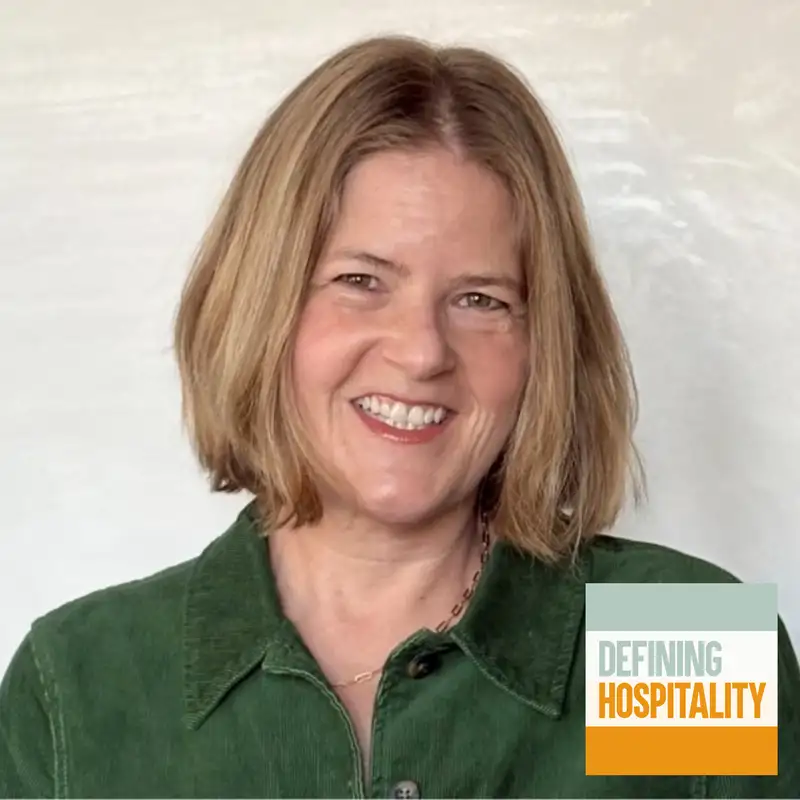
East Coast Design Expansion - Amy Margolis - BAMO Providence - Episode # 240
DH - Amy Margolis
===
Dan: [00:00:00] How
Amy: Um.
Dan: Taylor Swift's mansion in Watch Hill? That would be like the real,
Amy: I know. I mean, we just wanna go to the wedding, You know? That's,
Dan: Yes.
Intro: What I do is inconsequential. Why I do what I do is I get to shorten people's journeys every day. What I love about our hospitality industry is that it's our mission to make people feel cared for while on their journeys. Together we'll explore what hospitality means in the built environment, in business, and in our daily lives.
I'm Dan Ryan, and this is Defining Hospitality.
Sponsor: This podcast is sponsored by Berman Fall Hospitality Group, a design-driven furniture manufacturer who specializes in custom case goods and seating for hotel guest rooms.
Dan: Today's guest is an interior designer, creative mind, and industry leader. She leads teams with a strong commitment to client-focused projects that foster connection and create meaningful experiences. Her expertise spans luxury hospitality through high end residential [00:01:00] projects. She's got over 30 years of experience, and she shaped the interior design landscape at renowned firms such as Brighton and Hughes, DLR out in San Francisco, the Wiseman group. Duffy Design group, Ann Bergmeyer. She is now an associate and studio director at Bamo Providence, Rhode Island. Ladies and gentlemen, welcome Amy Margolis. Welcome Amy.
Amy: Thank you. It's nice to be here.
Dan: It's great for you to be here too. And I just want everyone to know I've known you, I think almost since I kind of started, 'cause I was living in San Francisco and. You were there at Brayton and Hughes and then I moved to New York. You moved to Boston and then we reconnect. I was like, oh my God, you're on the East coast.
It was just very surprising
Amy: Yeah.
Dan: almost as surprising as the memo I missed that Bamo opened an office in Providence and I was shocked to learn that
Amy: Yeah.
Dan: really amazing. And just so everyone knows, I'm [00:02:00] sure everyone who's listening knows just. Like a hotbed of design and art. Uh, Providence has been just being the home of risd the birthplace of the talking Heads And so many others, but also Michael Booth went to RISD and grew up in Providence, which I just. didn't even know. So it's like, uh, a sort of homecoming. But now, and we'll get into this in a bit. BMO's opened offices in so many places and I think what's I, so I want to tee this up I ask you the hospitality question. BMO's just been a fixture in my life, started in San Francisco in, uh, the late nineties, early two thousands.
It's just always been a San Francisco firm. It's been around for 35 year. Did you just have like the 30th or 35th anniversary?
Amy: Yeah. Yeah.
Dan: Okay, so
Amy: I should check.
Dan: when companies are around for that [00:03:00] long and the founders are still involved, they tend to, I'm speaking very generally 'cause I don't want to offend anyone.
They tend to like just be good with what they do and do that one thing really, really well. And I'm just so surprised and kind of reassured that even after being around for more than three decades. have this global footprint now, and I, I, it's just very exciting. And so before we get into that, 'cause I do want to dig into that, um, why hospitality?
I mean, you have residential,
Amy: Right.
Dan: done hospitality, a lot of hospitality, luxury, and other, um, what do you love about hospitality? What does it mean to you?
Amy: Um, so hospitality for me, um, means. This idea that every detail is really thought of ahead of time and it's choreographed and considered and it's been taken care of so that when you arrive as a guest, whether it's at a hotel or a dinner party or anywhere else, you can [00:04:00] relax and enjoy the company. And I had a little anecdote, um.
A thing that I read a few months ago, there was an article in the New York Times about Joan Didion, who's the author, and um, there was this article that talked about after she passed away, they found these like reams and reams of notes that they called it, that she used to plan for her dinner parties.
She had these kind of, um, well-known dinner parties where she. Do all the research, get the menus, choreograph everything. Figure out who was sitting with who and what the flowers are and where she was buying the meat, and exactly how long everything was gonna take to cook. And I guess she researched and researched and researched, and then she'd put this soiree together of people.
And, and everyone would have an amazing time, and she was really relaxed and everything seemed effortless, and I thought that that was such a cool way of thinking about hospitality. This what you put in on the front end. If you do everything right and think about every outcome and every [00:05:00] You know, opportunity, then when the night comes, you can kind of just sit back and relax.
I thought that was a great, great article.
Dan: were these dinner parties that she would do monthly, quarterly, multiple times a year.
Amy: I'm not sure. I'd have to, I'd have to look at the article. I think they talked about the, um, Thanksgiving dinner was a big one, and I don't know if she did more than that, but I thought how cool to be like at Joan Didion's dinner party and, You know, and then this after the fact, seeing all the, You know, all her intense planning to make them, You know, pull them.
Dan: about work. I, I always find, um. It kind of in what we do in our world or any world really. The, the people who are the most disorganized, I find are often the most explosive, right? So they're not calm, cool, and collected.
Amy: Right, right.
Dan: find that the people who really put the work in and get it done, [00:06:00] it's not so much because for the people who put the work in and are organized, it's not so much about the the outcome. will come, but if you do all that homework, it makes getting to that outcome much easier.
Amy: Right, and you're comfortable. 'cause you kind of know I've played it through in my head. I know all the things that can happen. You know, if this thing doesn't go that way, then You know, I've done enough thinking that I could go in a different direction. Right? It's like you're gonna try your filet mignon and you're gonna be okay with, if it fails, you're gonna get a pizza instead.
You know? So like, how do you switch directions and be flexible, right?
Dan: Well, so I really appreciate bringing up Joan Didion and these dinner parties. 'cause one, I didn't know about them and now I want
Amy: Yes.
Dan: it. But, um, and the dinner party side, because I've been, I've been rolling out these, I'm calling them symposiums, for lack of a better word. I did one in New York.
I kind of threw together one in Philly. And my goal is to do, I don't know, five to 10 of these over the course of a [00:07:00] year, um, in different cities.
Amy: Yeah.
Dan: and bring in like just a good mix of people. Not a lot, but enough that where it's like in a home or in a private room where I can facilitate and kind of do this podcast thing, but there where everyone learns from everyone else in the room.
Amy: Yeah.
Dan: of the things I love about doing this podcast so much is I get so much feedback from all these people who are not sitting here with me, but learn so much from talk, from just listening to me talk with really great people like yourself.
Amy: Right. It's like the idea of the modern salon, right?
Dan: the
Amy: Yeah.
Dan: the, uh, yeah, like the knit, like the knitting circle, the,
Amy: Mm-hmm.
Dan: you want to call it.
Amy: Yeah.
Dan: it's, um, everyone kind of leaves energized and having learned something new about the others sitting around, but also hopefully a new insight into themselves that they can, You know, continue to or take that momentum and continue to grow with the second reason why I love that you bring up Joan Didion and these dinner parties. [00:08:00] I don't know where she lived in New York City,
Amy: Yeah.
Dan: somewhere, I think it was somewhere close to where I lived because there was a restaurant just downstairs from me called Lizzie on 20th and seventh, she, I, I don't know, three or six times I would be sitting in like a little back room and she would be sitting at the table next to me or two
Amy: Oh, really? Yeah.
Dan: It was so cool. I never talked to her.
Amy: Yeah.
Dan: I
Amy: I
Dan: writing and her story,
Amy: him.
Dan: I, she's been such an inspiration for so many people, just from a, a perspective of creativity, but also, um, I can't remember the name of the book now, but just how to deal with loss. And, and
Amy: the one she wrote after her husband died? Yeah. I don't remember the name of it either, but it was really, it was a very good book. Yeah.
Dan: Yeah. And I think that that created this whole, um, following and, and new thinking around loss and, but just being okay [00:09:00] with it, You know, and like a grieving, it's, I think grieving is in the title. I'm gonna have to look it up later, but, um, it kind of changed the way I think about things
as well. And so she was just like a really incredible. Figure. So thank you for bringing her in, and I'm glad that I could have
breathed the same air as her mult on multiple occasions, so that's awesome.
Amy: sighting.
Dan: okay, so Bamo,
Amy: Yeah.
Dan: providence. So when I think of Bamo and I, I've had Anne Wilkinson on here a couple years ago, and as I've always known, bamo, the projects are luxury, they're global,
um, and really magnificent, right? So. What is, so what was the thinking behind opening the Providence office? I know I kind of alluded to it a little bit, being Michael is from
there, and then what attracted you to join the team and be there in Providence?
Amy: Yeah. So I. [00:10:00] The thinking, the initial thinking is this idea that Bamo is in San Francisco, right? And projects are around the world and, and in the US So, You know, there's East coast, west coast, there's um, You know, Caribbean and Mexico. There's um, Bangkok and Asia, and then there's Europe and all of those can be hard to do from one place, right?
So it's, You know, a little bit of thinking about where are we, where are we going, and how we might, um. Be better equipped in different time zones to deal with different clients and, and not have that lag between necessarily Europe and San Francisco, et cetera. So, so that was part of it. Um, the other part of it was we have a lot of projects on, um, east Coast that we wanna just be able to better service and better get to and have a three hour flight rather than a six hour flight.
And, um, and this a little bit of the, we learned a lot from COVID, right? Like, everybody has a laptop now. [00:11:00] Everybody can, You know, you can take a meeting, you can do a zoom. We can have proper sound and lighting and, and portray ourselves in new ways. And so I think that, um, ability to work remotely, um, to work across the systems to collaborate.
It became easier after everybody got equipped for that. Uh, the second big reason is that, um, Michael Booth, who's one of our founding principals, uh, is from Providence, Rhode Island originally, and he loves Rhode Island. And um, I think he got to a certain point in his life, career and family, and wanted to bring his kids to the East coast.
While they were young and show them that part of the country and raise them there as well. And it turns out that Providence is this really great place to have a design office where, um, literally next door to risd we're right by the Amtrak station. And, um, there are other great and [00:12:00] interesting hospitality firms in in Providence.
Um. Actually, in my opinion, seems to be a little bit more of the hub of hospitality design in the northeast, um, over Boston. And we thought it was a great location. We have a really beautiful, I don't know if you've been there. We have a really beautiful workspace. Um, we're right on canal in North Maine and Park Row.
Dan: but I am
Amy: No.
Dan: there think in February or March. I have a plan. will
Amy: Yeah.
Dan: but we'll
Amy: Yeah, it's, we have this amazing office and from it, You know, we always have people come in. It's giant windows and it's brick and we take people on the office tour are aware, You know, out one side of the building. We have the Roger Williams Memorial and the State House out the other side. We have the first church of cri, uh, first church.
First Church of Science. Um, we have Brown University on the hill and we have the First Baptist Church. So [00:13:00] there's all these really cool kind of landmarks that you can see right from outside of our window, and we find that it's a good spot. Um, it's kind of easy to get in and easy to get out. And it's a train ride to New York.
Dan: Mm-hmm.
Amy: I actually live closer to Boston and I come down on the train in the morning, so. Um, and then Rhode Island in general is, has this great history of makers. I can't reel them all off, but Michael can. Um, I think it's like the corn and glass studio and all the, like a history of really interesting makers and industry that started in Rhode Island and there's still a really interesting community of designers and makers that we're trying to tap into more and more for, um, both hospitality and residential projects.
Dan: Hmm.
Amy: So it's an exciting place to be.
Dan: one of my crowning achievements early in life was I did this really awesome portfolio. I got into risd,
[00:14:00] but, but then I, I went. To go look at it, and I saw how, You know, you do this whole foundation year, and I was like, I just got so scared. I was like, I don't think I could, I, I don't think, I didn't think I could hack it and
I decided to go west to California, but it is awesome.
My mom, who's a great artist, she applied there and didn't get in when she applied. So I, that was like, why? It was my big crowning achievement. I beat my mom. Even though she's a better artist, so, but that's great. Um, and then also another recent phenomenon for me, um, with respect to Providence is there's this really cool trilogy that they're turning into a movie.
Amy: Oh yeah.
Dan: called, um, well, it's City on Fire. Uh, city of Something. And then City of Dreams. There's three books by, uh, Don Winslow and the three books are actually called the Danny Ryan Trilogy, which I [00:15:00] think is pretty rad. And Austin Butler, apparently is cast to play Danny Ryan. And what's so cool about this gangster Irish Italian mafia saga that takes place in Providence, you it fast forwards. And they wind up when they go legit. Like in all the, the gangster movies, they start building
hotels in Las Vegas. So
Amy: Oh
Dan: it's like, it's, kind of
Amy: yeah, I know if, if they were real we could tap into them, right? And start doing their hotels for them.
Dan: Totally.
Amy: they are real wet yet.
Dan: I know. You just, you just, it's like don't ask, don't tell. Right. You gotta,
Amy: Oh yeah. I mean, as Michael always says, Rhode Island is kind of the, I've got a guy state, which is, which is fun, right? Whenever we do something for the office, we're like, who could we call? What could we do? Who's got a guy? How could we make this happen? Um,
I got a guy.
Dan: one thing that you touched upon with the office in Barcelona, [00:16:00] Miami. San Francisco, Bangkok. Did you say Bangkok? Bangkok.
Amy: Not Bangkok.
Dan: projects in Bangkok.
Amy: were projects. Yeah.
Dan: that, and Providence, this idea, and, and you alluded to it, that your projects are global,
Amy: Right.
Dan: but I was once talking to, um, this one kind of business guru named Vern Harnish, and he was, he and a lot of other entrepreneurs wind up settling in Barcelona between like London and Barcelona because at GMT Zero. Plus
Amy: Mm-hmm.
Dan: the, it's called, he called it time zone arbitrage, right? So that you can work on projects kind of around the clock
Amy: Right, like you're hitting the end of the day in one place and the beginning of the day in the other place, and you can like always be available.
Dan: Yeah, and when I was running my supply chain and also projects and business development, now I don't do all of that. I just do business development, but. I found that when I was in Europe visiting family,
Amy: Mm-hmm.
Dan: um, [00:17:00] I was the most efficient. 'cause in the morning I could deal with Asia
Amy: Right.
Dan: and then in the afternoon I could talk to everyone from New York to California and beyond.
So it was just
Amy: Right.
Dan: good footprint to have and I always loved the feeling when I was there.
Amy: Yeah. Well, and then you can also work too much, right? Like you're like always available for everyone at every time,
Dan: True. But then, You know, they bring out the wine and the bread after
Amy: and it's all, yeah, it's all good. Yeah.
Dan: but how have you seen, or because you haven't been there since the beginning, just in San Francisco, I mean, you were
Amy: Yeah.
Dan: Francisco, but not at Bamo, but what are, what are you hearing from other leaders at the offices and other team members since your footprint has expanded 35 years in. How has it changed the company?
Amy: Yeah, I think it's interesting. We're actually, um, we just worked on Ashley Venturini, who's one of our principals, and she [00:18:00] runs all of our BD and marketing. Um, did a questionnaire at the end of the year last year, which is kind of a like. You know, what do we have in common? What do we have differently? What should we be focusing on, et cetera.
And I think what was really interesting from that exercise and how she kind of synthesized people's answers were we definitely have the. The bamo. That always is and was and, and what we can do, You know, an RFP comes in for a luxury hotel in a city and You know, we know exactly what to do and how to jump on that and et cetera.
Same with a big resort. But what I think is trickling down is that each region also has differences and different priorities, right? So, um, our Providence office. I think we are really well positioned for, um, our team. We're a little bit smaller, we have a little, You know, it's more of a studio rather than a big [00:19:00] firm.
Um, we're agile and we work well together and I think everybody, um, is working on wearing different hats. I think what is interesting about our area is we do have Boston, new England, Connecticut, et cetera, and then we have. What does it mean to be in New England? What is a resort in New England and how is that maybe different than being in Miami?
So our Miami team, we have a bunch of projects in Florida. Um. Where we might be looking at a Mountain Inn in Vermont, they might be looking at a branded residential project in Florida. And so each region, it's starting to bubble up, right? Not only what is, what does glam Bamo do globally, but what does each region do and what should each region do and what can we do well by being there and how do we, um, tap into our network?
To staff those properly, You know, staff those projects [00:20:00] properly and in the best way.
Dan: somehow I'm trying to tie in like, okay, you have RISD in, in Providence, then
up in Boston, you got Harvard Wentworth. Uh, I don't
know what, what are the, there's like amazing design in
architecture schools. MIT,
Amy: There's MIT from interior design. There's NIS ad, which is part of New England. It's part of Suffolk University, and there's um, uh, what's the,
Dan: Well, it almost doesn't matter what they
are. The point is that there's all these like globally recognized, top tier design
Amy: yeah, yeah.
Dan: Uh, but they tend to be more like, and they have a lot of gravitas, right? But. They tend to do more like institutional or commercial, not so
Amy: Uh, yeah.
Dan: Right. And what's interesting about your career [00:21:00] path is having started, you started at Brayton and Hughes? Yeah.
Amy: I started at, I actually did my first internship at, Backen & Gillam Architects in Sausalito.
Dan: Up
in Sausalito. Cool.
Amy: And then, Wiseman group. And then went to Brayton and Hughes. So like I've always been in that mix of hospitality and high-end residential and it, and kind of over the years it has ebbed and flowed based on, You know, the firm.
Dan: But really let's, I'm just, I'll go out on the limb here to say
you basically, you started in hospitality,
then you moved to Boston area and you always did hospitality. But at more commercial firms that specialized in
commercial. And, but now you're back right at hospitality. So like, imagine that as like a bell curve or a rollercoaster, like what brought you back, right?
Because you were doing really cool stuff at the other firms as well, but
I, I, [00:22:00] I've always known you, my first impression of first ones are always lasting or your hospitality through and through hospitality
design. So like, what, what was that journey like for you to come back
Amy: So I
Dan: circle?
Amy: I think you kind of nailed it on the head. We moved, my husband and I moved in to Boston in 2006. Um, he had a great job opportunity and we're both from California originally, And so we thought like, let's try something new, You know? We're newly married. Why not? And I got to Boston and I was used to San Francisco.
You know, at the time the big firms there were Bamo and Brayton and Hughes. There were a few other ones, but those were like the two biggest ones, right? In terms of hospitality design, and I loved the size, right? 30 ish people focus on interior design and architecture. Um. Both doing really high-end, beautiful work, really great brands, um, both of them doing at that time, [00:23:00] residential and hospitality.
And I got to Boston and I. Reached out to reps and said, You know, who should I talk to and where should I interview? I probably called you and had me, had you set me up with someone here, and I met tons of people, but my experience was exactly what you said. Like a lot of the people are coming from these big architecture schools and um, the firms.
You know, it, it, the work you do is based on the, the work that's around, right? So there's a lot of, there's law firms, there's finance, there's um, hospitals, there's a lot of university work, and none of them felt the same to me as hospitality. Right? Like this idea of what are, who's living there? What is the guest?
What are people experiences? I, I always like to think about spaces that I want to design are places where people ultimately sleep. Dwell, rest their head, You know, and that kind of goes across hospitality, [00:24:00] residential, and branded residential. Like that's a thing you have in common is the, the end user is a person who is going to spend the night there at the end of the day.
Dan: Mm-hmm.
Amy: what does that mean and how do you feel comfortable and create a sense of place for them anyway. So I did, um, had the great fortune of, uh, I guess expanding. Expanding my own career in terms of working at different kinds of firms and understanding how they were different than what I had been doing in San Francisco, right?
So, um, I learned more interior architecture. I learned more project management. I learned different kinds of design. I learned different structures, um, and all of that was good. And, um, I, it, You know, it was 20 years of growth, right?
That being said, one day I was flipping through a job posting that a friend of mine was applying to, and I saw Bamo in [00:25:00] Providence, and I was like, what, what is that?
You know, like, what is going on there? And is this the same bamo from San Francisco? Um, and what are they doing here? Because what I had really missed was, uh, this. Really high level attention to detail. This really innate understanding of luxury. Um, when you walk into a project and you say, we, You know, we want it to be the best possible thing that it, we can be, and the guest is going to have the best possible spa stay.
And then how are we gonna get there? And, um. So when I saw that I hit my network and said, bamo is coming to Providence and I wanna talk to them, um, I think I'm well positioned. I'm like bi-coastal, right? I'm a California living on the East coast and Bamo is a west coast company coming here and um, and I have always done hospitality and residential so.
I, I [00:26:00] took a chance and reached out and somehow convinced them to, uh, to let me be part of what was going on and come on as studio director. Um, and I think also because of the many experiences that I've had over the years and not kind of just doing one thing, we are, um, You know, a little. We are a little studio in a big firm.
So on a daily basis, we wear all the hats. We have to be entrepreneurial, we have to do bd, we have to do the design, we're doing hiring, we're doing hr. You know, it's like all the things. It's the great situation where you have the backup of the firm that's, You know, we have an accounting department and a department in hr.
I don't have to do all of that, but I have to do a lot of little things all the time. But I like, um, I like that. Feeling, You know, that feeling of being entrepreneurial and supported at the same time.
Dan: Cool. And then what, as [00:27:00] far as like Bamo East or Bamo Pro, what are you calling it? Bamo East or, well, no, 'cause Florida could be east. Your Bamo providence,
Amy: Yeah, we, we call ourselves, I don't know what we call ourselves. We call ourselves Bamo, PVD, but we do have, um, so we have Florida, and then we have. We have recently Sergio Mercado, who's a designer in his own right, who had a residential firm in New York, um, and he's an ex Bamo San Francisco person from many, many years ago.
Dan: A
Amy: Yeah. Boomer hanger. Yeah. So he's come back into the fold also. So we actually now are Providence, New York, Miami. Um, and we are, we just had our Bamo East holiday party not long ago where we brought in everybody who was on the East coast or kind of like east of the Mississippi, um, for, for a dinner party and a day in the office and all that kinda stuff.
So we're really working [00:28:00] on figuring out what, um. How we're all working together, which things go which way? I think like Sergio right now is working on a KIPP Space Show House in Miami and Natalia in Miami is helping him and we're kind of tapping into a lot more of our east coast vendors for that. Just to like let people know that we're here and, and make sure that we're giving back.
Dan: I, like I said, I missed the memo and to me it was so surprising and amazing, and, and
Amy: Yeah.
Dan: glad to have you on. And as you think about Providence and the East Coast Bamo over the next couple of years, like we. What's like the dream state? Let, let's say like three years out, what are you guys rowing towards?
Amy: Well, I think that a healthy mix is my goal, uh, diversification and a healthy mix. But, um, what, what I, I think what we really are. Where I spend my [00:29:00] time, I guess is the best way to talk about it. Um. Michael and I have been going every year to the Chatham Luxury Home Summit because we think that this kind of residential portion is really interesting for us.
There's a lot of, You know, if you think about the East coast, it's like Nantucket and Martha's Vineyard and You know, all the way up to Acadia at Mount Desert Island and you can go, um, to New York and do Rhinebeck and Hudson Valley, or you can go up to Stowe and Vermont. All those places have houses. All those places have hotels.
And I think that our mix of how we, we, we think about the projects similarly, we pull products similarly for both of them and then we figure out how to make it work. Um, so residential and hotel in the Northeast I think is, You know, definitely high on our list. And because also as much as we like to travel, it's nice to take like a day [00:30:00] trip.
I did a hotel in Nantucket a few years ago and I could like hop in the car in the morning, be on the 10:00 AM ferry, spend the day there, and have the ferry home in the afternoon. And it was kind of an amazing day, right? Like you, you're taking the boat to Nantucket for the day. Might have been a little cold in the off season, but I think we love that idea of having an impact in our local area.
That being said, I think, um. We have a few projects that we're looking at around the country or, um, we're talking about one this afternoon, a possible Caribbean project, You know, so we have some of those out there too. And um, and then I think there's a lot of hotels in Boston. Um, that we'd love to be involved in, but could lead, need some tlc, You know, and sometimes that work, You know, depends on who owns it and who operates it and who their favorite designer is.
But a lot of time that work will go to New York or [00:31:00] outside of Boston, and we'd love to be the resource for Luxury hotel in Boston. You know, we don't think it needs to go so far.
Sponsor: Hey, everybody. We've been doing this podcast for over three years now, and one of the themes that consistently comes up is sustainability, and I'm just really proud to announce that our sponsor, Berman Fall Hospitality Group is the first within our hospitality industry to switch to sustainable and recyclable packaging, eliminating the use of styrofoam.
Please check out their impact page in the show notes for more info.
Dan: And then for the, for those cl potential clients that are in the Northeast and
Boston in particular, um, how do you let them know that you're here and, and introduce them to, to bama? Like what's, what's your approach to like developing. Uh, new relationships and, and developing trust with them
Amy: Yeah. Um, so I think there's a few different things.
Dan: to also, to be perfectly honest, when I [00:32:00] look at like all of the projects that Bamo has done globally,
in a way it's almost intimidating, right?
Because they're so freaking amazing.
I mean, like really, really, really over the top.
So how do you bring that into like that Puritan, uh, new
Amy: New England. Well, yes, there is that.
Dan: as a new,
Amy: Um,
Dan: Englander,
Amy: yeah.
Dan: of
Amy: No, we, so we have a few different things going on. I mean, we, so one is we are trying to talk to as many people as possible, right? So I'm talking to you, I did a brick and wonder networking event recently. We attend the NEWH events, et cetera. Um, we're trying to get the word out that we're here and tell people's about us.
We just got a great referral. From like a person who Michael knew, who knew a person, You know what I mean? Like, I have the companies that I know I wanna talk to, and we're, and we're working on trying to figure out, I mean, I hit you up recently, right? Remember at [00:33:00] B-D-N-Y-I was like, I want this project. Who do You know that I can talk to?
Dan: Yes.
Amy: so we're trying. Be specific about, You know, we're looking what properties, what are the new builds? We're paying attention, we're reading the journals, we're looking at what properties might need a renovation, what things are seven to 10 years out, and trying to see if we can get in front of the asset managers.
Dan: How
Amy: Um.
Dan: Taylor Swift's mansion in Watch Hill? That would be like the real,
Amy: I know. I mean, we just wanna go to the wedding, You know? That's,
Dan: Yes.
Amy: but, but then we are also, we've made a big, we made a big change last year in our social media. We brought, um, a company on to help. We brought Samara, who's our marketing manager, who's done an awesome job and we're. Or setting goals, like what do we wanna say?
Who do we wanna say it to?
Dan: Hmm.
Amy: How are we using video? You know, there's a whole strategy that Ashley has, but [00:34:00] I think that the biggest thing, I just said this to someone in my office the other day. I have a whole list of all the hotels in New England, right? Who owns them, who did this, who did that? And I'm like, oh, the list has to get updated so that I can launch my campaign, right?
And um, and I had this revelation recently that said, I was like, I don't actually need to update the whole list. I just need to do five. Right. Like, forget with, forget with having all the data on 30 of them, if I could get five and break through on one, um, then we're rolling.
Dan: totally, and, and also, know, there's some, some just incredibly iconic New England properties, um,
Amy: Chatham.
Dan: like, yeah, I
Amy: Yeah.
Dan: Hill
Amy: Watch Hill Ocean House.
Dan: Bretton Woods or Mount
Amy: Okay.
Dan: or in Boston. It's really unbelievable. And then also [00:35:00] Raffles in Boston,
Amy: Yeah. Raffles.
Well, what's interesting about most of the. Properties, um, I'm probably gonna not say this correct, but I think it's Quat and um, Cape Cod, Chatham Bars, and they're all in, they're all like either individually owned or they're owned. Someone owns like five of them, or maybe there's an operator who operates five of 'em, like Main Street Hospitality Open operates a bunch of the, You know, high-end ones,
Dan: Hams, hams,
Amy: ham, its, yeah, they operate that one.
So, so. It is interesting. You can start to make the connections, right? You can see who the, who the owner is and what they're doing and, and, um, And so we we're trying to meet as many of them as possible and help tell our story, tell our, You know, why we think, why we think we can do it better.
Dan: Um, as you build the studio in Providence. [00:36:00] know, there must be such an incredible pipeline of young creatives to come in. Like, what, what kind of people are you looking for to, to join?
Amy: Yeah. Um, great question.
Dan: how do you reach out to them? How do, how do you keep that pipeline fresh and good
Amy: Yeah.
Dan: or new hires, or you name it, because the,
Amy: Yeah. I think,
Dan: incredible.
Amy: yeah, I think what's, um. What's interesting, we're kind of looking for the unicorn at every level. Right. Um, which doesn't mean that they don't exist, but, but we're trying to, um, because we're a small studio, we. We don't want people doing one thing over and over and over again. Right? So, um, if you're an interior architect, we want you to be thinking about furniture and lighting.
If you are an FF and e person, you need to be thinking about drawing and how things fit into the plan, right? Like, we don't really have a lot of time and [00:37:00] space for, for, um, people who can only do one thing, right? And because we're a small studio also, like if FedEx comes in, you need to. Smile and welcome them and take the FedEx, right?
Like, um, everybody loads the dishwasher. Everybody does. You know, we, we do all the different things and that's, that doesn't mean like everybody and not Michael and I, that means everybody, including Michael and I. Um, yeah, which is good. Um, but it's also fun. We have a small studio. It, it reminds me of back in the day when.
You know, you learned by overhearing other people's conversations, right? People are on the phone and, and I think we got into this place many years ago where people are listening to headphones and they had to concentrate and blah, blah, blah. And we are like, how do, how do you actually like learn a bunch of new things just by sitting next to someone who's having an interesting conversation?
And is the person sitting next to you, Michael Booth, and he's been at it for 35 [00:38:00] years? Like, you're gonna learn a lot if he's the person who you sit next to,
Dan: And
Amy: um.
Dan: discount yourself either, because that's one. One of the other thing reasons why I love doing this podcast is I know a lot of people are moving back to the office now, but there's still general, people are in the office less. And then if you look at what we do in hospitality design, you are already in the office less than most.
'cause you're usually traveling to sites or client meetings
or whatever. And in doing this podcast, having these conversations, I find that it, it helps supplant or, uh, or augment whatever kind of talking and overhearing what happened at the water cooler, or they don't have fax machines anymore, waiting for the fax to come in. And
I think so much can be learned from hearing. A very heated discussion or a really great, awesome conversation and you just, it kind
of gives you a framework for how to act. And I, I [00:39:00] feel, I feel for like the younger professionals coming up because a lot of it is just like missed out on and okay, and then you take the headphone thing. Um, but. We can just learn so much just by immersing ourself in a studio or in an office. And I, I personally
miss it. I miss it. An incredible amount. I mean, that's kind
of why I'm doing this, but, and, and trying to share other people's experiences. So
like kind of with that setup like. You've been doing this for 30 years, right?
30, 20 something,
Amy: 20 something a long time.
Dan: Michael's been doing it for 30 plus, but
you've come full circle back to hospitality. Like what,
what gets you out of bed in the morning to come to work? Like why? Why did you do that full circle? And what about that full circle is what excites you the most about getting up every day to go to work?
Amy: well, I love hotels. I love to travel. Um, my family can tell [00:40:00] you that while we don't always stay at the fanciest hotels, we always visit the fanciest hotels. Um,
Dan: Oh, field trip.
Amy: yeah, there's always a field. I mean, I, there's always a field.
Dan: why can't we stay here?
Amy: Yeah, my kids know how to move quietly amongst a hotel of any like, size, shape, or caliber and like, kind of quietly walk into the elevator and end up on a guest floor and look around and then move on and like, not make a big deal about it.
Like they learned that when they were little, You know? Um, I, I think that there's, well. I don't know. I mean, one of the things that I have done a lot recently is proposal writing, right? So one of 'em was in a major US city, another was in Turks and Caicos. We had a thing in Fiji. And there is kind of this excitement when you open up an RFP and you look at it and you're like, what are they dreaming about?
Like what is the vision of this pro? Oh, it's barefoot luxury. Oh, it's this, oh, it's, [00:41:00] You know, city elegance, et cetera. And. Kind of that, that, um, working in relationship with the design team and the architect, and also talking to the client and figuring out like, what's your end goal here? Right? Like, yes, you wanna make money, of course everybody wants to have a successful project, but, You know, is it, what is, how is the success gonna be defined?
Right? Is it, um. The most architecturally edgy place in the world. Is it the most comfortable, You know, hotel in New England? Is it, um, You know, privacy and seclusion in The Bahamas? You know, figuring out what the, figuring out what the, um, the end goal is and then knowing that there's like a thousand solutions to get there, right?
Like, what is our team gonna work on? Um, I. I like the role that I'm in now because [00:42:00] I, uh, there's like people bring ideas to the table that I just wouldn't have ever thought of, and I find that inspiring and I like figuring out what's behind that, right? Like, how are they coming to that idea? Do I think it's relevant?
Do we, You know, how do we work through that? That that's like an interesting part of my, um, job. Um. And then I like going and visiting places.
Dan: I'm also noticing something about your, your career path.
Amy: Yeah,
Dan: gonna, I'm gonna skip over. Some of them because it, some of them just don't make my point. But
Amy: yeah,
Dan: let Beckham, Gillen, Brighton, Hughes, Bergmeyer, bamo, all
Amy: yeah, yeah.
Dan: all, they're all
Amy: I only do, I only work at firms that are bees. Yeah.
Dan: So we may have uncovered something there, but if you were to Bamo any of those other bees, is there anything that. You learned [00:43:00] from a leader or mentor at any of those firms that really stuck with you, that you try to incorporate into your vocation and like and mentoring
Amy: Yeah.
Dan: new people? Give me an example.
Give us an example.
Amy: the first one, um, well actually both of 'em are things that I learned during my time at Bergmeyer in Boston. Um, Bergmeyer has, um. Like a long legacy in kind of retail design and, um, working with brands and it's.
Different than how we usually work with hotel clients, right? Just that, I dunno, it's just a different language, right? Everybody in hospitality, we have our language, retail has their language, et cetera. But I think they had this, um, very interesting discovery process that was always framed in like customer [00:44:00] journey and mapping and user experience, right?
So that was the thing that we always talked about first. And so it wasn't, is it Rococo or Barefoot Luxury or, You know, it wasn't like based on site or context or anything. It was this idea about like, who's our, who's our user? How do we want them to feel? Um, what experience do we want them to have and how do we define that first and then find design solutions around that.
And so, while. You know, it took me a while to get that reframing from user to guest. It, it is how I think now, like, I think I mentioned it earlier, we had a competition that we were doing in December and we said, every design firm can come in and, and make a hotel, right? Like this, there's a brand, there's an idea, there's a bunch of obvious solutions.
Um, but how do we say, okay, this person is coming [00:45:00] to this hotel for this reason and this is who they are and what they might like. And kind of narrow down their demographics and then create a design solution that would speak to their need rather than saying it's like this building and it should look like that.
So, um, that was a great experience and it really did change the way I thought. Um, and I do it for residential clients. I do it for, um, hospitality clients. This idea of like, who's the guest? Why are they coming here? What do they need? How can we make that interesting for them? Um, the other thing, big thing that I learned was in the transition, in my last position, I had always used cad and the firm that I worked at used Revit, and I didn't know Revit.
There wasn't really like the time and space for me to learn Revit because it doesn't make sense from a utilization [00:46:00] perspective, right? And so I had to like that plus COVID, I had to start, um, giving better direction to my team and letting them figure stuff out rather than me doing everything myself.
Which is really, really hard. And it took me a long time to get there. But how do I say, like, show it to me three ways and get back to me or, um, I, You know, here's the design direction that I was thinking, You know, when they came back, like, how do you give good feedback? How do you, um, maybe be open to a solution you weren't, that you didn't come up with yourself, You know, it was like, I think it's just.
That stage of your,
Dan: is something really, really difficult. I
Amy: it's really hard.
Dan: You
Amy: We all do. Yeah. I mean, I, I'm not gonna claim that I'm amazing, but, um,
Dan: But you will admit that you're a control freak.
Amy: of course, I mean, [00:47:00] we all are.
Dan: I
Amy: Yeah.
Dan: I'm, I'm there with you.
Amy: And also like I have. I am open to more possibilities and I know that I can't do it all anymore. I have too many things to do and I can't do it right.
Dan: that, that's also the sense I get from like just speaking to you since we hit record also before, but there's just this genuine curiosity of opening up that proposal vis and envisioning what that is or
Amy: Yeah.
Dan: seeing what. Revit might be and like dedicating to trying to learn. But maybe, but then you're, you're curious and then you're like, You know what?
I should probably learn about it, but I also need to learn how to delegate this 'cause it's probably not the be highest and best use of my time and I
Amy: Right.
Dan: stay focused on, You know, my own zone of genius or my own expertise or the things that, You know, and, but it's also interesting 'cause in talking about the studio, um, You know. Yes, you're a bigger firm and you have all that [00:48:00] back office stuff, but you still have to do all these other small things,
Amy: Right,
Dan: of
Amy: right.
Dan: things add up and hopefully at bigger firms, the idea is you can spend most of your time doing what you're best at.
Amy: Yeah. Yeah, I don't know. I mean, I'm a parent. You're a parent, right? Like we know that your life is full of lots of little, lots of little balances, surprises, things all the time, right? So like your capacity, You know, I think like a new parent will be like, I don't know how I'm gonna be able to do A, B, and C.
And I'm like, your capacity just kind of grows every year a little bit more, right?
Dan: Yeah. And, and also you, you navigate a, a path where you, You know, and you, by virtue of. The capacity growing. You also learn whether you like it or not, to hand off more and more and more, but
Amy: Right.
Dan: really clear on your thinking and communication and how, and, and the strategy so that you can teach others how to [00:49:00] execute.
Amy: Yeah. Yes.
Dan: you were at Beckham Gillum before Bray Hughes? Correct.
Amy: Uh, yes.
Dan: Okay. So were you living in Marin or did you.
Amy: No, I lived in San Francisco, um, and then I would go to Sausalito.
Dan: But it's a great drive every day.
Amy: Yeah.
Dan: the ferry or drive?
Amy: No, I drove. It was, I was in, it was when I was in school. I went to CCAC no longer C and also no longer CCA. It just got sold to Vanderbilt. I don't know if you heard.
Dan: I didn't.
Amy: Yeah, it was like a week or two ago. So, um, yeah, I was in school and, um, I took, I would drive over there and I loved it.
Like it was the boathouse in Sausalito. I don't know if you ever went to that office. Um, it was, I, I was like, this is it. When I, it was just like this very cool [00:50:00] atmosphere we had just all the projects in Napa and restaurants and homes and, You know, it was beautiful. And my boss was Nicole Hollis.
Dan: Yes.
Amy: She was running the interiors and I was like, You know, junior designer, intern or whatever.
Um, and it was such a great learning experience. Um, they did this one thing that I thought was the coolest, the coolest thing. Every year they would go on their company party and Howard would call four or five clients. That we were working on current houses of, and they would get like, I don't know if we had a bus or 12 passenger vehicles or something like that, but we would go as a group and visit those sites.
Some were in progress and some were fully finished, and then we had dinner at a big restaurant in Napa or Santa Helena or something. And I mean, what an amazing. I don't know how old I was then, but like what an amazing, and you all got to bring someone. I brought my roommate and she was, she [00:51:00] said, this is the best day of my life.
Like, I mean,
Dan: So
Amy: but it was, You know,
Dan: when I, I think I first met Nicole when she was working
Amy: at back in,
Dan: Yeah.
Amy: That was before she went out on her own.
Dan: Yeah. And she's built quite a career for herself. Sister.
Amy: Yeah.
Dan: It. Going back to that like that, You know, you're, you're, you're going over the Golden Gate Bridge, you're going down to the boathouse, you're having these great experiences.
It's your first like design job. Um,
if the Amy that I'm talking to now, were to magically appear in front of that Amy, what advice
do you have for yourself?
Amy: That's a good question. I think that the biggest advice is to, um, to be open, You know, to be open to the possibilities, to put yourself out there to say yes, um, to try new things. [00:52:00] And I think the biggest thing is to keep educating yourself like. Read a book, watch a podcast, go visit that hotel. Take yourself to a fancy dinner where you wouldn't usually go or say yes to an invitation from a rep who's gonna take you to a fancy dinner.
Um, I still have things in my career all the time. Like this year I've been learning lots of Del Tech and project management staff, which, um. Has not been my forte in the past. I've always done it, but somebody else has done the technicalities. Uh, but also. It's a good thing to know, it's a good thing to learn when I train somebody else to do it.
Eventually on our projects, I will have the experience of having done it right. So there's, You know, there, there is the balance you were talking about before, which is the, what am I good at, what should I spend my time doing, et cetera. But [00:53:00] also, You know, you can always expand, you can always learn more, you can always see more, um, and just be open.
Dan: mm.
Amy: I dunno. We had a project that I, that we took four or five years ago that was, um, everything was stacked against us, right? Like supply chain, timing, COVID, staffing, et cetera. And we took a, that quote from Glennon Doyle and we put it on the wall. We can do hard things. We just like threw that on the wall every day.
We were like, okay, yeah, we know it. Today's gonna be a long day. But we, we can do hard things. We can make it happen.
Dan: we totally can. what year was back in 2001? 2002. That was just before me, my first job. I had an office on top of like, Embarcadero number one
Amy: Yeah.
Dan: Mount Tam. So I would like look down across
Amy: Oh, very cool.
Dan: past Alcatraz and um, and then I'd see [00:54:00] Sausalito over there
Amy: Yeah,
Dan: foggy, when Carl, the fog wasn't in,
Amy: Carl. Yeah.
Dan: uh, it's such a magical place.
San
Amy: It is a magical place. I miss it. I mean, I love New England. Um, I'm looking forward to our big snow, snow storm this weekend.
Dan: Yes.
Amy: But I do also love San Francisco. Still.
Dan: Yeah.
Amy: You know,
Dan: Yeah. I still have a four one five mobile phone number, so,
Amy: as do I.
Dan: I'm back there often. So, um, this has been awesome. Amy, if people wanted to learn more about you or connect in some way, or also learn more about Bamo, bamo, providence in particular, what's a good way for them to do that?
Amy: Um, yeah, so I think LinkedIn is always, that's like probably my best way email, I would say is my. Second best. Um, and then, uh, I do post on Instagram also, although I don't know if I actually check when people ping me on Instagram, so probably LinkedIn and email are [00:55:00] the best. Or you can call our Providence office.
Dan: Great. Come on
Amy: Yeah,
Dan: and, and, and bring your, your, your Danny Ryan trilogy with you to, to like get
Amy: I, I have to admit, I still haven't read it, so it feels like it's time.
Dan: You got it. You gotta, um, Amy, thank you so much. This has been
Amy: Thank you. Yeah, this was great. Uh, You know, I was a little nervous, but I appreciate, appreciate you and our friendship over the years.
Dan: Thank you and I appreciate you and also all of our listeners. So if this has changed your mind about thinking about hospitality or moving to Providence, or giving a firm in Providence a try. Pass it on, or You know, someone who could benefit from it. Pass it on because a lot of this is just growth by word of mouth to keep talking to awesome people like Amy and hear about her bi-coastal career growth just like myself, and also how she comes back to hospitality as we all do. thank you all very much and we'll catch you next [00:56:00] time.