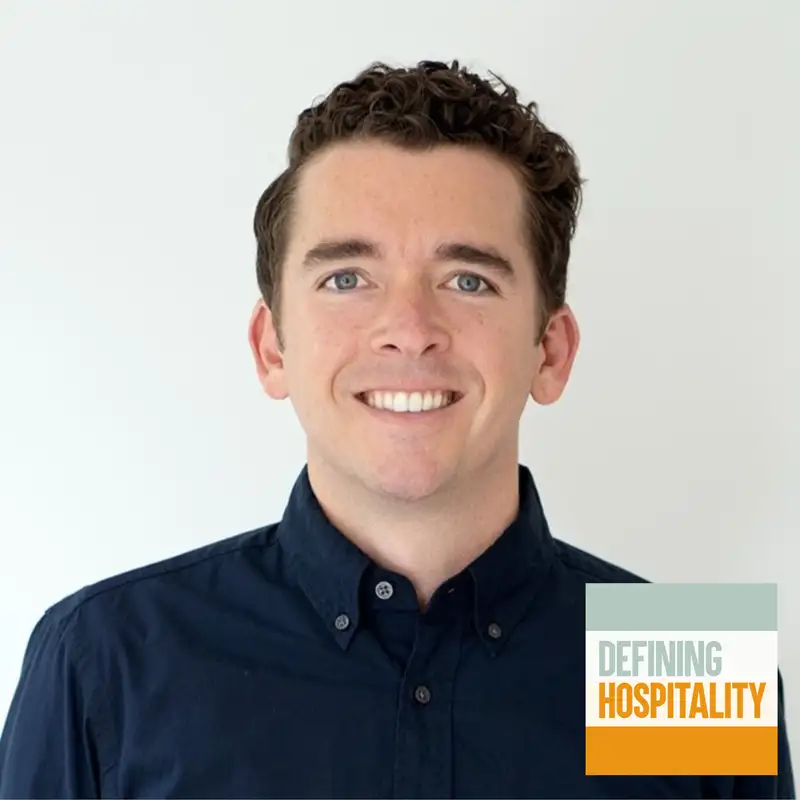
The Puzzle of Architecture - Andrew Ashey - AAmp Studio - Episode # 239
DH - Andrew Ashey
===
Andrew: [00:00:00] I find architecture and design to be one big puzzle. That's what I love most about it.
Intro: What I do is inconsequential. Why I do what I do is I get to shorten people's journeys every day. What I love about our hospitality industry is that it's our mission to make people feel cared for while on their journeys. Together we'll explore what hospitality means in the built environment, in business, and in our daily lives.
I'm Dan Ryan, and this is Defining Hospitality.
Sponsor: This podcast is sponsored by Berman Fall Hospitality Group, a design-driven furniture manufacturer who specializes in custom case goods and seating for hotel guest rooms.
Dan: Today's guest is an architect and entrepreneur. He's got over 20 years of architectural experience, and he's not only a member of the American Institute of Architects, but also on the state of Maine's board of a i a as a respected leader and educator at the University of Maine Augusta.
As well, his expertise spans multiple scales of architecture from residential to [00:01:00] commercial projects. He's also the president of the Board of Architects, a nonprofit lecture series in Portland, Maine that happens every April. He turns creative vision into brand impact through design, architecture, and interior architecture and design.
And he is a principal and the founder of AMP Studio. Ladies and gentlemen, welcome Andrew Ashy. Welcome, Andrew.
Andrew: Thank you, Dan. Happy to be here.
Dan: Um, I'm really happy to have you here as well, and I just wanna let our listeners know that. We met years and years ago at a former podcast guest, Dave Kaplan's wedding. Shout out to Dave and Jenna and Hi Dave.
Hi Jenna. But we saw you, I met you there. And then, You know, I think we crossed paths a bunch of different times through our friend groups, uh, over the years. And then I was at an NWH New England event and I [00:02:00] was sitting in the front row and there was a panel discussion up on stage. And I you, I was like, you look so familiar.
You look so familiar. And I took a picture of you and I sent it to Dave actually, and I said, is this Andrew? And he goes, yep. Tell him I say hi. And I was just blown away and also felt horrible at my job for not having connected with you and put connected all the dots sooner. So thank you
Andrew: that photo found its way into my pocket during the panel when I saw it on the side. And so I had to wonder for the next 30 minutes who took the photo and where it came from. So I was
Dan: Oh good.
Andrew: that you came up right after in cin. Hello?
Dan: It was me from the Grassy Knoll. I was there from the book depository or whatever.
Andrew: happy to have reconnected that day, after many years,
Dan: Yeah.
Andrew: very different circumstances.
Dan: So when I first met you at the wedding, I knew you were an architect, but I I, maybe I didn't ask what types of projects you had [00:03:00] worked on or connected the dots or maybe. 'cause when I'm at a, I also, when I'm in a social setting, it's not, one of the things I try to never do is be like, oh, what do you do what?
And like, do that whole thing because I, that's boring. That's like talking about real estate prices at a cocktail party also for, it's just not something I normally do, but I. I, I don't know. It's just funny how now here we are, but, so now I didn't realize, and having seen you up on the stage at NAWH, which is the Hospitality Network, so you've been, you've done so many different types of projects and typologies, as I said in your intro, but you've developed this focus into hospitality as well.
So why is that? And I guess the better question is, is what does hospitality mean to you?
Andrew: Yeah, I mean, I guess there are a few questions in there. Yeah. Our, our work does span quite a bit, uh, across built, like ground up, built work, uh, You know, adaptive reuse, [00:04:00] hospitality, residential, um, and kind of getting a little bit into, into institutional. But, You know, I'd say across all of those, um, You know, all of those design aspects including, and especially related to kind of hospitality design, would say design really is about kind of body.
Um, You know, it's about the, the people and your, your body's experience in it. Um, so you, You know, when you think about design, you often think about how things look, um, but also, You know, it's about how it feels. Um, You know, how it smells, um, how it sounds. Um. How kind of the space fits to the ergonomics of your body? Um, I think it's, it's really important that the kind of experience of the user, um, or the occupant, You know, really kind of has a holistic experience across the census, not just aesthetically, because that can start to kind of create an emotional [00:05:00] response. Um, You know, whether it's a smile, uh, whether it's relaxation, whether it's excitement, um, that is all driven by our environment, uh, and the spaces that are designed to kind of cater to it. And it, You know, it, it creates an individual and collective memory that is important in social interactions and in community and, and kind of how we live. Um, it fuels connection. It fuels desire. It, it, um, of elicits a, a response to return. So I think there, like in how your body experiences space, uh, is, is quite important in that regard, particularly as it relates to hospitality. I mean, hospitality design has a special, uh, niche in that it's different from architecture or, You know, solely interior design. Uh, because it, it really involves. All of them. It's, it's architecture, it's interior design, it's ff and e, it's o, s and e. It's, You know, the, the levels of lighting. It's the sound of the, the [00:06:00] audio, um, where the audio is placed.
Um, You know, and then you're working with the teams that are in hospitality, the operations teams to, You know, plateware, tableware. Like, You know, we don't really get into that aspect, but we're often involved in those kind of dis uh, conversations with
Dan: Hmm,
Andrew: with the, with the team. Uh, particularly as it relates to, You know, branding.
We do a lot of branding for our hospitality clients. Um, all the way from naming down to kind of menu and, uh, You know, collateral design way finding, uh, all of that, all of that, You know, it all scales from the sign on the bathroom door to walls that are around you and the stealing of your head. We, we really love that whole thing because it's a, that whole range, because it's a, really do find it to be a holistic design experience.
Dan: One of the things I'm fascinated by in your career path is that not only do you have a company doing architecture and interior [00:07:00] architecture and design, but you also dedicate like the most valuable resource any of us have in our life is our time. Right. You also dedicate a tremendous amount of time to impacting others, which could be students, your architects, um, being a, a teacher showing up to an NWH event to share your experience on stage with other people at various stages in their career within hospitality.
And that resonates with me tremendously because I, I do this podcast once a week. It's a couple hours a week, but it, it's such a passion of mine to be able to do this and talk to awesome people like you. But one of the reasons why I keep doing it, aside from being world famous and just, You know, just kidding with my millions of listeners and followers, no.
But one of the reasons that keeps me doing it is, um, students, interns, and people very early in their career. I get a lot of insights from all the people I [00:08:00] talk to, and I get really cool feedback from people where they say, oh, I didn't consider that element. Or, oh wow, I didn't know that there were people that did audio design or scent design, or like, it just, it's an o it's a kind of a spectrum of all the opportunities that hospitality and hosp, specifically hospitality design, can offer young people entering in and even people later that might want to change their career.
Right. Within our world. So you're very busy doing all of this stuff. What, what keeps you dedicating a big chunk of your time to impacting others?
Andrew: yeah, that's a great question. I think it's a big, it's a. It, it, we value it highly in our studio. Uh, Ann Marie Armstrong, who's my studio partner, uh, based in Toronto. Uh, I'm based in Portland, Maine. Um, but You know, she and I have known each other for over 20 years. The studio's been going for nearly 10 years, and [00:09:00] since the start, we've really valued and made sure to, include. You know, aspects of research and education. And I think with those two kind of, I guess anchors at the very start of our studio, that's kind of pivoted out into more community engagement. Um, You know, we really love, You know, not only do we love, You know, to research and teach and engage with the academic community, we're also sponges.
You know, like, we really want to understand like what's out there, what's going on, what people are saying, what are the new perspectives. You know, we, try to avoid silos as much as possible for our staff, for us, for our project types, all of this. So the more we can kind of break the, the, the kind of, I guess the, the, not the rigor, but the, the automatic kind of standardization or, um. I, I can't [00:10:00] quite think of the word, but, You know, you can get into patterns. It's very easy to fall into patterns. And I think, I think that as you engage in different parts of the season or the year in different groups, uh, like whether it be architects, the lecture series or teaching, um, or, You know, a i a Maine, uh, from my perspective, and Anne Marie has a whole tool of, of, of her own. Um, but it just gives you a lot of variety and, um, different perspectives. It keeps things kind of exciting and interesting. It helps us to, You know, pitch in where we can, like, You know, we're, we're part of the community and I think we all should play a role in, in, in participating it to some degree. I, I, I'll say it was very difficult, uh, kind of in the beginning, especially when we were just starting to make time for this.
Um, it felt. It felt almost selfish in a way. I guess I'll say from a personal perspective, I can't say for Anne-Marie, uh, but it's like, You know, we should be focusing on the projects and on the studio, but, uh, You know, over time the more you do it, you realize you are [00:11:00] focusing on the studio. Like all of these things are extremely valuable to the studio. Um, so. and it's a part of our identity now, and one that we don't want to, You know, go away or diminish at all. We only want to kind of make it grow. And You know, we're a studio of about 10 now, and, You know, we hold, You know, annual retreats and we do, You know, quarterlies, et cetera. And so we try to always revisit this and think about this and, and, You know, relay to our team that we, You know, we encourage them to do this as well.
You know, we encourage them to engage in academia or teach or into, You know, groups like, You know, main Interior Design Association or a I a, um, uh, we, we think it's important to get out there and just be part of the community. It helps them. And also, You know, from, again, to go back from some selfish level, this is not why, but it, it creates awareness for AMP too.
So, and
Dan: Yeah.
Andrew: it, it's all, all good.
Dan: okay, so if I, [00:12:00] you, what I heard you say there in the beginning was, um, with your quarterlies, your retreats, connecting with people, I feel like much in the same way that I learned from, um. Dave at Death and Co and other entrepreneurs that are here. There's, I think there's like two types of entrepreneurs.
There's entrepreneurs who invest heavily and debt and time and money into the culture of a business, right? And then there's other entrepreneurs who are ju and, and I'm not judging either one. Then there's other entrepreneurs who are just like, okay, this is, we're, we're just targeted. We're going and going.
And that's part of their culture as well. But I feel like there's certain businesses out there and you can name any and all of 'em. It doesn't even matter when you walk into a studio or a place of business or a bar, you can just smell [00:13:00] it. Not actually, but you can just get that feeling that they got the culture right.
You know what I mean? And I feel like for me, doing this, it allow, it keeps this pipeline of me interacting with younger people. Because while hospitality is so much about how you make others feel and meeting them where they are, the experience that it's packaged in changes over time as generations change.
Right. And I think be having that pipeline and investing and dedicating that time to students or people new in their career, it pays back dividends in, in ways that you can't experience. So I want to go back to your entrepreneurial start. When you started Amp at, did You know from the beginning that you wanted to dedicate the time and invest your time and resources into building that type of culture?
Or is it something that you figured out once you, once you had the shingle up and you [00:14:00] were moving and you were kind of moving through and, and paying bills and paying people and, and executing on projects?
Andrew: No, I'd say we knew it from, uh, the start, um, architecture, uh, which is, You know, we do architecture, interior design, branding, but really my kind of education and degree and background is in architecture primarily. And architecture as a profession is notoriously, You know, overworked and underpaid and there's little, very little work-life balance.
So Anne-Marie and I both, You know, in our, in our previous positions at studios before starting amp, both experienced this, um, considerably. So, You know, um, we're very aligned and the way we approach we're very different people, but very aligned in, in a lot of, in a lot of things. And one of them is that we both really, really highly value, um, kind of work-life balance.
And I think just with that general mindset comes a, comes sort of a cultural approach to the [00:15:00] studio. That, You know, leads into things that we were just talking about. Extracurriculars, um, You know, research. Um, just, You know, being amenable to, You know, allowing the team to have a little, a little bit of freedom,
Dan: Okay.
Andrew: in their day.
Um, and just to, I don't know, not, not be such like a, You know, an architect with a capital, a dictator, like a really, design comes from the whole team. Um, and we really, and not only the team, it comes from the client and it comes from, uh, You know, consultants and it comes from our contractors. Like, I mean, we really work, love and value to work collaboratively.
It's one of the things we value the most. Um, and the other one is a, is a democratic process. And we say democratic, really, it's, it's. not just within our team, but it's, um, You know, it's with the client. Um, it's with, like I said, the contractor, consultants, et cetera. We really wanna make sure we open up time, uh, and space for everyone [00:16:00] to kind of have a voice when the time is right. Um, we go through a very lengthy, not very lengthy, I would say, a little bit lengthier than usual, uh, kind of discovery process with our clients at the beginning.
Dan: So actually I want to, I want to dig into that. 'cause like, what I also find, and I think this is gonna lead into where you were going, so sorry to cut you off. What I also find is that the, the friends of mines who are entrepreneurs and have the, the companies where that are the, the employees treat them as, or or, or see them as, oh, these are the best places to work.
Um, they enjoy it. They have such high employee retention, it's because they invest in their own internal culture, people and processes. Because I think that many people who are creative and artistic process, they may see as. Stifling. But I also FI also find that many creative people and just entrepreneurs in general, if you really nail the process down [00:17:00] and you have a system, it kind of creates all this other white space, like a white, white board that you can just be ultimately creative with.
So pretend for a second. I was a new client or or contractor or someone on a project team, and you were onboarding me. Like, what is your process and how long did it take you to figure out? And I'm sure you continually adapt it, but how firm are you in your process? How did it develop and what are the benefits of having such a strong process?
Andrew: Um, hmm. That's, yeah, that's a, uh, that's a great question. It's a lot. It's relatively loaded. Um, but, I would say, I would say generally for clients, um, uh, You know, potential clients, current clients, You know, what we value clients, You know, we, we really value thoughtfulness. Um, we value clients who are collaborative, [00:18:00] um, rather than transactional. Um, we care about context continuity and, and meaning within a design. Um, we see we want to, You know, we want clients who see design as a long-term investment, um, and ones who appreciate kind of clear communication. Um, I would say clear communication is kind of one of the most fundamental parts of the process for us. And, You know, if you have clear communication, you can clearly communicate that we have a proven process and you can talk about it without being kind of run down, uh, You know, a lane that, that, that, that, that hasn't been proven in the studio. So, all to say with those kind of bumpers in mind about a client, um, we, we start with a discovery process, um, where we kind of outline a lot of the next phases, but it's really our first meeting or two are not about design.
We're [00:19:00] not designing, we're not putting pencil to paper, we're not showing you sketches. We're generally sometimes not showing you any images or anything. It's really like. A conversation, uh, You know, because everyone's coming to the table with preconceived notions. Um, whether it's about a past project, whether it's about the space itself, whether about it's about the brand, um, we wanna like get all of that off the table so that we can get it all back on the table in a different order. Uh, and then once you do that, you can kind of reframe the structure collectively.
Dan: Hmm.
Andrew: and sometimes that takes, sometimes it's very quick and, but sometimes it, it takes a meeting or two, sometimes it does take a little bit of, uh, sketching around to kind of open people's minds a bit. Ours and the clients, I'm not, You know, we come with preconceived notions too, so we wanna scrub those. Um, but that's, that's a really big part of the process. And then after that, it's really about, allowing the design team to step away a little bit. And [00:20:00] just get our heads around it, You know? So I think a design team, any design team needs that to be able to just step away and process and come back to the client, whether it's baked or not.
But, You know, sometimes clients really want to be involved, and we really appreciate that and we love involvement. We're ha we love conversations, we love to meet. But, um, the design team does need a little bit of time to step away every now and then. And we, we make sure to communicate that in the very beginning. Um, and outline, You know, I'm not gonna go into our process completely of, of the whole structure of sequence and cadence,
Dan: No, we don't need to put everyone to sleep on that front, but, but.
Andrew: We won't. But there's, there's a, there's a cadence, uh, throughout the design process that we have. We have very much, uh, proven within our own studio
Dan: A cadence, internal and external.
Andrew: Yes.
Dan: Oh wow. Okay. Cool.
Andrew: A, a series of
Dan: So
Andrew: milestones basically set over a, a certain amount of time. Yeah.
Dan: wonderful. And one of the reasons why I wanted to drill into the pro process a little bit, [00:21:00] stepping into the time machine and going back to when you were sitting up on the ds, like as part of this, um, panel, talking about hospitality design at the, in Boston, I'll frame this up this way. So I talk to a lot of hotel hospitality people like, so general, like I'll use general managers of hotels as an example.
Andrew: Mm-hmm.
Dan: are general managers that love to come into a hotel or restaurant or anything that's up and running and. They can optimize and continue to build culture and recruit, retain, and outperform and just make this asset hum. Right? Then there's other general managers and they're rare. They are, they are the ones who like the renovation process and like repositioning and come in at a new, like, just at the starting point of a, of a new [00:22:00] hotel and they're very, very different people.
Both important, right? And what struck me about with you being up on stage and what I, what I, and my memory could be playing tricks on me here, but with architects and designers, there are ones who like repositioning projects as like a normal box and we're gonna go and we're gonna optimize this. And then on that spectrum, on the other end, there are ones who love that adaptive reuse challenge and they rare do they intersect, but I got the feeling that you were.
You love the challenge of that adaptive reuse, which is, it scares so many away because as organized as you can be and as, as, as milestone driven and, and as tight as your culture and strong as your culture could be. When you get in, when you really start ripping the walls out and adaptive reuse, you're like, oh my God, this is insane.
But it works for you and you've done, you've had [00:23:00] like a lot of success in that, in that area. So how long did it take you to find that appreciation of that like ultimate puzzle making puzzle mastery?
Andrew: I am glad you call it puzzle, puzzle mastery. I dunno if it's mastery, but puzzle making. Um, I generally, I find architecture and design to be one big puzzle. That's what I love most about it. Um, secretly I love puzzles as well, just generally, but, um, yeah, I, I think that. I don't wanna say Well, well, well, I guess I'll say, You know, as a relatively young practice, not that, You know, we're about 10 years old, as I mentioned. Um, a lot of the projects you tend to get when you're starting out tend to be in existing spaces, right? You're not generally just jumping right in and doing ground up projects. so I'd say there's just a level of natural acclimation to that, and you, you just kind of, where most, You know, architects or designers land, when they're starting their practice.
And we've been fortunate enough that it's [00:24:00] branched out into, You know, both ground up, You know, new builds as well as kind of retrofits and adaptive reuse, scaled up as well, uh, considerably. So, um, You know, one being a 50 room kind of, uh, boutique hotel in Savannah called Municipal Grand that just opened in July.
Dan: Oh yeah. That was the one you, was that the one you were talking about when you were up on There was something about, I don't remember if it was the facade. There was something insane about the project that it was like a. You had to almost work in your design process, work in a lot of discovery into what was there, but also not wanting to change it as difficult as it wound up being.
Right. Was that, am I right?
Andrew: Exactly, yes. That's a whole nother kind of topic. A little bit. Uh, You know, it's, it's related, but it, it, it, there's a lot of kind of NPS and historic, um, uh, approvals related to that in the design process. I guess I'll say that one. You know, a number of bars and restaurants. We've done kind of adaptive reuse style projects, and we're doing [00:25:00] another a hundred room hotel in a, uh, in an old kind of bozart's, actually main's first high rise.
It's a 10 story building in, in the center of Portland, Maine,
Dan: Oh, wow.
Andrew: into another hotel. But You know it
Dan: Which one is that?
Andrew: It, it's, um. know if I can say the, they're still working through the
Dan: Okay. I,
Andrew: Yeah. But, but construction has begun.
Dan: okay,
Andrew: and it's, uh, it's at 4 65 Congress Street in Portland, Maine.
If
Dan: got it.
Andrew: wants to look it up, it's, uh, it's under construction, uh, which is very exciting. It's set to open in April of 2027. so we're we actually reviewing the model room, uh, build out, uh, in a couple weeks. So we're, we're pretty excited. It's moving along. But anyway, uh, backing up a bit, I would say, You know, you kind of naturally land to some level in, You know, adaptive reuse, and it, it is extremely exciting for us. I'll, I guess I'll say like over half of our projects have been of this type. Um, we find working with [00:26:00] existing, uh, buildings to be. only kind of exciting and challenging, but also rewarding in that it's one of the most sustainable things you can actually do is to reuse architecture instead of tearing it down.
And, and, You know, a lot of what was built, You know, in the past, You know, you just can't build it anymore. So you really wanna work with this beautiful, these beautiful assets that just sit and they're sitting there and waiting to kind of be reborn again. it, it helps us, You know, we really, really value kinda stewardship and care and we feel that, um, You know, we can be stewards to these buildings and creating a new life, not only for themselves, but also bringing new life to the neighborhoods that they're in. Um, You know, both of, both of the buildings in Savannah and in Portland actually were built as banks, right? Big, beautiful double height banks with, You know, offices above. And, You know, while one's kind of a mid-century building, the other one is a little bit more, more bizarre to neoclassical. It's, um, um, that, that. [00:27:00] That typology, that public typologies just doesn't exist anymore. You
Dan: Yeah.
Andrew: we don't need big grand bank lobbies anymore. So, You know, they're all giving them their themselves. They're, I guess they're all giving away to different program. And, You know, there's just one example of two that are turning into hotels.
And I, I know of many, and I'm sure you do, of many banks that have turned into hotels, but, um, there's so many different buildings and different types that are just, You know, there's, there's so many different ways to repurpose a building. And it's, it's really exciting. And I think the, the most exciting thing for us is like, You know, the unique context.
I mean, we could, if you gave us a, a piece of land and said, build a hotel, we'd be equally excited. As excited. But it's, um, it's just, it's lacking the, the kind of, uh, guess, um, underlying. It's, it's, it's lacking like a little bit of, of, of a story or a history that's already there that's so fun to work with.
Um, [00:28:00] You know, it has its challenges as you mentioned, You know, asbestos, um, You know, structural that's, You know, needs to be, You know, um, mitigated or sorry, uh, not mitigated, but, um, retrofit. Uh, so there's a lot of things, You know, facade updates, getting, getting, getting it to be up to code, You know, and, and the one in Portland, we're adding an entire second, or we're pushing a whole second staircase into the center of this 10 story historic high rise.
So there's
Dan: Oh wow.
Andrew: to come with it, but it's, it's like, like I said, or you said it's, it's a puzzle and it's, it's fun.
Dan: Um,
Andrew: your question, but, You know, I
Dan: no, you did. And I, I think it just gives a little color to the mindset of architects and designers who are kind of drawn to those. I don't, I don't mean to pigeonhole you in that. Um, I don't know. I into that adaptive reuse kind of typology because looking at your portfolio, you do every like your. [00:29:00] You have a very broad spectrum of the types of projects that you work on.
Um, but I do think that it, it is interesting that those more complicated projects, oftentimes I'm always amazed at like what the contingency budgets must be on those things because you, you don't know what happens until you get to the very end. Is there a different waiting on a development budget that they might add to contingency as like a rule of thumb or, or, or, uh, to the performa, uh, budget of as, as far as how they manage their exposure?
Andrew: Yeah, I mean, I'll, I'll say. Certainly we will always advise contingency on any project, and we'll advise it to go higher, um, in a, in an adaptive reuse or an existing space, um, especially one that's very old. and then as with any project that, that the, the contingency goes down as the phases go along and you get closer to knowing what's, what's kind of happening.
But with, um, with these kind of buildings, you don't really, really [00:30:00] know until you are it.
Dan: Mm-hmm.
Andrew: and we're, we're kind of, think, nearly fully demoed with the portions that are, it's an historic building, so we're not demoing very much. But in the, in the one in Portland, as, as a case study or as an example, the, we're still discovering things kind of at the end of demo.
And even as you start to build, you're gonna discover things. So that's just par for the course, and it's the contingency that the client has, has worked. Has, You know, aside. Um, and related to that, you wanna make sure you're working with clients who kind of know what they are doing.
Dan: Yeah.
Andrew: want to go into a 10 story, uh, historic building with somebody who's never done it before.
So it's great when there's experience from the contractor, experience from the architect, experience from the, the client. Um, all, all of these are very important and it's, for instance, one of the reasons we, uh, went with the contractor that we did, they have, they had very recent experience and number of experience kind of doing a similar type of project.
And, I guess one thing you want to be aware of is even in the design process [00:31:00] to, if the client already owns the building, which in most cases they probably do, otherwise, they wouldn't be spending so much money on the process. Um, know, doing probes and doing, uh, investigative work as you're designing.
You know, if you put, if you're making a big move that you, it makes you scratch your head about if the building can support it. Like, You know, do some pre-demo or do some, You know, Minor scope, um, probes and, You know, that that's, that's a huge part of the process. And, You know, we were in design for about a year, and I think we went in and did probes or kind of, we got early demo permits to go in and take certain things out so that we understood the costs before, You know, construction commenced.
And so that we could get some, some clarification to our questions in our drawings. Um, so that's the most comprehensive drawing that we could provide.
Sponsor: Hey, everybody. We've been doing this podcast for over three years now, and one of the themes that consistently comes up is sustainability, and I'm just really proud to announce that our sponsor, Berman Fall Hospitality Group is the [00:32:00] first within our hospitality industry to switch to sustainable and recyclable packaging, eliminating the use of styrofoam.
Please check out their impact page in the show notes for more info.
Dan: Are you keeping the vault in the bank?
Andrew: Yes.
Dan: And then what? I'm always amazed 'cause those become such cool spaces, but they're kind of hard to work with. How do you approach something like that?
Andrew: Uh, they are hard to work with. Um, they, uh, I don't know that I'm, I don't know that I'm out at liberty to give this away yet. but it, think there's a, there's a. There's a desire always to just make it like a bar or a
Dan: Mm-hmm.
Andrew: You know, kind of a speakeasy thing. Um, and the client has moved away from that and it's, it's, it's part of a, a very nice amenity, I'll say.
Um, which is, which is very fun. Um, so it's a, it's a, it's a supportive amenity to [00:33:00] the hotel guests and to potentially the broader public. Um, but it's, but it's very central to the design. Um, and it's, it's kind of a, it's an adjacent experience that's, it's, it's not like in the main space as most vaults aren't.
But, anyway, that, that was this one, that one in, in Savannah. Um, the client was particularly keen on not having a, um, You know, any speakeasy or bar or lounge associated with it. So it's a beautiful, beautiful object that sits as part of the, the, the kind of public bathroom lounge. I'll say. The bathrooms weren't designed as kind of your standard bathrooms.
There's like sofas. Kind of, uh, makeup locations or I don't know the locations, I'll say, but it sits within that space and behind it is funny enough just kind of a service, um, office for the, for the, for the team. But
Dan: Hmm.
Andrew: object inside. It didn't have much to write about, which is kind of why it ended up that way.
But
Dan: Or you can make one hell of a e escape the [00:34:00] room, um, experience for your guests.
Andrew: you could, you could, you could. And the, this, this, uh, the one in Portland has many vaults, so I think we have like four different vault doors that we're kind of relocating in certain locations to be a little bit more, uh, plain to the design a little bit more. 'cause not, not all of the vaults can be used.
Dan: Cool. Um,
Andrew: Yeah.
Dan: as you look back over just your career and the projects that you've worked on since you've been at AMP and, and started amp, um, from residential to commercial and all points in between, um, taking from all that. All those different typologies and the different aesthetics that run through all of them and the different stories.
If you were to take that whole vast experience and think about the future on like a dream hospitality project, but pulling from all of those, what's a dream project look to you in the hospitality space?
Andrew: well, I would say one that is, [00:35:00] You know, multi-use, I guess. Um, You know, that, that kind stems a little bit outside of hospitality, but we, and, and public serving. I, I would say those are the two big things we really value. Um, uh, like. Flexibility and growth of a space. Um, You know, it's one of the reasons I think we love adaptive reuse is that, You know, buildings and people aren't really stuck in time, like use and patterns change. So, You know, I think that's why I kind of say mixed use is that, You know, understanding that you have a central core primary program with ancillary program that are somewhat flexible and nimble and able to kind of interact with or change or adjust. That primary program, I think is, is kind of a fun multi-headed beast.
Um, that brings in a lot of not only variety of design, but also variety of like activation, which I think is exciting and that kind [00:36:00] of lends itself to the public aspect. Um, we really, I think, You know, all of our projects and clients really are private clients 'cause they're residential or. Commercial hospitality, You know, it's, know, in the commercial side it's for profit for the most part.
But we really value, one of the reasons we love hotels and restaurants and bars is it is public serving and public facing. It's really part of the community. We consider the rooms to be extensions of the street. Um, so when we have that aspect or, or that challenge, like, it's really fun to think about the users and experiences in different types parts of the day. You know, how does this impact its neighbors? Uh, again, the community, uh, context matters to us. So I think that's, that's really important. And I would say from an ideal client, ideal project perspective, sorry, it's, You know, we're, it is adaptive reuse or it's ground up. Honestly, even though we love adaptive reuse, we also really, really love [00:37:00] ground up.
And we do, You know, a lot of ground up architecture. Um, we're working on Um, a multi residential, uh, uh, project with 11. Yeah, 11. Sorry. I don't know why I said 1211 town homes. Um, so kind of larger scale, uh, ground up construction. Um, and to that end, actually, well actually I, I, that's a tangent.
I'll, I'm just, there's so many similarities between hospitality and residential that are so fun to play with.
Dan: Hmm.
Andrew: Um, but that's a different topic.
Dan: Well,
Andrew: say,
Dan: looking at your projects, uh, your portfolio on your website. I always, I, I'm always drawn to those residential projects that you, you keep the bones and, and reuse what's there for the older, like you have this one colonial house, I forget where it is. It's in Toronto, maybe, um,
Andrew: residents. Yeah.
Dan: borough, but you have like the old bones and you kind of probably do a gut reno, make it all up to code and new and fresh and new hv everything, but it looks awesome.
And then you put this new kind of [00:38:00] completely different experience next to it. I love the, like, to me that's, that's a really exciting thing to do where you can marry the, marry the two together.
Andrew: Yeah, it's really fun. Uh, the, the client was really excited. They loved, loved their old brick colonial, and we did too. And they wanted to really preserve the character of it,
Dan: Mm-hmm.
Andrew: it, it didn't work for them at all. So it, you're right, it was a full gut, gut reno. Um, it's, there's some really fun photos of it actually, fully, like the full brick shell with a completely hollow interior.
All the floor slabs have been taken out and everything. But, we doubled the size of the house. So we kind of call that project a little bit stealth 'cause you can't tell that that's actually doubled in size. but we took the form and the vernacular of the colonial house and, um, applied it to what you're saying is the kind of new structure, which is a bit, little bit more modern or a lot more modern. Uh, kind of a black, uh. Almost, it doesn't mirror it at all, but it, it uses the vernacular language of the windows
Dan: Totally.
Andrew: [00:39:00] roof and siding. And we actually around the corner, I'm not sure which images you've seen, but we repurposed, we tore down a garage that was there and we repurposed all of the brick on a portion of the exterior. Um, so that it kind of, it kind of,
Dan: Oh, I see that. Like next to the pat, next to that outdoor patio. Oh, that's awesome.
Andrew: it kind of, it's kind of the old material hugging the new, new material. So yeah, it was just a fun way to tie the two, the
Dan: Oh wow. I was just looking at the front photos and now I went around the side and it gets even more interesting. So,
Andrew: that's all existing, uh, brick, which is kind of
Dan: so this is actually a good, a good exercise here. So in adaptive reuse, you can make a bigger contingency, right? And you can kind of anticipate it, but it's so hard to see around corners and what you might find.
So imagine or see, can you draw from a past project where you worked on, where you, for whatever happened, like that was an existing condition. You guys [00:40:00] went, not you, is it? But the project went way over on the contingency, but at the end, and that might have been really painful for the owner or the, the fund, whether it's public or, or a private enterprise or a private individual.
Um, but at the end of the day. What kind of a testimonial would the client give you? As painful as it might have been busting through it because of whatever unforeseen experience, uh, existing conditions, but the, the end outcome was just so great. What, what, what's something that someone has said to you where it might not have gone The way is planned from, right from the beginning?
Andrew: Oh boy. I don't know. I'm trying to recall testimonials and if I'm understanding your. Question correctly, it's kind of overcoming unforeseen challenges, but it's still working out.
Dan: Yes. No, and, and, and exceeds everyone's expectations. Right? There's, there's like, I don't know, like you could find asbestos or. Some other structural thing you weren't [00:41:00] accounting for, and it just blows the budget. But your team, your process, not just you, but like how you work in Congress with the architect, the engineers, everyone, it's still, while you may have blown through the budget because of these things that are not your fault, you've cared and, uh, and stu to use your word of steward, you stewarded the whole team to other solutions and met or exceeded the expectations at the outset of the, of the project.
Andrew: Yeah, that's a great question and one that I'm not, I have a different kind of answer for you, uh, related, but specific to that one about unforeseen conditions, think. unforeseen conditions is usually dealing with a lot of, uh, abatement
Dan: Mm-hmm.
Andrew: asbestos or water. Like, You know, adjusting kind of waterproofing or adjusting kind of cracks in a facade like, or structural, like, there's always [00:42:00] kinda structural things in an old building, especially in the basement.
So, You know, um, kind of adding unforeseen, reinforcing to basement. So none of it's really that sexy. So sure sometimes it is like when you discover, uh, when you can really celebrate the, the unforeseen condition. I would say that's probably pretty rare. Um, so I don't know that we have any wow moments of, of spending a lot of money on unforeseen conditions other than being prepared for them.
I would say, You know, that's maybe a testimonial, like making, like having the client understand and acknowledge that it was important to hold that aside.
Dan: And also kind of maybe we don't know what we can't see around the corner, but. Look in this basement or in this beam or this part of the structure, there may be something more than you're anticipating. It's almost like you can telegraph those things happening, um, to help ease the pain. But then maybe let's switch back to your que, like the [00:43:00] question that you had an answer to just a second ago.
Andrew: Yeah. Yeah. I'll say it, it, it relates to this in that the client, what this is in Savannah, the client, um, bought the building a little weary of its existing conditions of its current state and the design of the building. It is a mid-century slash kind of pseudo brutalist building. it's, it's, it's concrete and tiled and
Dan: And that's the municipal grant?
Andrew: municipal grant. It's to, in our opinion, a a really beautiful building. Uh, it has a wonderful legacy and it has a wonderful story with counterparts across Savannah of really, You know, Savannah's known for a certain type of architecture, but there's a lot of really beautiful mid-century architecture in, um, in Savannah, and a little shout out to SCAD who has done a re, they've done a really wonderful job, kind of, purchasing and kind of preserving and caring for these buildings over the years. Um,
Dan: Is that a SCAD owned building?
Andrew: no, it's [00:44:00] not.
Dan: Oh, okay.
Andrew: but they own, they, his, historically it was, it was a bank and then the city actually bought it, and it was a municipal building for a very long time. Hence
Dan: Hmm.
Andrew: Municipal Grand. Um, so it was where people pay their water bills and all of that kind of stuff. So it has this sort of storied past of, You know, people, uh, going in and paying their bills.
It's not a place people liked to go before. And it was, it was a sad, kind of fluorescent dark building, fluorescent lit, dark building. Um. backing up the, the, the client, the only way the client could do this is with historic tax credits and with historic tax credits. Uh, You know, this is a, this is a, a recognized building, uh, at the state and I believe national level. And it is with, with that, you have to keep certain things. And this goes back to your question about, You know, having to, well, anyway, I won't go there, but we were kind of touching on this a little bit earlier, and you have to keep certain things. Uh, and one of [00:45:00] those things is this blue, um, mosaic tile that looks like a pool tile.
It looks like it belongs in a,
Dan: Inside along the mezzanine.
Andrew: eighties pool. It's everywhere.
Dan: Yeah,
Andrew: all of the structural columns.
Dan: that's what you were talking about at NAWH.
Andrew: the Exactly
Dan: Okay, now I, okay, now I see it and we'll put this, we'll, we'll actually put this in the YouTube version and we'll also have links to it, um, in the notes. Just, it's freaking awesome. And all the walnut you use and just the, you did a,
Andrew: Thank you. Yeah. Uh, so the client, even before they bought it, was they were really nervous. They like, You know, this is this blue tile that's everywhere, inside and out. Um, it's can't go away because we have to use tax credits. Um, so it's going to be everywhere. And, You know, they, they turned to us and they said, do you think that, You know, we hadn't been hired for the project, but we had worked with them in the past and they, I guess, valued our opinion. And they asked what we thought of it, and we just immediately responded with excitement. We're like, that is cool. Like
Dan: yeah.
Andrew: [00:46:00] beautiful. Like, you don't come across it every day. It's
Dan: It's very unusual and very hard to work with, I can imagine. Or to get everything to look outstanding.
Andrew: Exactly. So I would say
Dan: Mm-hmm.
Andrew: that's an example where the client was very nervous, um, about existing conditions going in and throughout the process. Um, I think even right up until it all came together and, You know, they've said, um, I think individually even all of us, all of them to us, um, just like how excited about how well it integrated into the design, or I should say the design integrated with it, um, and how it kind of came together. 'cause I think that was a really nervous thing for them about it being such a huge part of the identity and the fact that it ended up coming together.
So I think working with very unique, um, existing conditions, one that you might not, ones that you might have to hold contingency for. That's why I said it's a little bit of a different answer to your question, but it's an existing that the clients were very nervous about that, um, [00:47:00] they're extremely excited about now.
Dan: Yeah, I'm, it's really, it's,
Andrew: but very
Dan: it's stunning and it's like a, it's a tile that I probably wouldn't. Ever choose to work with on a project, but it was there and you had to build everything around it. I wonder if that type of motif will, will be resurgent. Now as I'm looking at these millions of tiles, if there were areas that were damaged or that you had some kind of structural issue behind, is it easy to replace those or did you have to have someone who could custom make replacement tiles?
Andrew: They were, they were retrofit. Yeah. I mean, they were, we were able to find, um, yeah, tiles that worked really well with it. Um, so yeah. And, and they were cleaned up, You know, considerably. Um, You know, grout gets dirty over time. Tiles get dirty over time, especially outside. there, I will say too that there was inside, while they were always exposed, exte on the exterior, inside, they were covered in a kind of a horrible beige wallpaper from, I don't know, [00:48:00] maybe the eighties that had yellowed over time.
Dan: Nice.
Andrew: people still smoked in the building, but it was, you couldn't see it inside. So it was, that's another thing I guess the client was nervous about. You knew it was in there, but you didn't know how much was in there. Right. You really couldn't see it. So
Dan: Hmm.
Andrew: ripped it all off, you didn't really get a sense of what, um, I mean it was in our 3D views and renderings, but in, you couldn't really see it in the space until demo started.
Dan: I wanna go back to your, your professorship and stewardship of the, uh, of the next generation. Let's say. Um, recently I had a professor on from UNLV, um, hospitality Design Architecture School. It's a graduate program, and I was saying, God, the, the students that go to NLV when they really think about how to expand their minds and like, and push the limits of what's possible.
Vegas, I know it's not for everyone, but they do crazy things there, right?
Andrew: Yes.
Dan: [00:49:00] How do you, so just by virtue of like landing in Las Vegas and doing your graduate program in architectural design, right, you're kind of plugged into some insane things and seeing crazy things being built. How do you get younger architects to think more expansively about what's potential specifically in hospitality design
Andrew: I would say like reading, honestly,
Dan: really?
Andrew: You know, I, You know, I teach a de design studio, so it's like, You know, we're, we're, we're, we're building, designing a building, right? So it's not really a, a seminar or a research course, but, You know, I would say, You know, You know, not, not necessarily has to be reading a book, although reading a book is great, but like, just like, You know, reading the news, You know, whether it's real news, like, You know, political news, but also, um, just. Uh, You know, design news, like being aware of what people are doing in the world. I think, You know, I, I [00:50:00] mentioned silos earlier and I really feel strongly that avoid silos as much as possible. And this is when, You know, particularly we're in a state, uh, I'm speaking about Maine, where I am right now. Uh, You know, a state that is, You know, it's, it's not densely populated, You know, um, it's actually one of the oldest by, by age states in the country. Um, there's one accredited program in the state, which is the University of Main Augusta. so there's, there's already, it's a bit of a silo with young architects studying in Maine. Um, so I think it's really important to kind of expand your horizons. And I think the, the best way to do that in a relatively rural state is to engage with, um. Resources, like reading and, and, and the news. And, You know, history. I think history is really important. You know, you can always think you're doing something for the first time, but you're probably not. Like it's probably been done and been proven and been tested. also, [00:51:00] know, participating in, it's one of the reasons I, You know, for architects, which is the architecture, uh, lecture series that I run, uh, in April every year.
It's going into its 40th year next year. Um, I have not been the president that whole time, but, um, so it's, it's, it's, it's a really wonderful lecture series where we bring people intentionally from outta state. It's, You know, we bring people nationally, internationally. Um, You know, last year we had Deborah Burke and ti Um, this year we're bringing Bridget Shim and a few others.
And we, You know, so we're bringing really wonderful, diverse, um, people from around the country in, You know. Um, You know, from big offices to academia, um, to be able to bring their voices to Maine. And it's, it, it's really important that, um, not only the community participates, but also our, our students. So, um, You know, pushing, not pushing, what's the, what's the right word?
Encouraging the students to, to [00:52:00] go and to participate
Dan: Well, it's a form of pushing
Andrew: is, yeah,
Dan: you.
Andrew: it's really, it's really, really important, like, opening your mind and, and like looking outside of your periphery is, is how you stay. I guess back to your question is, um, it, it's how you stay, I guess, interested and excited about new things.
Dan: Mm.
Andrew: I believe that was the core of your
Dan: Yeah.
Andrew: um, about how to keep young people kind of interested.
Dan: Yeah. And, and, and my, and continue to expand their minds. Right. Um, I'm a huge fan of Deborah Burke. One of the things I appreciate about her, well, many, I've only met her once or t maybe once or twice, I don't remember. But I do, I I do a bunch of work with her office, um, and they're great shout out, but as a professor, right?
She had a studio, uh, has a studio. It was Deborah Burke. Now she rebranded it as 10 Burke because she wants that to out, like grow past her name, right. And it's, it's pretty [00:53:00] awesome. And it's cool that she comes up and does your a architects as well? Um, a really good friend of mine bought one of the houses she designed, um, in the next town over for me in Connecticut.
And I just go in there, I'm like, oh my God, this is amazing. Um, and I'm currently working on a project with them right now, which is pretty fun. But in the.
Andrew: Dean of Yale School of
Dan: that's what I meant from as an education. Right? So she's up in New New Haven, right up the road here. And that architectural school is freaking amazing.
Um, that's a really cool brutalist building. if anyone happens to be in New Haven and you wanna get some pizza.
Andrew: one of my favorite buildings on the planet.
Dan: Oh, really?
Andrew: yes, absolutely.
Dan: cool. Have you been down to the,
Andrew: I love Paul Rudolph.
Dan: oh, cool. Have you been down to the hotel Marcel? Down by the water there. That's like a
Andrew: since it's been completed, but when I, when I was in New Haven, it was still the kind of like, it was, well still Nickia parking lot, but, um, anyway, it was just an office building when I was there.
Dan: Oh, well next time you're down, a a friend of mine designed it, like we can go [00:54:00] check it out. It's pretty cool. Um, but as far as all the work she's done from education to entrepreneurship to just the, the portfolio of projects that she and her team have worked on over the years, um. It's really astounding and something I think we can all aspire to.
I'm not an architect so I can't do a lot of that stuff, but as you look to the future, what's most, like, what excites you most and like really helps you get, get up out of bed every day?
Andrew: Well, I guess that's, that's great that
Dan: I.
Andrew: one of the, I would say excitement for architecture and design, that's really the fundamental core of it. And is also something I was just gonna kind of tack onto the students' experience and I would say staff as well, or sorry, staff, team. Uh, our team is just like excitement.
Um, You know, when Anne-Marie and I started, we actually used, this is a bit of our mantra, um, when we were in grad school together when we met, it's just like, You know, we're making space like. Fun, like architecture should be fun. And [00:55:00] I feel like so many architects and designers, just like, they really, it's very easy to get in your head, uh, about things, but they, they really take themselves very seriously and we should, we're building things that are important, are right, um, and to code and, You know, are healthy and safe. Um, but ultimately it really should be really fun. Like, as long as we're having fun with our projects, like I, I'm happy. Um, You know, we wanna have fun with our clients, we wanna have fun with our team. Um, we wanna have fun with our contractor knowing that we're being professionals and getting the work done in an efficient and timely manner. but You know. It's, I think it goes back to culture, You know, just building a good culture of positivity, um, with discipline I just think it's good. And it, it, the project can be big, the project can be small,
Dan: Mm-hmm.
Andrew: but as long as it's, it's kind of, it's, it's thoughtful. Um, You know, you're, it's, [00:56:00] You know, it's collaborative.
It's, we, we really value kind of clarity and restraint.
Dan: Mm-hmm.
Andrew: whether it's big or small, as long as you have that kind of clarity and, and restraint in your design process, and it, it, it has a clear kind of backbone, um, really fun. So I would say like, You know, I don't, the, You know, maybe that answered your question very, very broadly, but
Dan: No, it, it actually, it answers that perfectly because, like, to kind of wrap here, if we go back to when I finally connected the dots, seeing you at NWH New England up on the dus, right? You're investing your time into this nonprofit organization that helps raise scholarship.
Andrew: Mm-hmm.
Dan: you're teaching, you, you're on the board of architects.
You didn't found it 'cause you're not that old, but like you're investing in your culture. Much in the same way in nonprofits that I'm involved with or where I dedicate [00:57:00] my time mentoring others. I challenge everyone whether, whether you're an architect or just starting off have your own firm or just starting off in your career.
I think everyone has at least 5% of their time that's fungible in that they can dedicate it, right? So I know we don't work 40 hours a week, but that's two hours, right? In the course of your work, in your work life, just your work life, I think that there's at everyone can find two hours to dedicate to something other than just your day to day to impact others and help lift them, encourage them, inspire them, and I'm sure you're doing way more than two hours on that front.
But I think my takeaway here and for all the listeners is it's so important that we all take at least two of those hours and dedicate. To giving back in some way and inspiring and mentoring and it, it, it doesn't have to be [00:58:00] super complicated, but we all have those two hours. And I get the sense that you're, you're, you're way in the, in, in the, in the green there as far as how much time you're dedicating that.
And I can just see from your portfolio, just the projects that you're working on, your career direct trajectory. I just get the sense that that's also paying dividends for you. And that's not why you do it, but it just, it just helps And getting yourself out there and inspiring others, it's, it's amazing.
And I'm so glad that we reconnected Andrew, and I'm so embarrassed that I didn't put it all together sooner, but You know, the best time to plant a tree
Andrew: No.
Dan: 20 years ago or today.
So,
yeah. Um, but I just wanna say thank you for being here, sharing your story and, and I know inspiring others to. Dedicate some more time to, to encouraging others to be more expansive.
Andrew: [00:59:00] Yeah, thanks. Thanks for that, Dan, and I appreciate the time and to be able to share a little bit more about AMP and about kind of our process and. Um, yeah, our, our, our, I guess our, uh, our practice and, You know, our, our way of engaging the community. So yeah. I appreciate that.
Dan: Thank you. And if people wanted to learn more about you and Amp, what's a good way for them too?
Andrew: Uh, yeah, the most direct is just our website.
Dan: I.
Andrew: uh, amp studio.com and AMP is with two as, um, and then our Instagram and, um, LinkedIn. They're all, they're all the same, just AMP studio. Um, and you can reach out to hello@ampstudio.com. Uh, if you want to get in touch directly.
Dan: Awesome. And I want to thank you again and I want to thank all of our listeners and watchers. If this has changed your idea on how to inspire and encourage others or how to work on more difficult projects, um, or You know, someone who could benefit from [01:00:00] this, please pass it along. We grow a lot by word of mouth.
And don't forget to like and subscribe and thank you so much and we will catch you next time.