The Human Side of Hospitality - Chelsea Hershelman - Coral Tree Hospitality - Episode # 236
I think a lot of owners are recognizing that guests are guests are savvy, you know, we've we've gotta there's some stuff we just have to embrace and fix and maintain. And, you know, there's there's a lot you can make up with service, frankly, you know, if the building's not so great, but those rooms are immaculately clean. They might be tired, but they're clean, but you had the most amazing welcome of your life. You know, there's there's a lot that service can do.
Dan Ryan:What I do is inconsequential. Why I do what I do is I get to shorten people's journeys every day. What I love about our hospitality industry is that it's our mission to make people feel cared for while on their journeys. Together, we'll explore what hospitality means in the built environment, in business and in our daily lives. I'm Dan Ryan, and this is Defining Hospitality.
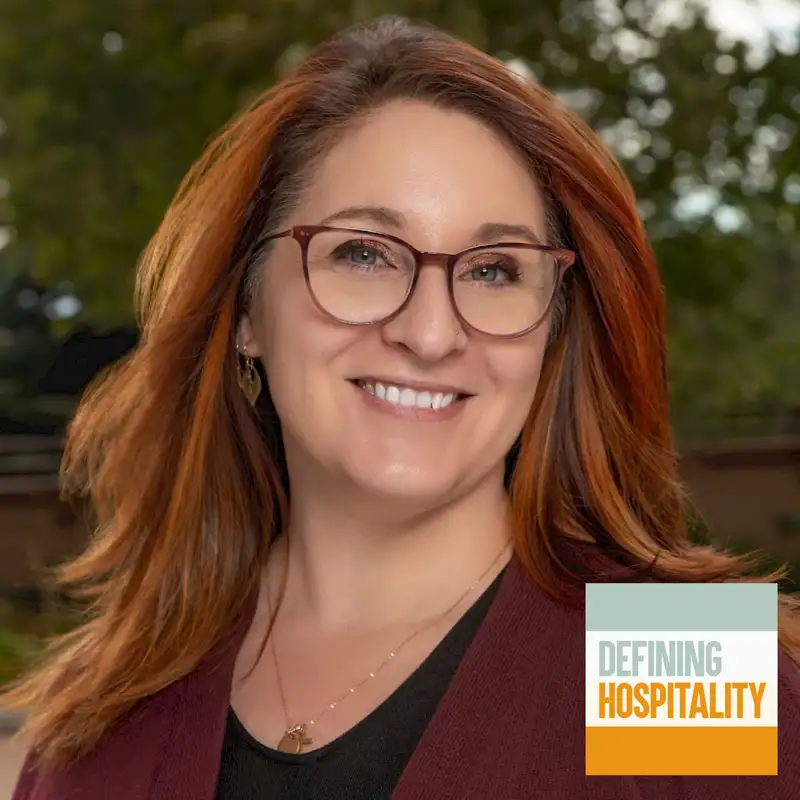
Dan Ryan:Rooms. Today's guest is someone who lives at the intersection of story, strategy and space. She blends her background in art with deep experience across design, procurement and operations, weaving empathy and storytelling into every hotel she touches. From independence to brands, from Europe to Colorado, from scrappy consultant to now VP of design and development at CoralTree Hospitality, she's known for her quiet tenacity, process driven creativity, and for being handpicked by her CEO to represent CoralTree's core value of balance. She's a Colorado Hotel and Lodging Association rising star and a part of the twenty twenty four wave of the future class.
Dan Ryan:Please welcome Chelsea Herschelman. Welcome Chelsea.
Chelsea Hershelman:Hi, Dan. So good to be here. I'm so excited. We're doing this.
Dan Ryan:I am really excited because I think you get the record for taking the longest time for us to nail this down because life has gotten in the way of us so many times.
Chelsea Hershelman:I'm so happy.
Dan Ryan:This is like the best day of my life talking to you today here. Finally,
Chelsea Hershelman:we did it. Dave. Hooray.
Dan Ryan:Yeah, the first time I was sidetracked by altitude sickness, and I needed to get an IV and I couldn't leave my room. So that was a really missed opportunity of doing it in person. But, you know, there's no time like the present.
Chelsea Hershelman:Exactly. This was the time we were meant to chat, so here we are.
Dan Ryan:A 100%. And I also think, did I first meet you when you were working in London? Is that possible?
Chelsea Hershelman:Yeah. I think so. You came over and, came into our office.
Dan Ryan:I oh, yes. That's right. Now I remember. Okay.
Chelsea Hershelman:Our big one one massive room office. Yeah.
Dan Ryan:Yes. There was a lot of activity in that one big massive room office.
Chelsea Hershelman:There sure was.
Dan Ryan:And I don't remember. Were there there weren't many windows either, were there?
Chelsea Hershelman:There were some. Yeah. Because it was an old warehouse building, which we knew about the most in the summertime since there was no air conditioning. So that cross breeze was everything at the time.
Dan Ryan:Wonderful. I do remember. And I'm more than anything. Remember the feeling of being there and meeting you and then watching your career. I don't know, you've just like the introduction says or precedes you I, you've done so many cool things.
Dan Ryan:And you have such an interesting perspective. And now you're sitting in this great seat with an amazing company that's very values driven. And I get from just interacting with you, reading about them, knowing other people who work at CoralTree and just seeing the rise, it's you really get the the feeling that values when they're put first by companies like oftentimes they're just a poster somewhere. But I really do get the feeling that CoralTree is a values driven company. I and I'm sure that's why you've wound up where you are.
Dan Ryan:But before we get into all of that, like what what about hospitality has kept you here?
Chelsea Hershelman:You know, I I love hospitality for so many reasons. You know, it's it's one of those spaces where you have infinite flexibilities. You've kind of seen in my CV that you can you can pivot, you can try new things, and that it's such a supportive space. I really love that about our our industry because, you know, since I've had my first job, when I started with Benjamin West in 2004, I've never really had to, like, cold interview for any other position I've had. You know?
Chelsea Hershelman:People just we support each other in our career growth and our changes and how we need to learn to grow. You know, it's it's such an amazing community, and I love that I can never be bored in it because I I need I need challenge. I'm kind of like a a shark that you gotta keep swimming or you die. I kind of need to be constantly challenged or I'm just I don't feel like I'm thriving. And hospitality is such a beautiful place to thrive.
Dan Ryan:And as you're saying that you made me think of something you said previously where you said hospitality is really an empathetic act and it's a way to help people feel safe, but also supported enough to discover something new. So at what point in your career in the hospitality world did you first experience that yourself? And and I'm asking this question for everyone's knowledge from a place of. When I every time I've spoken to you, there's there's this undercurrent of it's really possible to do anything and to and forge your own path in life. But also just within our industry, hotels have so many different channels of business and so many complexities that it's a really great way to just experience so many things and kind of forge your own way.
Dan Ryan:And it's not necessarily that you need a doctorate in hospitality to excel at it. So, yeah, what did you mean by it's an empathetic act?
Chelsea Hershelman:For me, I think, and I guess it's easy for me to say because I am an empath, but, there's something to be said for when we're designing these spaces and then, filling them with the amazing operations team that brings them to life, we're always thinking about what is the guest's journey? How are they arriving? Who are they? How can we help them? How can we make them feel welcome and safe and, you know, make the most of their business trip or their or their vacation?
Chelsea Hershelman:We really think about that, and we really lean and wanna know our guests. And then I also think about, as we're designing buildings, what is it like for our team members to to to come into the building? Do they feel welcome? Do they have a great space to, you know, put on their uniform and start to personify their role within the hotel? And do they have a nice break room?
Chelsea Hershelman:You know, do they have space to decompress for a minute? Because being on a hotel staff, you know, you're you're you're meeting people where they are, and sometimes where they are is stressed out or scared or angry or nervous. Like, they're you know? Because all all people in all all kind of states of being enter our doors. So to be able to welcome them well and meet them where they're at, is something we think about in terms of the space and then also in terms of our operations team.
Chelsea Hershelman:And for the operations team to meet people well where they are, we also need to meet their needs in the back of house and make sure they have space to decompress and, you know, have have really good food to nourish them and, you know, be able to just, you know, recharge before they go back out and can be their very best for our guests. So in all of in saying all of that, you can see there's just so much thought about how to walk in other people's shoes, you know, and in the rooms, how do people sleep best? You know, I always make sure we have, some extra pillows in the back. Maybe somebody needs a firmer pillow or a softer pillow. So let's have those on demand so that people can can have that.
Chelsea Hershelman:Or some people need white noise. Some people need a completely dark room. So having some things that if guests don't travel, if they're not road warriors like you and I, and they're traveling and they're like, oh, this the light from the TV, the little pinpoint of light is making me crazy, we got to, you know? Here's here's an eye mask for you. So I think there's just so much thought about how to give people the best experience they can for the time that they're with us.
Chelsea Hershelman:And I just love the challenge of that and how we're learning and growing in our knowledge about what people actually need and, you know, understanding neurodiversity, understanding, you know, everyone's going through something. So if they come in hot, don't meet them there. Stay you know, there at eleven, you stay at a free. What can I do for you? How can I help you?
Chelsea Hershelman:And, I think about in the design side, how do we have then maybe we have, a fridge at the, at the check-in desk with with various beverages. So maybe someone just needs a little, like, wellness shots. They're not feeling well. Or a shot of something else because they need to pull them down.
Dan Ryan:Yeah. A shot of something else. Right?
Chelsea Hershelman:Yeah. So, you know, there's what I love about it is that there's infinite opportunity to to discover how best to connect with people. And because it is a very person to person, you know, act to go in to stay in a hotel or to go into any kind of hospitality situation.
Dan Ryan:So one of the things I have a question of, because I always like I like the dinner the dinner party conversation in the sense that. I'm sure you just like I go to dinner parties or get togethers and, you know, people have jobs in finance or jobs as teachers or jobs that are very, you, most people understand what people do. But I find that when I say, Oh, I furnish hotels, or you say that you're a VP of design and development. People I think would understand the design part. Okay.
Dan Ryan:I get that. But the development that can be like a catchall of just every project has its own set of challenges and things that need to get done and its own context. How do you describe what you do to someone at a dinner party?
Chelsea Hershelman:Oh, that's such a good question. And not put them into a coma.
Dan Ryan:Yes. Exactly. Well, I don't think you well, in my experience, no matter who's at the dinner party, most people are always fascinated by, wow, you furnish hotels like you must love furniture and travel and all this. I'm like, well, actually, I just like opening hotels. I like the challenge.
Dan Ryan:I like all the creative people that I work with. To me, like the furniture is almost secondary. It is secondary. To me, it's more making sure that people are cared for towards opening their project. But development is such a wide ranging word that I'm curious what you what you would say.
Dan Ryan:And I also would push back. I don't think I don't think people would be put to sleep by. By that title at all.
Chelsea Hershelman:That's well, thank you. That's good. You know, I think to to your point, yes, we build buildings or renovate buildings or, you know, we some of the development part is us coming in and taking over a hotel, taking over the management of it, and then kind of looking at what improvements we might want to make and that type of thing, including back of house. Because again, making sure that our team members are happy and have a good life when they're at work is really important to us. So that's part of what part of what it is, but really it's leaning into relationship.
Chelsea Hershelman:And and I feel like my entire career, whether when I was in purchasing or doing a bit of consulting and now that I've been on the operations side for the last eleven years, it's about relationships. Right? Because, you know, there's there's plenty of factories that can make furniture, but who's gonna pick up the phone when everything starts going wrong? Who's gonna be there for me?
Dan Ryan:Who's gonna run into the fire? I call it entering the danger and addressing the elephants in the room because so often people don't wanna avoid the the elephant in the room, which is usually painful. But I I love entering the burning building because that's really where where we get to shine. But keep going.
Chelsea Hershelman:No. I highly agree with you. But so, you know, it's always been about, you know, linking arms with all the smart people in the room, all the subject matter experts. And so a lot of that when I think of the the development side of my job or and the design side, it really is about, giving people a platform to shine at what they do best. And so, you know, my favorite thing is really just getting to know people, and then knowing where their strengths are and leaning in on that, and just, you know, hey, you're really great at problem solving logistics.
Chelsea Hershelman:Awesome. We have an issue. Can we talk about this? And, but you can't do that if you don't know people and you don't take the time to get to know them and get curious. I think that so much of my job is staying curious and understanding why is that so expensive, or why doesn't that work, or why is the city pushing back on this permit set?
Chelsea Hershelman:What what's the issue? You know? So so much of it is is really people skills. You know, there's the hard skills of being able to read drawings and look at a space and think how could it be better optimized and, you know, those kind of more obvious things. But the the more underlying and I would argue the more important skill in some ways is is knowing who the players are and how best to work together.
Chelsea Hershelman:And, you know, it's that to me is the most exciting thing when we're all kinda singing from the same sheet. And I will tell you, Dan, I I'm with you on the burning running into the burning room because I sort of love it on-site when we're we're like we're in the middle of punch and we're trying to install some some things and stuff starts going pear shaped. And I'm like, oh, problem solving. And I just love getting into problem solving mode because you can't overthink things. You can't you know, you have to take everyone's opinion into into consideration, consolidate that information, and then come up with a solution.
Chelsea Hershelman:And those days, I go to bed so satisfied because, like, we did a thing today. There was a problem. There was an immediate solution. You know? Because our our lives are a long game, you know?
Chelsea Hershelman:Like the from from the beginning of a of a new build to the time it's built, you know, it's a three to four year process. So those days when you can have, like, problem solution are so exciting to me. I really I really enjoy those days.
Dan Ryan:I it's funny you say that. I don't remember if it was two years ago or three years ago, we were at this Gold Key dinner and I had a bunch of clients slash friends who are clients where we become friends over the year. And one of the things I like to do is I go around the table and I say, oh, you know, something I appreciate about each person at the table. Right?
Chelsea Hershelman:You're the best, Dan. I love that.
Dan Ryan:Oh, thank you. Well, what was interesting is we had time. I didn't get to do it this year because like there was just like a lot of talking and it was loud as it normally is. But for some reason, there was a lull and someone at the table, I think it was maybe Rebecca Weinstein. I'm pretty sure it was her.
Dan Ryan:She said, Hey, everyone, let's share something that we appreciate about Dan. And everyone went around and they were all talking about just shit that had gone wrong on projects. And by and I while I was going, was like, oh my God, I feel horrible. Like this is bad. But but and I started to, I think get sweaty and embarrassed, like reliving some of those painful moments.
Dan Ryan:Like I definitely had the the moisture buildup on the like where my mustache would be. I may have my cheeks may have gotten a little flush, but. And I and I obviously made fun of myself in that moment. But I think what everyone said is like, no, you like those are the parts that really make you shine and not just me, but everyone in our industry who who run into that burning room because, you know, these are we're furnishing hotels, we're opening hotels that are financial assets like they do have to perform. But I've out of my embarrassment, I realized, oh, wow, that's really I like just solving problems and getting ahead of things and, and entering the danger has really served me well over my career.
Dan Ryan:As painful as it can be sometimes, right? Because we just have to hear. But the reason why that my long winded way of saying that is earlier you describe yourself as an empath, and like being super empathetic, and I get that from you. But also when you have a schedule, and you got to get heads and bends, heads and beds, how do you strike that balance between creativity and meeting people where they are and understanding and maybe most of that was from the operation side, but even in the course of opening or renovating a hotel, how do you balance between that creativity and then just the deadlines of opening the hotel?
Chelsea Hershelman:Yeah, that's a really good question because I can get into go mode. And so I kinda like to think of it as and I'll tell this especially to the GCs, you know, I'm like, hey, we're gonna we're gonna work hard and we're gonna get shit done, but we're gonna have fun along the way. And so I usually start to get to know the GCs by going into the OAC meetings and cracking jokes and, you know, just just trying to get everybody to unclench their fists so that people understand that we're we're we're in this together. We're in problem solving mode together. And, you know, because it's the position that I'm in, I don't hold the contracts for anyone.
Dan Ryan:Really?
Chelsea Hershelman:So the only way, yeah, we don't, we don't really hire anybody. We're one of the consultants at the table, essentially.
Dan Ryan:Oh, that's true. So right. Okay. But but everyone becomes a stakeholder whether you're holding the contract or not, and you can help move everything along from the CoralTree perspective.
Chelsea Hershelman:Yes, exactly. So so I have to lead by influence. Right? Because and there's no legal thing that anybody owes me other than we should have a fully done building to operate. Right?
Chelsea Hershelman:But how we get there, you know, the the designer, the contractor, they don't particularly owe me anything. So the best thing I can do then is to get to know everyone and to, to lead by influence and by listening, by staying curious, and asking good questions. And sometimes sometimes I come into a meeting and I'm more like this, kinda like, okay. Let me hear what you have to say, and let let me just sort of influence it, you know, underneath the surface. And sometimes I have to come in a little bit more like this and be like, guys, we cannot open this hotel if x y z isn't done.
Chelsea Hershelman:It it cannot happen. So what are we gonna do to get there? So I I can strike a balance between, you know, those times when I when I get to know people. And I think for me, it's important that they understand that I come from a place that I I care about them as people and and their their thoughts and ideas are important. However, we've got a deadline, and we gotta get shit done.
Chelsea Hershelman:So I kind of get into that mode of, like, trying to inspire people to because I'm excited. I love this process. So, you know, hey, guys. Let's do it. Here's what's the plan for today, and how are we gonna do that?
Chelsea Hershelman:And that even comes down to as we start to hire our executive team, the GM and I will kinda lead morning stand up together, and we get these giant post it notes on the wall and one marker for a different color marker for every department, and we start to talk about, okay, housekeeping, what's going on for you today? Great. What help do you need? Okay. Security doesn't have anything to do today.
Chelsea Hershelman:They're gonna help you. So it's it's kind of coordinating all that. And most of the time, everyone knows the GMs are in charge, but the GMs often were just like, you know what, Chelsea? Just run this meeting. You got it.
Chelsea Hershelman:And to me, of my favorite marks of pride is that when we opened Maison de la Luz when I was with Ace, it was my last opening with Ace Hotels, such a special hotel. And the GM for the rest of his tenure there, which is, I think, another three or four years, he left my last sticky note on the wall of his office. Aw. And that just made me feel good because, yeah, I mean, there's accountability. There's there's the need to get stepped on.
Chelsea Hershelman:But you can do that in a way where you're not an asshole. Like, you can do it in a way that it's like, yep, this this is gonna we're gonna embrace the suck today. It's gonna be alright. And, you know, let's do it.
Dan Ryan:Do know what I love about that story about having those interchangeable meeting leaders? I I've been really lucky in that I've been in this entrepreneurs organization forever and I get to be a moderator of our forum or be an group leader. But all of us have the ability to do that within just on a project. Hey, I tried running this or can I watch how you run it within a nonprofit like in any age or I forgot the the Colorado like Colorado Hotel Lodging and Association? There's all these like organizations that we can try out our leadership skills and see others do things differently than we're used to.
Dan Ryan:And I think that the more all of us listening can have those opportunities to run a meeting a little bit differently or run a meeting on our own, get out of our comfort zone and see how others run it. It just it's really it's like gasoline on a fire as far as like as far as like a learning path.
Chelsea Hershelman:Exactly. And I think that's part of that curiosity piece that's so important because, you know, pretty quickly when you're not when the meeting's not going well. So, you know, it's like, what can I learn from this? How can I recalibrate? Because anything I've ever done, you know, empathic, and I'm also an INFP, so I'm very kind of instinct and gut based.
Chelsea Hershelman:And so I trust I trust that. And so I can't always tell you, Dan, like if you if someone asked me to put stuff in a Gantt chart of how it's all gonna go, I wanna jump out a window because I just understand it in my head. And I explain it to people the best I can, and I'm like, let's just trust the process and keep going. And, when I have that trust, that means everything to me, because people hopefully will know I'm in it with you. We're gonna figure this out together, and anything is possible.
Chelsea Hershelman:Because, you know, it's this isn't life or death, and things are gonna go wrong, but there is always a solution. There's always a plan b, c, d, whatever. Like, we'll figure it out. There's no need to feel defeatist and you know? Do I want do I go in a room and scream sometime?
Chelsea Hershelman:Absolutely. And then I come back back to being positive. But I'm not I don't believe in being unrealistically positive. You know, I think it's more just, well, we have we have a task in front of us. Let's just keep working the problem until we get there.
Dan Ryan:Yeah, my wife accuses me of being unrealistically positive sometimes. But you know what? I'm I'm always like the glass half full. And I'd rather I'd like having that as a fault of mine. I think it's a what is it?
Dan Ryan:It's not a bug. It's a feature. Right. But I also do appreciate her grounding me because then I do have to check myself. But all of this actually ties into something that you said earlier as well.
Dan Ryan:I don't remember if it was in this conversation or previous, but this idea that our industry is infinitely flexible. And one of the things that I love about doing these conversations with people is they inspire people who hadn't considered, oh, I can do this or oh, I could do that or I hadn't considered that. And I think you're like ground zero for being able to try so many things and be on a path to work to the seat where you sit now. So with that idea of the industry being infinitely flexible, can you and I know you mentioned the ACE project, but is there any other project where You just had to bend so much but not break and it got and you got it right? Like, do you have an example of of something of that flexibility?
Chelsea Hershelman:Oh, I think that's what a good question. I would say so I was I was with ACE hotels as a project manager for five years, opened five hotels. The first hotel I opened for them was the hotel in Pittsburgh. And I was new to the role of project management and new to really learning a lot stuff on a visceral level with the operations team and with the construction team. Because previously my, you know, the first ten years of my career being in procurement, you're a little bit removed.
Chelsea Hershelman:Right? They don't really want you on sight that much. They wanna call and yell at you when things are breaking and falling apart, but, you just don't get as much boots on the ground and as much experience. So opening that first hotel, with Ace was was really I had to be flexible in ways. I don't I did I never knew I could be.
Dan Ryan:It was like you were on an going into an ashram every day, like doing yoga in in a hot room, a hot ashram.
Chelsea Hershelman:Yes. With only master yogi. Yeah. Yeah. Exactly.
Chelsea Hershelman:And so I had so much that I needed to learn. And what I loved was I knew how to read architectural drawings to a certain extent, but not completely. And so I learned very quickly, and I always believe this, people are really proud of what they know, so just ask them. And so in no way intending to be a burden whatsoever, I did, you know, with the architects or with that particular project was designed internally with Atelier eighth. So with the designers asking questions and leaning in and just asking, you know, like, okay.
Chelsea Hershelman:Why? Or can you help me understand this? And and those kinds of questions. And then getting to know the GC. This was an adaptive reuse.
Chelsea Hershelman:It was an old YMCA. We were turning into a hotel. So that leads to all kinds of fun discoveries. And so understanding what we can and can't do per the National Park Service who's overseeing all the historic stuff and, you know, all of that. I mean, it was just such a massive learning curve.
Chelsea Hershelman:And then also getting to know the owners and what they needed versus what, you know, Ace needed and and finding a way to meld those together. So trial by fire, but what an amazing opportunity to just really get to know everybody. And I I mean, I got to sit at the front desk and kinda watch them get that all set up and really get to know the GM and kinda what his thinking was on everything. And we had cultural ambassadors. So what how was how was Aaron gonna program this, and what did he need to be able to bring it to life?
Chelsea Hershelman:So that particular hotel is sort of was was my crucible in the introduction on how to manage design, you know, through construction into pre opening and then post opening. And I love that project so much, and I fell in love with the people so much. I ended up moving to Pittsburgh for a short period of time because I just was so proud of what we'd done together, and I felt like I was part of such a community and family, with my ace folks and and just all the people on on, you know, Atelier folks, in the in the home office and then also those people on the ground.
Dan Ryan:Pittsburgh is a super cool town. I just I love the topography of it. It's got great universities, really good food. I don't know. All those bridges going across all those rivers.
Dan Ryan:It's just it's a real jewel of just the way a city could or should look just as far even just topographically. Oh, yeah. That idea of curiosity as you were you were learning and asking questions to me. That's why, you know, I've been furnishing hotels for twenty five or I don't even know how many, whatever it's like, dumb saying years now because I can't remember. But the thing that keeps it sharp and interesting for me is curiosity, because I think every project, especially when there's those challenges that everyone around the table is talking about, is an opportunity to learn.
Dan Ryan:And I love learning. I'm a lifelong learner. And to me, I don't remember if you said this or I said this, but it was this idea that for us, not for everyone, but for us, this idea that inertia is the mind killer. I don't know if that came from Dune. I think in Dune it was like fear is the mind killer.
Dan Ryan:But this idea of inertia and to me, inertia is a time when I stop learning about things and I can stop. I'm not able to share my learnings with other people. With that in mind, that inertia is the mind killer for you and I. What in all the ups and downs and the and the and the different ways that you've you've gone, the industry's gone, the economy's gone. What gave you the courage to keep going in this field even when it didn't all like line up on paper?
Chelsea Hershelman:You know, I think it's the fact that I I've been a leap of faith person most of my life. I think it probably helped growing up. We moved around a lot. So I think I was I think I went to, like, eight different schools, k through 12. So, you know, you yeah.
Chelsea Hershelman:You you learn to like, I learned to belong to myself in the brain Brene Brown nomenclature, and that I can I could do I could do hard things? I could go into spaces where I wasn't that comfortable, especially as a pretty hardcore introvert. You know, I could learn to adapt to new spaces and new challenges. And then that when I was 18, I was able to do an exchange year to France, sort of a fifth year of high school. It's now we'd say it was a gap year, but that wasn't a term I knew at the time.
Chelsea Hershelman:And so talk about ultimate leap of faith going to a new country where, okay, I learned French in suburban, you know, public school, but it was very different going to France. And people talking to you like you're a baby and that type of thing. But so I was determined to get conversational as quickly as possible when I did that. And, know, there was no I mean, there was a safety net in that I was with the Rotary Club, but I really just had to do it. And there was no one but me to figure this out.
Chelsea Hershelman:I didn't have anybody else with me. So I think that was the beginning of of the fact that I just I've always had restless feet in that I wanna go explore, and I just I do have this innate curiosity, and so I just was like, I've got nothing to lose and everything to gain if I try this. And and that's what I did. And, you know, I went to France, and then every time I've changed my career, it's been these leaps of faith. And I have a little meme that says sometimes your only available transportation is a leap of faith.
Chelsea Hershelman:And I sort of love that because sometimes you just do have to step out and and not in a way that is disrespectful to where I've been, but in a way that's like, guys, I've gotten so much out of my time with you. Thank you so much. I I just need to try something new and and to just do it. Because, yeah, it is I can't I can't be inert. I need to keep trying things and and doing things differently.
Chelsea Hershelman:And I I I had a big heart evaluation when I decided to pivot in my career eleven years ago. You know, I I had done procurement and procurement in Europe, especially, which is pretty intense. It's not especially at the time I started, it wasn't as professionalized as it is in The US. So it's a lot more hands on. It's a lot more you're a lot more helping the design in some ways.
Chelsea Hershelman:And I I thought, you know, I could I could do this for the rest of my life. I know how to do this now. I've cracked the code. And I mean, I wrote the SOPs for for Benjamin West in London. Wrote this big thick book.
Chelsea Hershelman:And I'm happy to say they still use a lot of those things, not all of them, but they do still use a lot of that training to when they're bringing in new people. And, you know, but I felt like I just kinda cracked the code, and I thought, you know, I need to I need to challenge myself in new ways, and I'm just not built for an easy life. Not to say that any particular job is easy. It's just more that once you get to know what all where you can where the monsters lurk, you know, it's like, okay. I know I know what to look out for.
Chelsea Hershelman:I know what to do. And I think that's wonderful. I just needed to find new adventures to to keep going.
Dan Ryan:Hey, everybody. We've been doing this podcast for over three years now, and one of the themes that consistently comes up is sustainability. And I'm just really proud to announce that our sponsor, BERMANFALK Falk Hospitality Group, is the first within our hospitality industry to switch to sustainable and recyclable packaging, eliminating the use of Styrofoam. Please check out their impact page in the show notes for more info. I love that you brought up Renee Brown because one of my favorite, like, biz I call them business porn books, but was, was dare dare or daring greatly.
Chelsea Hershelman:I'm looking at that right now on my bookshelf.
Dan Ryan:Yeah. So I got, there's this poem or letter by Theodore Roosevelt in there. It's like I think it's like the man in the arena, but Brene Brown changed it to the woman in the arena. And I got them printed and put them my daughter's rooms, each of them framed. But the idea is and I do I while you were talking, I looked it up and said, the credit belongs to the woman who's actually in the arena, whose face is marred by dust and sweat and blood, who strives valiantly, who errors, who comes up short again and again because there is no effort without error and shortcoming.
Dan Ryan:But who does actually strive to do the deeds? Who knows great enthusiasms, the great devotions who spends herself in a worthy cause, who at the best knows in the end the triumph of high achievement and who at the worst, if she fails, at least she fails while daring greatly so that her place shall never be with those cold and timid souls who never know victory nor defeat. I love that.
Chelsea Hershelman:I would love to I would like to tell you that the sticker on my laptop is a big four by four sticker of the woman in the arena. That is that is my kind of mantra for life.
Dan Ryan:Well, I also got one printed for my son, Theodore, also Theodore Roosevelt. But, yeah, it's something that and I think that that echoes what you're saying about hospitality in our industry being infinitely flexible, because you're able to try so many things and you're able to touch that hot stove and you're able to, I don't know, refocus yourself and and create a new path. So as I think about coral tree, and I know that you have, I think there were six par values with the one imbalance. Like what does that idea of balance mean to you as a leader and also as a teammate? Because to me, daring greatly and being in the arena, like, it's it's hard that's hard to balance with balance.
Dan Ryan:Right? You're you're always iterating.
Chelsea Hershelman:No. It's really true. And I would tell you that, people I worked with in my twenties and thirties, if they they the idea of me being kind of the person who was chosen a couple years ago at our leadership conference at CoralTree, speak on balance would be laughable because I just love to work. I love the challenges. I I really just embraced my career wholeheartedly.
Chelsea Hershelman:But as I've as I've gotten older and as I've been in my forties now, I realized that you can only do so much. And sometimes even when you're in that arena, you just got to take a knee. Just need some time to recharge. And to me, sometimes that recharging is it is it'll be watching some kind of like work, you know, seminar about some particular topic within our industry to just like be passive and learn instead of always having to be sort of problem solving and just let my brain be a sponge for a little while instead of it being wrung out all the time. Sometimes that means that, you know, hey.
Chelsea Hershelman:I'm traveling for work in this cool place I've never been. I'm gonna take a couple hours and just explore it. What is this place I'm in? Let's get to know it because Yeah.
Dan Ryan:That's something I need to do a better job of. I just know it's in and out.
Chelsea Hershelman:It's really hard, but, you know, because we can be so surgical in our travel. But, you know, if it's a if it's a new place I've never been and I wanna be telling stories within this place, I need to understand it. And so giving myself the the grace to take a walk, to breathe the air, maybe sit in a coffee shop and just watch the people, whatever that is. It's really hard for me because I have to really go against my type a personality, but I'm learning how much I actually get out of that and how much that contributes to what I'm doing for work, but that it feels restful and that it is kind of quiet. So I I think that's somewhat of the work balance and then also just, you know, taking time for myself.
Chelsea Hershelman:You know, I had a injury a few years ago, some muscular injury in my hip and it's very humbling because sometimes I can't walk that well. And so if I don't do my physical therapy twice a week, I know it immediately.
Dan Ryan:Okay. So balance and taking care and like it resonates with me, but there's also that imbalance of always driving forward. Right. And. Kind of fighting that idea of inertia, right?
Dan Ryan:In some ways, inertia is about pausing, breathing, being present centering. But at the same time, I also get the feeling from talking to you now and also our previous conversations that some people in our industry or any industry for that matter. But in our industry, particular, someone might not feel qualified to take that next step or to do that or take that next opportunity or take that entrepreneurial step. What do you have? What do you have to say just based on your life experience to someone who might have that limiting thought and think that they're not qualified?
Dan Ryan:Oh, they need to do this and they have to kind of stay where they are for longer before taking that step or trying that new thing.
Chelsea Hershelman:I would say don't disqualify yourself. You know, I think that's the most limiting thing you can do is like, oh, I'm not meant for this or whatever because, you know, I mean I have a master's degree in art history. It's not an obvious career path at all to go from graduating from that to procurement in the hospitality industry. To me, there's a through line in that I got to be part of bringing design to life, and I had studied a lot of the so called decorative arts in my degree. So there was a there is a through line.
Chelsea Hershelman:It's just maybe not an obvious one. But I think that if you can set your pride aside and your type a, if you have a type a tendency that you wanna like always look like you know what you're doing and that you have this, you know, anyone with a perfectionist streak, recovering perfectionist for sure, to just kind of set that aside and say, what do, you know, what do I wanna do with this one wild and beautiful life that I have? And, you know, you have nothing to lose by putting yourself out there Because the feedback you'll get is like, actually, you know, love your attitude, love your enthusiasm. We need someone who has a you know, who's a licensed architect. Like, Not me.
Chelsea Hershelman:But then, you know, you get some further feedback of, but we could see you in a role like this or that or the other, and we don't have that right now, but maybe that's something you should pursue. You know? Or they say yes. Or they say yes. However, we think that actually this role would fit you better.
Chelsea Hershelman:So I think that there's never any harm in just having the conversations and feeling things out and, being really upfront about, you know, I haven't done this before. However, I have skill sets that I think can get me there. And, you know, I I could be an asset to your company.
Dan Ryan:Well, I I think hearing about your art history degree, your master a master's in art history. I think that that just goes to show how you love studying people and humanity. And I think that, you know, as I have kids that are entering college and you know, with AI and all this stuff, where people were saying, you have to code or do stem or yes, I'm sure that's all very important. But I also think so much has to be said for studying literature, arts and just understanding humanity better. It really helps you, like you said earlier, show up, meet others where they are because you do in studying other people and history and art and literature, you better understand people and you develop empathy.
Dan Ryan:Just by reading a book, you might not be able to travel all over the world, But by reading a novel about a certain place or time, you develop empathy for that. And I think so much. Not enough is said, I think in having that kind of liberal arts, people understanding degree, if you will.
Chelsea Hershelman:I agree with you. And I also think that you learn to, you know, you read a lot of different things, assimilate information, you kind of, you have to find an argument, you know, a thesis, and, you know, reason your way through that. And, so the ability to take a ton of information, synthesize it, find find where the data's leading you, and then be able to sort of take that forward and defend it and and and all of that. I mean, I do that all day, honestly. I'm constantly assimilating information and figuring out, okay.
Chelsea Hershelman:Does you know, even just having something like the branding, which is our thesis for any given hotel, that we're working on, and and it's it's it can be the bad and good guy for our design. Right? And so you can always kind of litmus test, is this is this aligned with the thesis or not? And so it's all of these skills that that I learned, you know, with that liberal arts education. And I loved art history because you do you have to study psychology and history and literature and, music and all of the things that I loved I could find in one degree.
Chelsea Hershelman:My dad's an accountant the day I graduated with my master's degree, I was already working at Benjamin West. And in no disparaging way, I'm standing there with my cap and gown, I'm so excited. My dad's like, yeah, but don't you think it's a waste? You're not even in your field. And I was like, dad, cap and gown.
Chelsea Hershelman:But my dad, you know, being quite left brained, you know, he went to school for accounting and that's what he did. Right? And so I just said, you know, just trust me, follow the process. This is a theme in my life, Dan. Like, just trust me.
Chelsea Hershelman:We're I'm going somewhere. And then, several years later when he visited me in The UK, because I I spent eight of the ten years in in The UK doing, procurement across Europe. And so he came out to visit me, and I showed him some of the hotels I was working on. He got to meet some people I worked with, and he it had come full circle, and he was like, oh, I get it. I get it now.
Chelsea Hershelman:Like, you you are using your degree. It's just not in a linear fashion. I said, yeah, doc. I you know, I told you. Just trust me.
Chelsea Hershelman:We're figure this out. So, you know, I think I think trusting myself was a really big thing, and I learned that from from all of those moves when I was little to just kind of learn to trust and belong to myself. And and it's scary. I'm not gonna say it's not terrifying sometimes, but it's always worth it. It's always worth it, even if the answer is no.
Dan Ryan:So you've had this path from art history to purchasing, to project management, to being vice president of design and development at CoralTree. And I'm sure I missed a couple steps along the way. As you sit where you are now. Working within this values driven company, what is exciting you most about what you see in the future?
Chelsea Hershelman:We're we're entering a new kind of phase in CoralTree. We're we're starting to, transition some new hotels into our space that are a little bit different to some things I've done before, which are the outbound hotels. And so this is kind of a new fun lens to to look at what OS and E might be and just how we kinda operate these hotels, because they're meant to be they're in spaces that will connect people to nature and to adventure. And so we're in Stowe and Jackson Hole and, soon to be Yosemite and Mammoth and soon to be Sedona. So there are all these, like, amazing places.
Chelsea Hershelman:Like, you say you say the names of these these locations, and they're immediately evocative. I say Sedona, think that beautiful Redstone or, you know, Dovermont. I picture I picture autumn, which someday I'm gonna get up to up there to see the to see the it's or, yeah, I'm dying to see it. But that inspires me to think about, okay. Well, how do we how is this new way that we're meeting our guests?
Chelsea Hershelman:Because I understand meeting them, you know, for business travel, for for leisure, for pleasure, all of those things. But kind of diving into that more just adventure mindset is really fun to me. And I think what's great about CoralTree is that the core leadership team that formed this company seven years ago, they've all worked together for twenty plus years. And so there's this really, really high level of trust between them. And they don't wanna do things the way they've always been done just because.
Chelsea Hershelman:They kinda look at each other and they're like, genuinely wanna do cool shit that makes sense for for where we're going, but also to stay challenged. So I think that I found a place where I fit in with the leadership because all of us wanna stay challenged. We wanna try new things, and we're not afraid. I've I've heard, Tom, the president of our company, say, you know, we've never done that before, but we've got x y z skill set, and we would love to give the for you to give us the opportunity to show you how we could shine in this because we wanna dive in and partner with you on this particular opportunity. And to me, that just kind of blew my mind that he was totally willing to not just be like, oh, yeah.
Chelsea Hershelman:We've done this a million times. But to be very humble and say, we haven't, but we want to, and we we will give it our all. And, I was like, oh, speaking my language. So I think I'm excited that we we just continually keep ourselves challenged.
Dan Ryan:These outbound properties look super cool. I didn't realize you were you were doing those. Is that that's your own brand?
Chelsea Hershelman:No. It's not our own brand. It's it's with Barings and Waterton and Getty's. And so there there's a really amazing brain trust there, and we're we're the operator. We we have some we have some skin in the game as well.
Chelsea Hershelman:But we get to get to do something just totally different. And and in these, like like I said, these super beautiful locations. I'm so excited about Jackson Hole. We just transitioned that in November, I believe. So, you know, and that's a new it's a whole new place, a whole new mindset.
Dan Ryan:Yeah. And your portfolio is really remarkable in the sense that so many different resorts. You even have single family residential, lifestyle, hotels, luxury. You're really touching every kind of vertical in that independent or quasi independent space or boutique, whatever. I don't even know what boutique means anymore.
Dan Ryan:Soft branded.
Chelsea Hershelman:It's fun. You know? And and a lot of we do do a lot of the kind of residential management platform, and that to me is fun too because it's it's interesting on how how do we know, these are people's usually second or more homes, And so giving them a comfortable space that they love, but that can also be part of a more cohesive hotel product. And how does that all go? That's an interesting challenge as well.
Dan Ryan:And then recognizing me personally, I think, like, being on the receiving end of CapEx budgets forever and ever. One of the metaphors that I keep talking about is since COVID, there's just this so much deferred CapEx on the renovation side, and it's everything from systems to FF and E. It's just been deferred for every kind of reason. And there's this lake I call this lake of deferred CapEx that's trapped behind a dam. And the dam is everything from interest rates to uncertainty of tariffs to construction costs, labor costs.
Dan Ryan:People many, many properties have not refilled their capex reserves since COVID. And it's just been hard to get it there. But there's there's all this stuff that's keeping that dam in place. And but at some point, interest rates will come down. People are will start to understand more about the tariffs and complain around it.
Dan Ryan:And then then you can start showing returns on investment for CapEx work or even repositioning of hotels. What is if you were to use a baseball analogy from like one to nine innings and that damn holding everything back? Where do you think we are as far as like third inning, fifth inning, sixth inning, second inning? Like, where do you where what what do you think will chip away or what are you seeing chip away at that damn?
Chelsea Hershelman:You know, I gotta say, as you're asking that question, the first thing that popped in my mind is the seventh inning stretch. You know, we're just kind of waiting to see because interest rates are starting to come down. There's a lot more first time hoteliers entering the space. And so they are seeing, you know, these maybe distressed assets and and, wanting to, you know, jump on that and, you know, love on them and bring this kind of new interesting product in. But at a certain point, I mean, we're we're now five plus years on the other side of all of that, and building systems do not age like wine.
Chelsea Hershelman:It gets so much worse. And, guests will vote with their feet if they have a terrible stay or they're freezing in their room or it's too hot or you know? And it's hard because the a lot of the deferred maintenance, it's not a sexy spend, and it's a 6 figure to 7 figure spend. It's a huge number, and it's not really it's all behind the wall stuff in a lot of cheap biz, and it's hard to wanna spend money on that when you wanna maybe, you know, dress things up, put some makeup on them. But a lot of what we're seeing is you just have to do it.
Chelsea Hershelman:You just we just have to bite the bullet. And maybe the more cosmetic, you know, instead of being on that seven and fourteen year cycle, something may have to be deferred a little longer. Can we be smart about reupholstering the chair or, you know, adding something to the case good to just maybe even changing out the hardware? I mean, there's there's a lot of creative ways to do some of that, but I think that the demand and the need is just getting stronger and stronger pushing against that dam. And the and the brands are less and less and less tolerant of deferred maintenance at this point.
Dan Ryan:Yeah. I keep hearing that. But, you know, and Hilton actually at the lodging conference was saying that they're going to more heavily weight guest comments and guest feedback as far as and try and incentivize that not penalize it. So like, if you're performing well, I don't know how they're going to do that. But maybe they'll take less of a management fee or something.
Dan Ryan:Don't know what what the financial metrics of that are. But it's also interesting. It's like we're in this age of overcorrection because I remember in 2019 when I reorganized my how I was living my life and just how I operated as a business. One of the data points I looked at is I was I was like, you know, we're ten or eleven years into a seven year credit cycle, right? So we were in 2019.
Dan Ryan:Just before COVID, we were that that credit cycle was extended. And now, like what you said, we're, you know, five or six years past whatever that reorg like that reshuffling should have been back in 2020. Now that's pushed there. So I like to hear that you're saying it's the seventh inning stretch because I look at a baseball game is split in thirds one hundred one thousand one twenty three, three to seven, or three to six, and then seven eighty nine. And it's nice to hear that you think that we're going into the final third of whatever we've all just been going through or are currently in.
Chelsea Hershelman:Yeah. And and I think a lot of owners are recognizing that guests are guests are savvy and, you know, we've we've gotta there's some stuff we just have to embrace and and and fix and and maintain. And, you know, there's there's a lot you can make up with service, frankly. You know, if the building's not so great, but those rooms are immaculately clean, they might be tired, but they're clean. It might be tired, but you had the most amazing welcome of your life.
Chelsea Hershelman:You know, there's there's a lot that service can do, but it's starting to be to a point with some of this service can't overcome some of the big challenges that these buildings are presenting. And so you know, to, to, to get us over that through that dam, you know, I just I do I feel that pressure kind of building up right now.
Dan Ryan:Yeah. And then it's also you look at companies that are, you know, they've staffed up to wait for that flood to come. But it's like, is it really like, how long do you wait before you start rethinking things? Because we all want to service it. I'm, you know, I'm talking to so many design firms and architecture firms and everything else where, you know, they they have this great core and they want to hold on to that core.
Dan Ryan:But it's it's like it's a very wobbly time, I think.
Chelsea Hershelman:It is. Yeah. And the and the the tariffs certainly add another dimension to that. You know, it does it does make it difficult because as much as, you know, I think a lot of us would love to see more manufacture back in The US. That's skilled labor.
Chelsea Hershelman:You can't just, you know, flip a switch and suddenly we're doing this like amazing case goods in The US.
Dan Ryan:Oh, yeah. We'd love to see that too. But, you know, you kind of have to add a zero to your room budget.
Chelsea Hershelman:It is possible.
Dan Ryan:Yeah. But the other thing is like finding the people that's really the hardest thing in any job.
Chelsea Hershelman:It's the people.
Dan Ryan:This has been awesome. If people wanted to learn more about you, or CoralTree, what's a good way for them to get in touch or learn more?
Chelsea Hershelman:I would say via LinkedIn. That's always a great place to find me. I always appreciate somebody reaching out to me there.
Dan Ryan:We will be sure to include that in the notes as well as CoralTree's info as well. Because you guys everyone should just go on to that website and look at the portfolio. It's pretty widespread and pretty fantastic. So I just want to say thank you for being here with me with us and finally making this happen. You really made my you made my 2025.
Chelsea Hershelman:Yay. All right. Yeah. Ending ending on a high note together. Back at you.
Chelsea Hershelman:Always enjoy talking to you, Dan. And so thank you. And I love your podcast. So I'm just thrilled to be able to be a part of it. So thank you, Rick.
Dan Ryan:Thank you. And again, if if this conversation with Chelsea has changed your opinion or how to navigate our hospitality world or hospitality design and development world. And you think someone else might benefit from this, or if you know someone who might be a little nervous to take that first step, just pass this along. Grow a lot by word-of-mouth. And one of my favorite forms of feedback that I get from everyone, and I get all different kinds is, oh, I didn't consider that I could try this, that or the other thing.
Dan Ryan:Or it was really cool to hear Chelsea's experience, and it actually motivated me to try something new. So please pass it along. We appreciate you. Let's have a great twenty twenty twenty twenty six. And, we'll catch you next time.
Dan Ryan:Thank you.
Creators and Guests