Leading Through Exploration and Service - Richard Wiese - The Explorer’s Club - Episode # 235
There is a whole generation of 20 year olds, and I'll even extend it into their thirties. They really are dedicated to making the world a better place, and they're not doing it necessarily for money. They're doing it out of love of science, love of, you know, clean water or fresh air. And so there are quite a few very smart young people working on these issues, and they're they seem highly motivated. And and because of the way communication works, they can intersect each other a lot quicker than in the past.
Dan Ryan:What I do is inconsequential. Why I do what I do is I get to shorten people's journeys every day. What I love about our hospitality industry is that it's our mission to make people feel cared for while on their journeys. Together, we'll explore what hospitality means in the built environment in business and in our daily lives. I'm Dan Ryan, and this is Defining Hospitality.
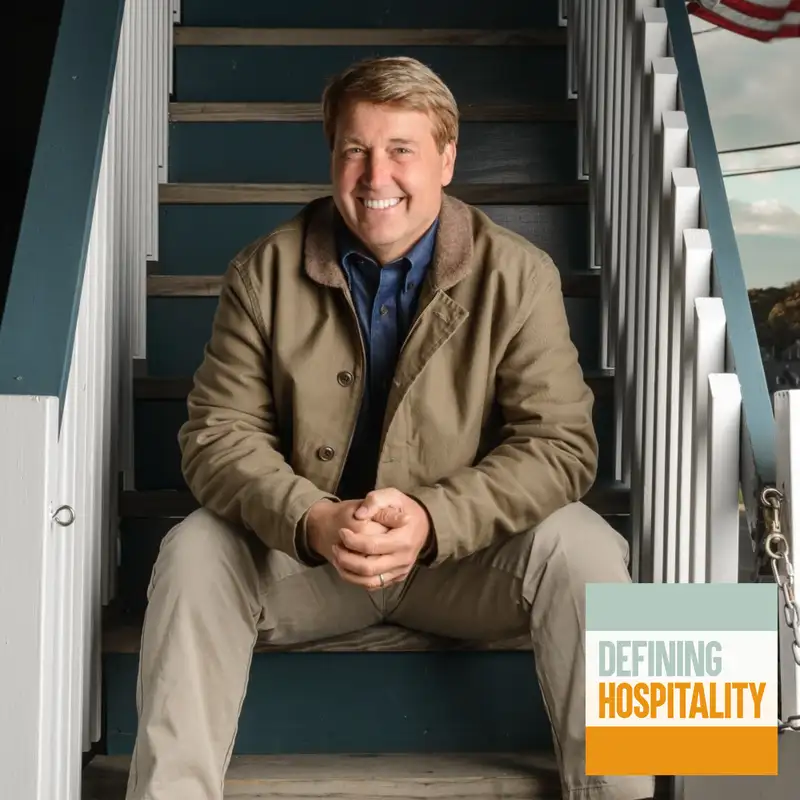
Dan Ryan:This podcast is sponsored by BERMANFALK Hospitality Group, a design driven furniture manufacturer who specializes in custom case goods and seating for hotel guest rooms. Today's guest is an entrepreneur, television host, speaker, author, world explorer, and Emmy award winner. He's hosted a variety of nature oriented programs, including exploration with Richard Weiss and the BBC series Hell on Earth. Over his career, his work has earned 14 daytime Emmy nominations with two wins. Throughout his wildlife adventures, he strives to connect people through discoveries in nature and scientific exploration.
Dan Ryan:He's also the host and executive producer of Born to Explore and president of the Explorers Club based in New York City. Ladies and gentlemen, please welcome Richard Weiss. Welcome, Richard.
Richard Wiese:Well, thank you, Dan. That was a very generous, introduction there. I I always feel I'm I'm better on paper than in through introductions, but you've done a great job.
Dan Ryan:Well, I can tell everyone that you're actually better in person. And what's really interesting is I get so many of these pitches for people to come on the podcast, and I take very few of them. And I almost hit the floor when I got one from your from the, PR company at the Explorers Club saying, would you like to talk to Richard Weiss? Because you and I are dad friend. Like, we're friends, and our kids are the same age.
Dan Ryan:And I remember taking them to the baseball diamond and making a run around the bases and shagging fly balls. And so, like, I know you. And this is so exciting, and I'm just happy to have you on.
Richard Wiese:You're you're almost I I can't say you're walking distance because it's a very steep hill by that very name between your your house and my house but yes, we know each other. The wives know each other. The kids know each other.
Dan Ryan:Oh, yeah. They're in a book club together, aren't they?
Richard Wiese:I you know, I'd be surprised if they read many books there.
Dan Ryan:Oh, yeah. They just talk about how incredible we are as their husbands.
Richard Wiese:Anyhow, yes, I'm happy to be here.
Dan Ryan:I'm so happy to have you here. And the other thing is I, before knowing you many years when I lived in New York City, I'd been invited to the Explorers Club by a friend of mine who is a member of the Explorers Club, and I was just blown away by this. There's so many private clubs around the world, but to see one that's purpose built for people that had been to all ends of the earth and even outer space and that flag you have behind your left shoulder, I think the members of the club bring those all over the world and to outer space. I don't know if there's one of those on the moon.
Richard Wiese:There is. So, you know, it's so funny in my desk drawer by me, and maybe I don't have it. I thought I had a flag sitting here. But, you know, the Explorers Club's been around since nineteen o four, and its members, are the first to the North Pole, first to the South, first on the moon, first on Everest, first to the bottom of the Marianas Trench. Even my own father was the first person to solo the Pacific Ocean in an airplane and you mentioned there are flags at the explorers club and so they're all numbered and everyone of the Apollo missions to the moon carry the explorers club flag and it's it's funny.
Richard Wiese:The Apollo thirteen flag actually came from a note with a note from, James Lovell, the commander of that, and he said, sorry. I couldn't complete the mission. Here's the flag.
Dan Ryan:Oh, you gave him back?
Richard Wiese:Yeah. And, you know, a few years ago, I happened to have Mark Armstrong, Neil Armstrong's, son happened to have the flag at his house, brought it back to the club to donate it. And one of the things I love best about the Explorers Club is you get to hear some great behind the scenes stories. And I said to him, Mark, when your when your dad came back from the moon and he's in that quarantine trailer that they had for the Apollo astronauts, what's the first thing he said to you? And he said, you boys been mowing the lawn?
Richard Wiese:And it's such a dad thing to say. Right? You know, you see your your kid, and it's not about the moon. It's you know, you've been doing your chores. So, yeah, for me, it's it's been great.
Richard Wiese:You know, it's like Harry Potter's Hogwarts for adults.
Dan Ryan:Oh, I definitely got that feeling. And we'll talk about that in a second because I recently had an experience being there where you, introduced these incredible world changing this incredible world changing couple, the Jubers, I believe they were. But
Richard Wiese:Yeah. Beverly and Derek Jubers.
Dan Ryan:They're incredible. And but, also, I got to you got to welcome me into that Hogwarts. So I got to you welcomed me into your home before, but also to be able to see that at this storied place, on the Upper Upper or Midtown East.
Richard Wiese:Upper East Side.
Dan Ryan:Upper East Side. It was just I just felt so at home in such a group of incredible people from all over the world that are just very intrigued by what the in explorers club brings. But before we get into all of that, you've traveled all over the world. You've experienced so many different cultures and people from the time you were a kid. I remember your dad the story you told me of your dad dragging you up Mount Kilimanjaro when you were a kid.
Dan Ryan:But what does hospitality mean to you? How do you define it? And then we can kinda pull on that thread from there.
Richard Wiese:Well, it's funny you mentioned thread because to me, hospitality isn't about thread count. It's really about heart. And it and it really transcends wealth or design. It it's really how people treat one another. And, you know, there there were are 5,000 languages spoken on Earth, yet there are universal languages of food, music, art, dance, nature.
Richard Wiese:And when you sit there and you break bread with somebody over a meal, and it could be in Morocco, it could be sitting on the floor, It it's you know, as I said, it's less about that thread count and really what, you know, is coming from their soul. And, you know, it's it's it's makes somebody feel that they're being heard or comfortable, and, there's something very wonderful about it.
Dan Ryan:So I wanna go back to being up at the Explorers Club recently because I also find that in all of my travels, especially whenever I've been on safari in Africa in particular and then met a bunch of the expats who moved to Kenya or grew up in Kenya. They have these most incredible stories of just the time that they contracted malaria while logging up in Uganda or whatever, whatever, whatever. But the the Jubers who are are their life mission is really conservation and they were run out of Botswana at one point and recently went back and that was incredible to hear. But the millions of acres that they've put into conservation and also the people that they bring into these areas that they've that they've conserved and just to impact them and create this almost I got the feeling just from their stories, their filmmaking, their trials and tribulations. They they're like a a lightning rod for awareness in conservation Definitely.
Dan Ryan:And bringing people into that fold and really changing the world. And I I was just totally blown away. And I I I would think that sitting in the seat that you sit at at the at the Explorers Club, you're you're around I I that was just one couple that I met. But you must see so many of these people that are trying to change the world and make the world and outer space a smaller place.
Richard Wiese:You know, well, they happen to be an extraordinary couple even by explorers club standards. They are truly world class. A lot of people might not recognize the name but know their National Geographic films that they do on Africa. But that very lectern that you saw me stand at and them stand out. I it's one of my favorite places at the Explorers Club because I've seen Jane Goodall's hands on there.
Richard Wiese:I've seen Neil Armstrong's hands on there. I've seen Sir Edmund Hillary. You know, I've seen one great person after another. And I guess one of the great traditions of exploration is storytelling, and it really goes way be before the explorers come when people first came out of caves or out of trees, my relatives more recently than others. But they, you know, someone would always stand there and say, you'll never guess what happened to me.
Richard Wiese:You'll never guess what I saw. And that's a tradition that that follows. A couple stories come to mind. I was we had an event where we had nine Apollo astronauts, and I was driving with one of them back to his hotel in a taxi. And I was saying, you know, when I was a kid, one of my favorite memories of my father was standing under the stars, and, you know, he he knew celestial navigation when he started in the airlines.
Richard Wiese:And so Al Warden said, you know, when I was coming back from the moon, which is always a great way to start a story, he said, I was afraid that we would have the same issues that Apollo thirteen had of losing coordinates and then really not being able to get home. So he said, without telling NASA, he goes, I have an eight inch window on my Apollo spacecraft. And he said, I decided that I'd use celestial navigation to find my way back to Earth. Think about this. To do it just on Earth itself is hard, but now the moon is moving, Earth is moving, and you're in a spacecraft, but yet you had the competency to be able to do this, you know, just on your own.
Richard Wiese:You know, I I got goosebumps.
Dan Ryan:So he wait. Just so I'm hearing this right. Because I remember in Apollo 13, the movie, when the computers went down or something was wrong, they were using stars and line of sight dead reckoning almost with a with a burn. You could override the computers to figure out your way home?
Richard Wiese:I mean, the computers were not very, sophisticated at that point. You know, other stories of Buzz Aldrin telling landing on the moon or or even remember I was on an expedition with Prince Albert, let's drop a name, and we were he was giving me a ride on his jet back to Montreal so I could get back to New York. And there was a astronaut Chris Hatfield on there, and we were just all talking about, seeing aurora borealis', and he and he chimed in. He goes, well, I happen to do a spacewalk over my country during an aurora borealis, and it was also the country's first spacewalk. So not only is it seeing the northern lights, but it's actually walking in space over the the northern lights.
Richard Wiese:Or, I I mean, it's just story after story like that. And and it it sounds like peep people are either name dropping or being pompous, but when you start a conversation with somebody who you know, you know, whether they've dove on the Titanic or been up Kilimanjaro or Everest, the conversation just jumps in at a much higher level or or placement because you just assume the person knows where it is, and it's been there, and he's eaten there, and it's been under the stars. So, yeah, it's it's it's fun. I I really enjoy the community.
Dan Ryan:Okay. So how does someone become a member of the Explorers Club, number one? And when did you become president, and what's been your, I guess, your your driving force as far as being president? How do you wanna shape the future on on your tenure as president of the Explorers Club? What what's your what's your top one or two goals as the Explorer's Club president?
Richard Wiese:So for me, how most people become this is not, you know, a Travelers Club. To in order to be a member, you have to have contributed to science in in some sort of manner. So while climbing Everest might be a great feat, it wouldn't necessarily qualify you as a member, but maybe you study butterflies in Central Park, and that might be a way. I I've been involved with science since I was a boy. You mentioned that my father took me to climb Mount Kilimanjaro when I was 11, when I was in high school.
Richard Wiese:I helped the local conservation officer build the first artificial reef in the Long Island Sound. And then when I went to Brown, my major was in the sciences. So I I had a science background. I have a favorite uncle at MIT who's the head of their nuclear engineering department. His daughter works on the Mars Rover.
Richard Wiese:So, you know, I've had that. I was lucky to have great mentors in my life. But I can tell you when I first joined the Explorers' Club, there's just no way if you said you'd ever be the president of this organization. I I would have thought, yeah. Right.
Richard Wiese:I mean, I was just honored to be a member. And lo and behold, in, 2002, I was elected, to be president. And, you know, it's pretty awesome because everything from heads of state to famous history making people come through those doors, and you're part of that history. But, you know, you said what what is the driving mechanism? I think anybody who works for a non for profit ultimately wants to make the world a better place, but I also feel that unrealized potential of explorers and scientists around the world is something that I wanna overcome.
Richard Wiese:And so during COVID, I started this honor program called the Explorers Club fifty. 50 people are changing the world that the world needs to know about. And it was built on the premise that all of us, Dan, including you, when you travel someplace, you meet somebody extraordinary. It could be in Mexico, Nepal, and you go, my god. This person's extraordinary.
Richard Wiese:And that's usually where the conversation ends. And so what I asked explorers to do is break the mirror of self reflection and say, instead of look at me, look who I found. And the program is now in its sixth year. That's 300 people. It's like fifty fifty male female, 50% international.
Richard Wiese:There's people from Nepal. There's people from South America. It's it's an extraordinary program. It's organically derived, and each class is more amazing than the next. It goes from relatively young to I found a woman named Susan Bauer on Cape Cod who has an organization.
Richard Wiese:She's 85 called Old Ladies Against Underwater Garbage. And she goes in these ponds and they clean out, you know, trash from these ponds and she is like one of the most inspiring women or persons I've ever met. I mean, just an an extraordinary person.
Dan Ryan:Okay. So Susan Bauer or or even yourself, myself, and anyone listening to this. We have a lot of architects, designers, and other people in who are building hotels, restaurants, bars, restaurants, resorts around the world and other entrepreneurs. But one of the things that I am a champion of, whether it's in my entrepreneurs organization or within my industry, there's so many paths of leadership that can help promote scholarship. Whether you're at a committee level, a president, a a membership chair, there's so many nonprofits that we can all get involved in that I think sometimes people feel intimidated to do.
Dan Ryan:But you just it's a good way to pierce through. In my experience, it's a good way for me to pierce through what I do, who I'm always talking to, and also just kind of change my perspective and see how other leaders lead. Do you have any experience share or or opinion on people who are listening that whether there if there is an industry organization that they've been debating whether or not to take that leap into, like, dedicate some time to, do you have any words of encouragement to take that step further?
Richard Wiese:So there's a famous oceanographer named Sylvia Earle. They call her her her deepness because, she has some incredible oceanography records. But she always has young people coming and say, oh, doctor Earle, I'd love love to do exactly what you're doing. And she said to peep she said to them, if you hang around the action long enough, you become part of the action. Meaning, if, say, you're a high school kid and you're interested in oceanography, you know, go down there.
Richard Wiese:Be the person who cleans the boat or does the job that no one else wants to do, and suddenly you become part of the gang. And I and I think that my wife Nikki has a saying, doing well by doing good. You know, there are many benefits to volunteerism, and one is that you meet incredible people in a, maybe in a, nonwork environment, and you get to really get to know them. So you you your your network of people you meet, you know, becomes incredible. And I I think as you mentioned, you get to see how other people kind of do things.
Dan Ryan:I'd also love to give a shout out. I mean, thank you for mentioning Nikki again. By the way, Nikki, if you're listening when you're listening, that's the second time we've talked about you here. So, Alexa, I'll give you a shout out too. But Nikki took it upon herself just in our town in Connecticut to collect food scraps from people's table, all the waste.
Dan Ryan:And I don't know what the number is at right now, but it must be over 10 or 20 tons of food waste that then gets turned into compost now. But my point of sharing that story is for all the listeners, there's so many opportunities to become a part of the gang, like Richard said, or Sylvia Earle said, and he quoted, where we can lift where we stand and make an impact. And I think that's what I was also most impressed by when I experienced you at the Explorers Club and having the having the Jubearers there and telling their story and how their impact. And it doesn't have to be, like, the most incredible impact. Every little step, every every drop of water can turn into a waterfall, which is what I I say that all the time.
Richard Wiese:A ripple. A ripple. So, Dan, I'm curious. You saw me standing at that lectern that I described speaking to an audience. Was that any different than when you normally see me?
Richard Wiese:Obviously, circumstances.
Dan Ryan:No. The only thing is that you just didn't make eye contact with me because there you had these bright lights shining in your face. Normally, I I felt like you were talking to me even though there were really bright lights in that old storage room.
Richard Wiese:Yeah. They were because they were they were doing that for a they stream these things, and that night, I remember they had just, like, boosh lights in your face. I have to tell you a funny story regarding that. So in 2004, I was president of the Explorers Club, and it was our centennial. And we have sir Edmund Hillary there, and I was introducing Buzz Aldrin.
Richard Wiese:And so you have those bright lights, and it's like in the movie bodyguard. You see one face that doesn't look the same or smiling approaching you, and this guy was sort of coming towards the stage. And I was above, the stage because it it it was at the Waldorf, and there's about a I guess, about three and a half, four foot riser. And this guy and I thought, my god. He's gonna try to shoot Buzz Aldrin.
Richard Wiese:So I took my napkin, dinner napkin, and I put it in front of his face because I thought, alright. Let me cut his line of sight off and he grabbed my hand and he bit me. And so I've put it together like the Zabruder tapes why he was so agitated. And so he was like, how can you be spending all this money on, you know, going to the moon when blah blah blah blah blah? And it's interesting to that extent too more than ever lately.
Richard Wiese:I've been meeting more and more moon deniers that we actually landed on the moon.
Dan Ryan:That is just unbelievable to me, that you that people don't it's almost like I my my thinking is and this could be a whole other tangent, which we might not need to go down. But when I was a kid and even into my early twenties, I always thought that, you know, three or 4% of the world thought that Elvis was still alive. Now Elvis obviously is dead now because so much time has gone by, but it was like that. And maybe in that three to four or 5% buck
Richard Wiese:But it almost seemed funny. Right? It was it was not like it was serious that you don't believe that the earth is round or something like that.
Dan Ryan:Oh, so you throw in the flat earthers to this, the conspiracies, the science that are not all these things that are happening, I just feel like that three to four three to 5% number of people who were just kind of kooky, I think it's, like, 15 or 20% now. And it doesn't have to be Elvis. It can you it can you name it. And it's just it's a very unusual time. And I think it's it's all the more reason why I think science and and the explorers club and your role there and getting that word out is and impacting people, I think it's just all the more important now more than ever.
Richard Wiese:Yeah. No. I mean, not just that, but I also think that volunteerism brings out the best in people, you know, civics. And I think that, yeah, the the world is an angry place right now. I mean, part of that is by design that you know, let's face it.
Richard Wiese:If you're China or Russia to sow discontent in America, you don't have to aim missiles at us. All you have to do is, you know, talk smack about whatever their ideology is, and, you know, people seem to get angry. But that's the beautiful thing about design and hospitality because you're trying to go completely the opposite of that.
Dan Ryan:Hey, everybody. We've been doing this podcast for over three years now, and one of the themes that consistently comes up is sustainability. And I'm just really proud to announce that our sponsor, Berman Falk Hospitality Group, is the first within our hospitality industry to switch to sustainable and recyclable packaging, eliminating the use of Styrofoam. Please check out their impact page in the show notes for more info. I wanna go back, like, using Nikki and yourself and and your missions of volunteerism and lifting where you stand, if you will.
Dan Ryan:You're busy. You're a dad. You're a husband. You're producing shows. You're winning Emmys.
Dan Ryan:You're getting nominated for Emmys. Just like everyone else, we're all busy doing our day to day. But I always say that all of us have 5% of our time that we can dedicate to other things. How do you balance all of the things that you're doing, but also manage to tell the stories that you tell and and stand at the helm of the Explorers Club?
Richard Wiese:You know, things are much easier, and they don't seem like work when you love what you're doing. Right? When you when you really love like, I love filming internationally, you know, in the desert, whatever it is. That I find fun. The business aspect of any industry is usually less fun, you know, accounting and, you know, personality conflicts and all that other stuff.
Richard Wiese:I personally feel very enthusiastic about life and optimistic to some degree. And, you know, part of that too, I think there's a larger holistic equation of even good health that makes you more vibrant. You know, if you're always hungover or you're not sleeping enough, you know, everything becomes or if you're in a bad relationship, everything becomes hard and harder on you. And so I I think the big buzzword these days, especially for guys our age and older, is longevity. How do you live long being vibrant and enjoying what you do?
Richard Wiese:Because I I do think that in all industries that your ability to sort of solve problems or design something or create gets better with time. The only intersection sort of like a good quarterback gets smarter, but sometimes their body starts failing, and they can't use those smarts. So I think that, you know, one of the goals of being successful is being vibrant past your twenties and thirties or even forties, that you're still vibrant in your fifties, sixties, seventies, and eighties.
Dan Ryan:And and part of that, I would think, well, I'm gonna go out on a limb here for you and doing all the things that you do. And and you've said these words a few times in speaking and leading up to this, but this idea of storytelling. And so many of the listeners that are listening here are designers, architects, engineers, well, maybe not the engineers as much, but who knows? But through any kind of narrative where they are really trying to tell a story of where is this place that we're building? How do we do as much research as we can and tell the story about it so that we're at whatever this built environment is, it connects with the place that we are at.
Dan Ryan:I've also felt that this idea of storytelling has become like an overused couple of words there. What are your feelings on the idea of storytelling as a storyteller? And now it seems to be, like, the buzzword of the of the decade.
Richard Wiese:Yeah. I mean, I hate when certain terms get overused because then you're like, blah. Right? I think that storytelling isn't just about travel. You know, for example, I'm holding a glass out right here.
Richard Wiese:And it reminds me of in that movie, The Devil Wears Prada, and she got onto that blue sweater she was wearing and how that specific color wasn't something she happened to choose. It was chosen for her. And I think that everything I'm I'm holding a pencil. I mean, this pencil has an incredible story of its vulcanized rubber that may be came from Vietnam. You know, maybe the lead came from Colorado.
Richard Wiese:You know, there's a reason why they're using this particular yellow color on it. And even the design of of having it how many sides is it? Five sides? That, you know, somebody found along the way from a dexterity standpoint that this was the better thing. And even the type of wood.
Richard Wiese:You know, I think this is some sort of pine. I don't know where it comes from, but it probably sharpens better. So anything that you have, you know, has an evolution to it. And to me personally, I love when architects or hotel designers tell me why they chose certain aspects of their lobby, what the stone you know, not everything is just driven by cost. It's it's because of the story that each one of these materials or the shape, you know, wants to make people feel you know, the reason the the whole idea of putting chocolates on somebody's turned over covers, I'd never do that at my own house.
Richard Wiese:I'd be sleeping in chocolate if I did it. But, you know, all of those things have a rhyme and a reason to it, and and each one has a story. I mean, there there's so many things that we talk about, and I I mean, I just heard an interesting lecture the other day because we're in the Christmas season that Jesus' real name wasn't even Jesus. It was Yashu and that the letter j wasn't even invented until 1524.
Dan Ryan:Wow. But that, something you just said also resonates with me in the sense that many of the hotels or travel experiences that I've had, when the people working there are able to tell the story of that painting or of where that found object is from. It just also goes to show a level of caring, right, and impact that whoever built this place took it upon themselves to be able to make it their mission to continue to educate the people there so that they can tell the story. Some of the my my most favorite dinners, I was just talking about this yesterday, with a colleague of mine, Shannon, that one of the best restaurants I've ever been to, I will never go back because I don't wanna ruin it. But most of what it was I don't wanna ruin the memory of it.
Dan Ryan:But most of them what the memory was was the sommelier telling me and what I'm tasting and how it pairs with this. And I don't know if it's true or not. I'm not a wine guy, but I'm I'm able to suspend all disbelief and just go on a ride and be completely transfixed with that story. And there is an impact. And then I in a way, in some other aspect of my life, I wind up paying that forward.
Richard Wiese:I think that, you know, for you know, the food experience is very interesting because it is universal. And so it's no different than when you go to someone's home or a small village and someone's with all the pride in the world telling you why this meal is x, y, and z, why they made it, and their family recipe, and how it's the best, and the care they put into it, that's very seductive at any level, even if you don't particularly like the meal. You just feel like the intention was so good. For me, ambiance plays a big role. Like, you know, there's no better dinner than sitting under the stars for me personally, whether I'm in a ship in Antarctica or, you know, Africa comes to mind in a boma, you know, where you're just looking at a a a carpet of of stars.
Richard Wiese:To me, that is that is great. In the summer in Connecticut, I I love eating outdoors. I really love eating outdoors. I've eaten outdoors at your place. You have a a great spot for, I think, entertaining there, Dan.
Richard Wiese:It's it's nice. I give you a five star rating on there.
Dan Ryan:Oh, good. Thank you. Thumbs up. One other thing I noticed, and I I don't I I def when I was in the lobby of the Explorers Club, I think it was lobby Ground Floor. There was a partnership with Rolex, and I think maybe another one with Microsoft.
Dan Ryan:But there there are a couple of different partnerships that are happening in in that in in your townhouse, of the Explorers Club. One of the trends I'm seeing, in the hotel world, and I don't know why it hasn't taken on more, but this idea of branded residence. So imagine if there was a Rolex hotel or an Apple hotel or these don't exist right now.
Richard Wiese:Well, I just stated an Armani, hotel in Dubai. I mean, that was at Burj Khalifa.
Dan Ryan:Right. So the yes. And I don't know why it hasn't taken off more because if you think about a hotel as a completely immersive experience, I don't know why more of these aren't happening, but they are starting to happen. There's a there's a trend in this happening now. Were you involved in orchestrating any of those collaborations with those brands and the Explorers Club?
Dan Ryan:And and if someone is starting to work on one of these branded type residences or hotels, what are some things to consider if if you have experience in setting those up?
Richard Wiese:Well, you know, you brought up Rolex. That's the, our oldest sponsor at the Explorers Club, and it was started by, their CEO and and named Roland Butan a long time ago. I he's still alive. I know him. He's an outdoorsman, and that was the alignment.
Richard Wiese:But Rolex is an interesting company because they really don't advertise or I I know they they don't use consultants to sort of do market studies. They're a lot more organic on it. And from, you know, their partnership is different than most. They really don't want anything in return. You know, they want a polite mention or they wanna know how they're being aligned with other products but you know, how they fund things is just different than other companies.
Richard Wiese:Another company that we work with is Panant. It's a it's a a luxury cruise line that they take people on really not off the shelf type expeditions, but they they've chosen to partner with us because they also include science on it. Like, people can actively do experiments and be part of scientific studies. It's great for multigenerational travel. You know, I deal with them a lot.
Richard Wiese:We discuss what would be interesting to passengers. And I think that what you're finding with a lot of higher end hotels or cruise lines like Penance is that they're trying to give people unique experiences. And I think more and more people, it's not just about going to the Eiffel Tower. It's maybe having knowing that the restaurant is just you and four other people, and that's it. Or that, you know, you're in Antarctica with somebody who's the foremost glaciologist.
Richard Wiese:All of these kind of unique experiences to to me deepen the relationship with that property and I think, you know, another term that's being used a lot in travel is called cultural immersion. And I think what that is is if I'm going to New York City, am I gonna have somebody from France take me around? No. I'm gonna have a New Yorker. Hey.
Richard Wiese:Forget about it. Right? And it's the same with when you go someplace else. Don't wanna take your slice of America and bring it to Paris or bring it to La Paz or to any other place, to Nepal. You want that cultural immersion on a curated kind of level.
Richard Wiese:Curated meaning that they're taking out looking at the best aspects of their culture, allowing you to experience it, And, also, I think a lot of Americans want Hemingway without the hangover. You know, they they wanna go someplace that's cool, but know they're also safe, and they're being watched over.
Dan Ryan:And six toes six toed cats always help, right, in the background.
Richard Wiese:That's right. The ones in Florida.
Dan Ryan:A lot of what you just said also has to do with as far as on the immersion side, this experiential travel. That's another trend that's definitely happening in the luxury and also just lifestyle. It's it's more approachable for everyone, whether it's glamping, having a cultural immersion, learning a language, going on a long cycling trip. Has the Explorers Club thought about doing that more or partnering with any of the larger hotel brands out there as far as digging into what their experiential travel might be? And then on the other side, know we're talking about terrestrial travel, but even Hilton now is working on they're they're actually building out a hotel that would be up in space that there could be space tourism coming from.
Dan Ryan:But is there anyone has the Explorers Club figured out a way to kind of put themselves between those experiences to to kinda make it make it make to make exploration more approachable for everyone. I guess that's what I'm gonna try. Because a lot of people wanna explore things, but they don't know how to take that first step.
Richard Wiese:Well, I'm gonna tell you some of the best first steps is that and you'll recognize this where we live close to the Long Island Sound near Westport. At low tide, there's this giant sand flat. You know where it is, Campo Cove. You've been there before. And, you know, the great thing about these big these big low tide mudflats or sand flats is that there are no rules other than being respectful to nature.
Richard Wiese:And so you see a kid building a sand castle. You see another kid making a little crab fort. Another kid maybe kicking a soccer ball. But to me, that is such a beautiful hour or so where, you know, you could just create. It's it's a blank canvas.
Richard Wiese:You know, the other thing too is, you know, birding. You know, make a life list. It's one of the few things that you collect that you don't actually take anything. I mean, these gotta be things that interest you. You know, for me, you know, I hike through our woods.
Richard Wiese:We're we're blessed by really great hiking trails, you know, close to where we live. I go every morning with my golden retriever and, you know, I I just love the fact that I I see so much from yesterday. I saw a pileated woodpecker, to you know, sometimes I'll see the, claw prints of a bear that might have scratched the tree. So, you know, you don't have to go far afield to explore. You know, part of the perspective of exploration is also seeing something that you've seen often through a new set of eyes.
Richard Wiese:And I'll give you an example. Everybody has seen a full moon come over the horizon that you've said, wow. Look at the size of the moon. Right? We've all said it.
Richard Wiese:I know everybody said it. And and if you ever try to take a photo, the photo never really comes like the experience. And so when the moon comes over the horizon, it's actually a trick of your brain that if you put your thumb out to measure it or even a tape or a little ruler, and then when it was overhead, it's exactly the same size. So why is that? So you're it's a it's a trick of your brain.
Richard Wiese:We perceive things on the horizon to be closer than we do overhead. So through our eyes, one of the most intuitive things, it's called the full moon illusion, but one of the most intuitive things is, my god, the moon is huge. Right? I see it with my eyes. You can't tell me it's not big, but yet it's a trick of your brain.
Richard Wiese:So the next time, Dan, you go and see that huge moon, just put your thumb out and measure it and then measure it later. You'll see it's the same size.
Dan Ryan:So off okay. Thank you for sharing that because it's very timely. I just received a gift from a former podcast guest and also a friend, Craig Calachian. It was a he gives books out every year.
Richard Wiese:Oh, I'm supposed to give you something now? I'll send you something, Dan.
Dan Ryan:I I I expect it. I expect it. No. You don't have to give me anything. But he just sent me Amy Tan's new book.
Dan Ryan:Have you heard this? It's the backyard bird chronicles or something like that.
Richard Wiese:No. I haven't.
Dan Ryan:Okay. She wrote Joy Luck Club and all these other she's like a literary force. Right? But but it's basically I haven't I just flipped through the first couple pages, but it's this meditative journey to her backyard and just starting to look at birds. And I guess, oftentimes, if I think of exploration, it's this big thing where you need bags of ropes and petanques and gear.
Dan Ryan:And but like what you just said, we can always just start exploring in our backyard because it's all right there or a mudflat or you you can just zoom in on something the size of your thumb, like if if it's the moon or a patch of grass and and just learn so much just from being right there.
Richard Wiese:I agree. You know, sometimes you have to like, I'm a little I I've gotten into foraging a bit, and I actually had a bad foraging experience this past spring. Yeah. The mushrooms. Oh my god.
Richard Wiese:That was
Dan Ryan:Oh, wow. Were they fun mushrooms, or were they poisonous mushrooms?
Richard Wiese:They weren't fun for me, but I think in retrospect, they were. They were a psilocybin, which I think are called magic mushrooms. So if if one or two get you high, I had a dozen of them. And when so just to give you some backdrop, I a friend of mine, she she's a forager. She's also a chef.
Richard Wiese:I showed her some mushrooms that were growing in my backyard. She said those are really great, but why don't you eat smaller ones? Those are gonna be a little tough. So, you know, I I got a good amount of them, a really good amount, and I sauteed them in garlic and put them in an omelet. And I'm just sitting there with my dog by my side and, you know, my screen porch, and I'm going, gosh.
Richard Wiese:I god. A little bit of a headache. I said, let me have a glass of water. And what I didn't know is that water makes mushrooms express themselves, so it shot through my veins and head. I thought I was having a stroke, but I knew the test to test yourself for a stroke.
Richard Wiese:And I could feel like a train that I was gonna blackout. And I said to Nikki, I said, Nikki, you gotta get me to the emergency room. And, you know, I fought really long and hard not to pass out. You know, of course, yeah, that was that was not fun. That was just my wood chip pile right in my side of my house.
Dan Ryan:I was many years ago, I was invited to a dinner at the James Beard Foundation, yeah, on thirteenth or '4 twelfth, somewhere down there in in the village. And the whole menu was foraged from within, like, twenty blocks of Greenwich Village. It was amazing.
Richard Wiese:Yeah. That's great. I mean, I I honestly, I love for I mean, I do it all the time with a lot of greens. I mean, you know, stuff is fresh. There's more food in the woods where we live than there is in the grocery store.
Richard Wiese:You just have to know what to eat, and I'm I'm just not doing the mushroom root again.
Dan Ryan:And speak oh, yeah. Understood. Okay. But also just a metric, and you might not have the latest. But regarding Nikki's food scraps collection and turning into compost.
Dan Ryan:Again, this is something that anyone can start anywhere, wherever you live, and that's a different kind of exploration. But how many tons have been diverted and now converted into into compost?
Richard Wiese:I I don't know. It's it's in the tons. You know, my wife was originally from South Africa, and she went back to be part of the post apartheid South Africa, and she started an organization called the Africa Foundation. She was in her early twenties, and the whole idea was to include local communities around safari parks so that the safari venues would hire local people, buy their food, all of that stuff. So that locals would find that being you know, having this safari area in their backyard would be a good thing.
Richard Wiese:People would get jobs. They would sell their food there. They'd work there. They'd become executives there. And so that particular organization, you know, as of five years ago, I think it raised like $65,000,000 so, yes, my wife is very industrious.
Richard Wiese:But she did it for the right reasons. Honestly, I wasn't as socially conscious until I met my wife. I just, you know, maybe it's becoming a father too but you know, you just sort of realize that it's not not how fast I get up to the mountain. It's sort of the people you meet along the way.
Dan Ryan:And well but you've been exploring so was that when you were 11, was that the the the biggest or the first big trip that you remember going up Kilimanjaro with your dad?
Richard Wiese:Well, yeah. I mean, in terms of, like, expedition yeah. I was this is 1971. It wasn't even a national park then. And I remember, we went to in New York City, Abercrombie and Fitch, At that time, it was an outfitter, not an underwear company, and, you know, getting the leather boots and all of that.
Richard Wiese:But, you know, after that, to me, you know, I was just outside all the time. Didn't matter whether it rained or snowed. I would go to our, we lived on a harbor on the North Shore Of Long Island. I'd go clamming by myself. I started a lobster business.
Richard Wiese:I was just always outside and you know, I used to go there was a local private trout preserve that I used to go poaching in as a kid. You know, it's just always outside. I'm I'm way tougher than my kids are for sure at that age.
Dan Ryan:Right. Well, yeah. Yeah. Our kids go to surf camp in France, and it's it's really hard for them.
Richard Wiese:Yeah. And they're raised like little veals.
Dan Ryan:Totally. They are little veals. Oh, I can't wait to play this with them.
Richard Wiese:But since you
Dan Ryan:were 11, you've been exploring. You've been telling stories about it, producing shows, winning Emmys, getting nominated for Emmys. Now you're you're at the helm of the of the Explorers Club. How do you I guess by nature of just exploring, it's a very curious thing. But what keeps you curious and and keeps your sales full as far as continuing on this path?
Richard Wiese:You know, there there was, Dan, there's so much to learn. I mean, just knowledge in and itself is enough to keep you curious. Right? You know, whenever you learn one thing about archaeology, suddenly, wow, you realize how much there is to learn about archaeology. Or, you know, if you go on a dinosaur dig and you find something and you realize there's this whole world.
Richard Wiese:And this is where I may disagree with certain people who feel the Internet or at least Google or ChatGPT is ruining the world. To me, it's expanded my knowledge base because as a kid, if I wanted to learn about something, it was pretty tough to go to the library, look it up, find a book. There's obviously something magical about that, and, you know, I can sort of reminisce about those kind of days. But if I see a tree I don't know or a bird or any of that stuff, man, I can look it up so fast.
Dan Ryan:It's instant gratification.
Richard Wiese:Yeah. Well, it's not even the gratifications. It's knowledge at my fingertips. I think the difference is that because you and I grew up pre Internet that we did things a different way, we can sort of approach I'm definitely glad I grew up before there was online this or that.
Dan Ryan:Well, that that brings up another great point as far and a question I wanted to ask you about in this world of TikToks and eight second video clips, how do you you're you keep creating this long form exploration content. Right? And you're surround yourself around that. So how do you keep that long form content, like, relevant and inspiring? I know I just I couldn't stop watching the American Revolution documentary that Ken Burns did, but my kids think it's like they they try to sit there for a little while with me, maybe for two two of the two of the episodes, but then after a while, I can just see their it's like short circuited their brains.
Richard Wiese:Yeah. I mean, I I think there's definitely a challenge there. And I know that, you know, my particular kids have traveled quite a bit. You know, my wife's in the safari business. You know, I'm I'm sort of in in kind of in the travel business.
Richard Wiese:And so they've been a lot of places, but I I know as soon as they get to their hotel room, man, how they relax is getting on their iPhone and just, you know, looking at whatever they're doing. You know, it's challenging. I I think it's more than just bringing them to really cool places because I think, again, I I I just watched teenagers. They gravitate right to the phone. They're not looking at people in the face anymore.
Richard Wiese:It's challenging.
Dan Ryan:Exactly. But okay. So that's them as it pertains to the children, our children in particular. But, although your kids, your boys definitely always look me in the eye and say hello. They're so awesome.
Dan Ryan:So and I know that my son, by virtue of being I hope he I hope he reciprocates to you.
Richard Wiese:Yes. Theo is always very polite to me.
Dan Ryan:Okay. Good. So so we're winning. But do you find in the long form content that you've been creating over the years and your contemporaries are creating, do you find the market changing?
Richard Wiese:It's disappearing. It's disappearing.
Dan Ryan:So how like, oh, yeah. Walk walk me through that. Like, how how do you do you have to mod modulate or modify the stories that you're telling or put them in different format? Like, what's your experience on that?
Richard Wiese:I think that, if you're a good storyteller in any format, you always have to be rigorous with yourself. But The US market is definitely changing. There are very few outdoor or travel shows that are actually on TV or even popular streaming anymore. The market's just not demanding those. I know in The UK, it's different because the BBC is is such a a fixture for for people's channel one and two on on their TV.
Richard Wiese:So they're sort of forced to watch, and they they seem to like it. I, you know, I don't know. For for me, it's disappointing because I'm interested in the subject but then again, if I think about it, a lot of travel shows or nature shows, I don't particularly like especially if I feel like they're over sensationalized or you know, the host has become like Superman. He can you know, it's like MacGyver. Every situation, he just knows what to do.
Richard Wiese:I mean, those people really don't exist.
Dan Ryan:As you look to the future and think about your tenure at the Explorers Club and all the and all the works that you've been all the projects that you're working on and collaborations and you look to the future, what's exciting you most about what you see in the future as it pertains to you?
Richard Wiese:You know, I think it's not so much that it pertains to me that what gives me a lot of hope and optimism is there is a whole generation of 20 year olds, and I'll even extend it into their thirties. They really are dedicated to making the world a better place, and they're not doing it necessarily for money. They're doing it, out of love of science, love of, you know, clean water or fresh air. And so there are quite a few very smart young people working on these issues, and they're they seem highly motivated. And and because of the way communication works, they can intersect each other a lot quicker than in the past.
Richard Wiese:You know, you will have colleagues halfway around the world or even I know within the Explorers Cup community, you might be in, you know, Morocco one week talking at some session and then, you know, be in California and and you'll run into the same people because of WhatsApp and and texting, you're you're connecting all the time. So I I think people are connecting a lot more just because they have the ability to. So I'm optimistic that there's a lot of young, motivated, smart people, and they're they're really amazing. They're really amazing.
Dan Ryan:Yeah. And now as you think about how far afield that you're going and that other explorers are going with, if you are doing an exploration, under your thumb, but out in the world, you sprinkle a little star link in there, and it's amazing what, how, where the connection happens Because now you can be anywhere even and I guess that's a that's the there's the other side of the coin there too where it's like, it's really hard to just get away and shut everything off as well.
Richard Wiese:Well, I'm not even concerned with that. You mentioned that in a communications place, could be any place in the world. You can also physically be any place in the world within twenty four hours. I had to get to Everest Base Camp in twenty four hours. It is possible for me to get there.
Richard Wiese:Now the problem with that is that you lose an apprenticeship of skills, especially outdoor skills. You see this all the time on Everest. When Shackleton had his, expedition that went wrong, the reason why everybody lived is everybody knew how to take care of themselves, and that's no longer the case. You're so dependent on on people. And so with this ability to travel fast is also great responsibilities.
Richard Wiese:I had friends who died on that submersible that imploded because they had the money. They could just go there, and and they didn't even think about it, and they were gone. Or, you know, I've I've I've seen that story play out a lot where people just get over their ski tips a little too far.
Dan Ryan:Yeah. Well, I I gotta say, I I love the fact that we have the Neil Armstrong's and the Christopher Columbus's and the Ferdinand Magellan's and these explorers who, you know, they didn't know what was out there. And I'm also glad that they exist because that's not for me. Like, I don't wanna go to space. I don't wanna sail out into I I now that I know that there's a continent on the other side of the ocean, I'm glad to go.
Dan Ryan:I'd love to do that. But to be the first of anything doing those feats, I'm glad that humanity is wired in a certain way that those people can do what they need to do, and then I'll be the second follower or whatever that is. But I I love the work that you're doing. I'm I and it's so weird that I for years, I had no idea that you were even at the Explorers Club. But I just wanna say thank you for being here and sharing your story and hopefully inspiring some of our listeners to explore closer to home too and lift where they stand and make an impact where they are because I think that that is, like, the next frontier of exploration is how do we make everything better for all of us.
Dan Ryan:So I just wanna say thank you for being here.
Richard Wiese:Dan, I enjoyed it. You and I should get together more often instead of just dropping off kids or, you know, get get away from the our little princes. Right?
Dan Ryan:We will. Maybe we can go out to your wood chip pile this weekend. We can go forage a little bit and then do our own our own exploration.
Richard Wiese:I'll I'll drop some mushrooms off at your house. That's my gift.
Dan Ryan:Right. But you know what? I do wanna know, and we'll do this after we hang up, is I need to find out when you're walking with the dogs in the morning because I would love to go walk with someone if you wanna if you wanna have a his game yet.
Richard Wiese:Oh, yeah. So you you know where I well, I I can tell you when we hang up.
Dan Ryan:Yeah. Well, we'll talk about who we hang up. But, Richard, if people wanted to learn more about you and the work that you've done, the Emmy award winning work, but also the Explorers Club and and even the Joubert's or other people who are kind of giving back and lifting where they stand. What's a good way for them to get in touch or learn more about you and the Explorers Club?
Richard Wiese:Well, I mean, the Explorers Club, obviously, I'm a small part of it, but explorers.org is the best way to look at the Explorers Cup. They have a actually a pretty good website, I think. You know, just I read a lot of articles. You'll see a lot of same names come popping up. You know, look up the Joubert's.
Richard Wiese:It's j o u b e r t, and we know that j wasn't invented until 1524.
Dan Ryan:Yeah. Exactly. The printing press was sometime around then too. We'll be sure to put all that into the show notes, and I just wanna give you a heartfelt thank you for sharing your experience with all of our listeners. Thank you.
Richard Wiese:You are welcome.
Dan Ryan:And to all of our listeners, if this has changed your idea of hospitality and exploration and even lifting where you stand and giving back and taking that little step to join that organization or nonprofit in some other kind of path of leadership to just kinda show up for the party, and just be part of the crew, please pass it along because I think that all of this inspiration can act as inspiration for others. So thank you, and we'll catch you next time.
Creators and Guests